The sustainable local centres guidance 2026 has arrived with a serious purpose and a tidy clipboard. The supplied archive record places the announcement on 17 May 2026. Homes England’s publication, “Delivering quality: local centres”, explains how shops, schools, nurseries, cafés, public spaces and other facilities might work together. The bench has stopped sitting quietly while a development calls itself a community.
Sustainable local centres guidance 2026 meets the bench
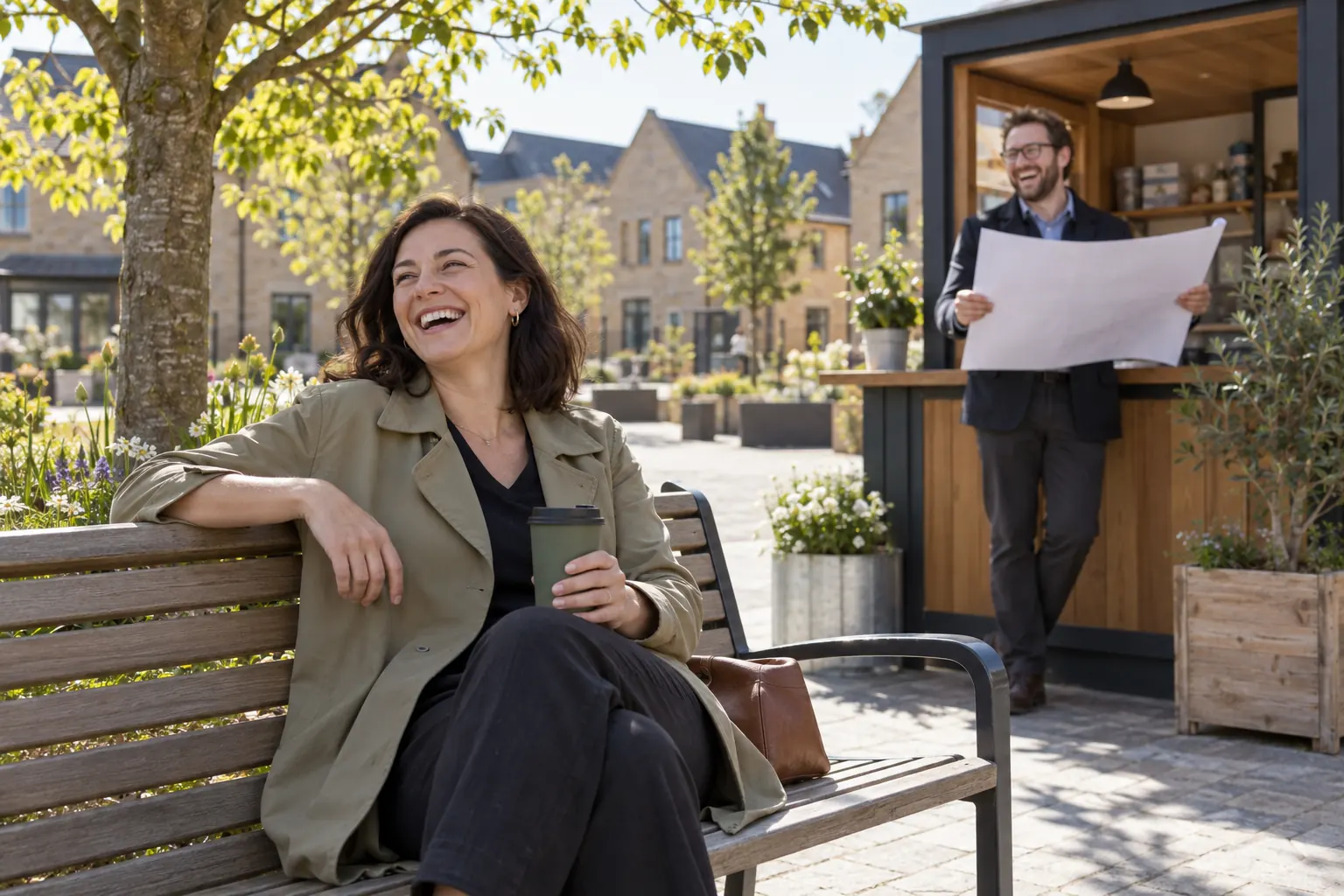
The publication treats a local centre as critical infrastructure, alongside roads and schools. This is a remarkable promotion for the café, which has spent years being handled as an optional extra with inadequate parking. A bench at Jubilee Square in Marleigh Park has reviewed the guidance and wants a seat on the infrastructure committee.
The guidance calls for the right location, mixed uses, active travel routes, adaptable buildings and public space where people can linger. It also recognises that timing matters. Deliver the centre too early and the shops may lack customers. Deliver it too late and residents may already have formed a lifelong attachment to driving twelve minutes for milk.
When the community arrives after the homes
Developers are encouraged to treat local centres as long term investment rather than isolated commercial plots. A centre can support house sales, strengthen a neighbourhood and create a setting for community life. In other words, the thing that makes the homes desirable should ideally exist before everyone buys one and discovers that the promised heart of the community is a fenced patch of compacted mud.
The guidance also advises against letting car parks dominate. Several tarmac expanses are seeking counselling after this personal criticism. Meanwhile, the centre must remain flexible, welcoming, connected and commercially viable. That is a demanding brief for any building expected to contain a pharmacy, nursery, café and perhaps a shop selling candles called “Rain After Planning Committee”.
The serious point is simple. Design, transport, services and stewardship cannot sit in separate boxes beside a skip. A place works when its parts support one another. Somebody must also remain responsible after the brochure stops smiling. That is the institutional contradiction behind the sustainable local centres guidance 2026.
The bench has submitted its application for a planning hat. Officials refused it because the hat would create an unacceptable visual impact, block a strategic sightline and encourage other street furniture to believe it had democratic rights.
Source: GOV.UK.