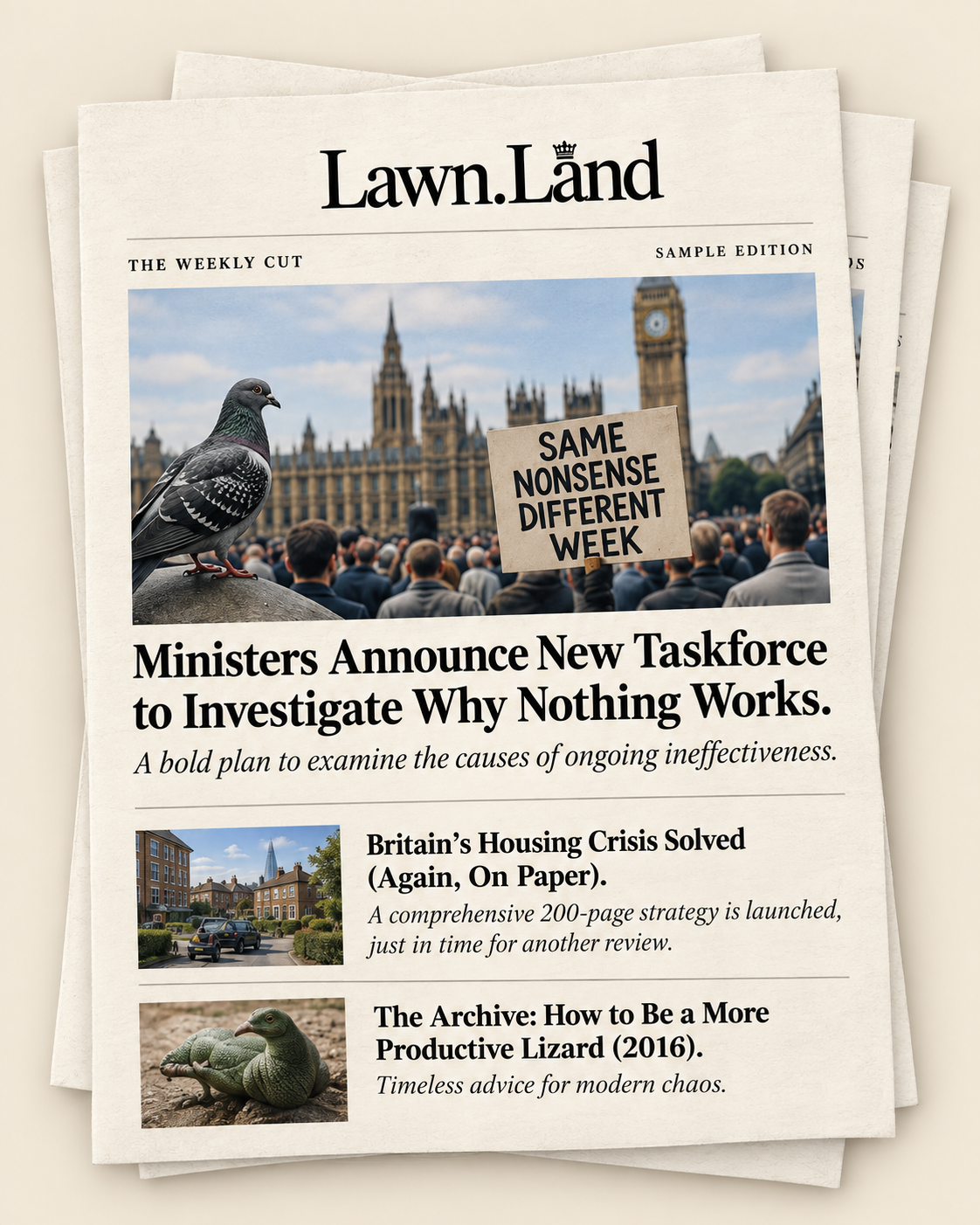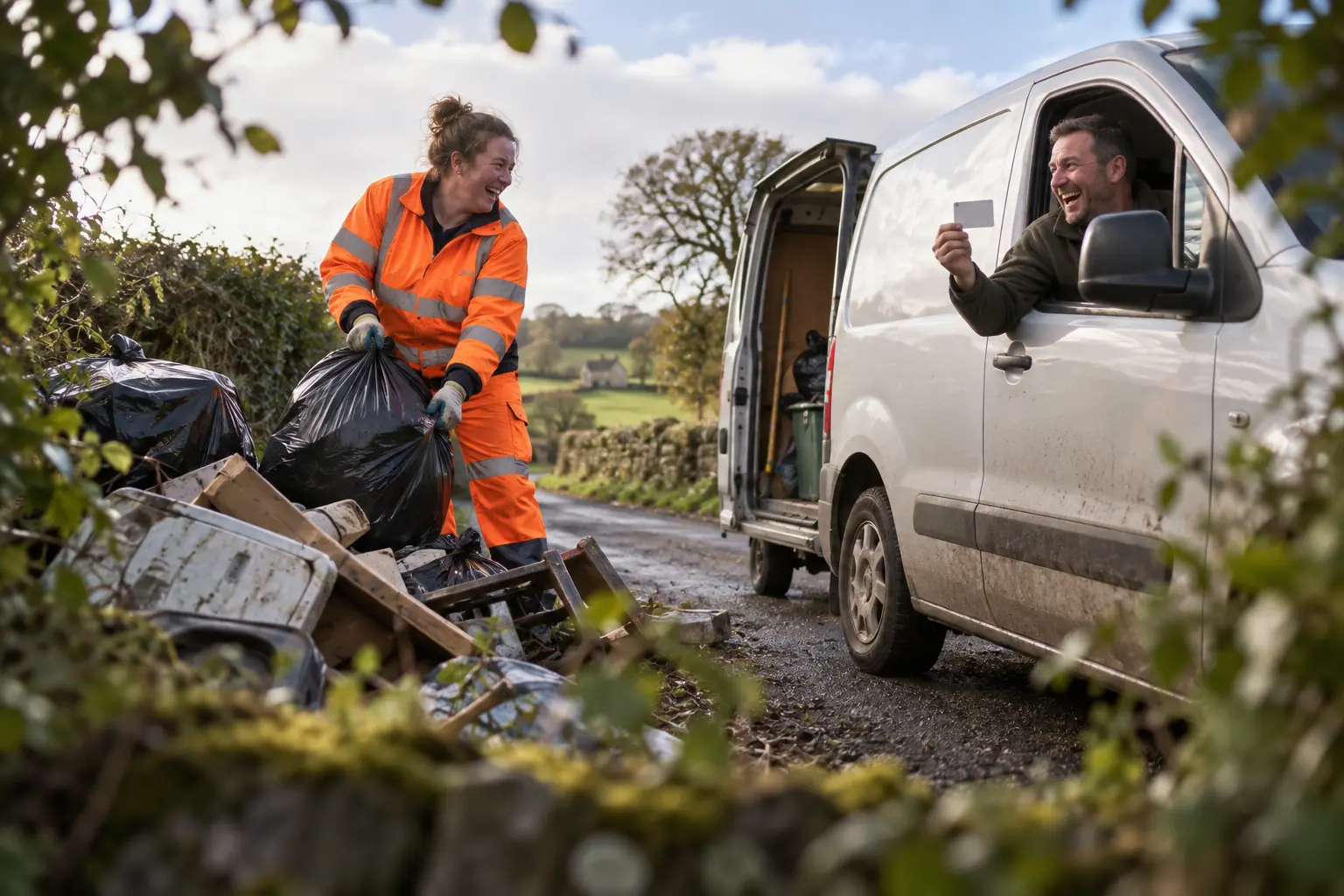
The illegal waste enforcement crackdown has arrived with a promised £5,000 fine in one hand and a remarkably confident press release in the other. The Government announced the plan on 19 August 2026. It will give the Environment Agency stronger powers, more officers and extra help to pursue illegal waste operators. A neat pile of blank cardboard boxes has been appointed interim director of visible progress.
The announcement says fines for some waste offences could rise from £300 to £5,000. It also brings together councils, police, regulators and regional mayors. Apparently, rubbish becomes more frightened when several institutions stand around it using matching language.
The first phase of Operation Unite produced 42 site visits, 17 suspended or revoked permits and more than 30 criminal investigations. Three more sites have been identified for possible clearance, subject to feasibility assessments. Even the cardboard boxes understand this official dialect. It means the problem has been located and everyone is now arranging a meeting about locating it.
Illegal waste enforcement crackdown meets the paperwork
The illegal waste enforcement crackdown targets organised waste crime. It does not target the ordinary citizen who briefly owned a broken wardrobe and regretted it. The plan uses intelligence, drones, asset seizures and closer cooperation. It aims to stop operators from moving their piles somewhere else.
This creates a useful contradiction. The rubbish is an urgent threat that needs the full force of law enforcement. Yet the cleanup still travels through feasibility studies, regional structures and the cautious footsteps of several committees. Somewhere, a skip is applying for a partnership board. It is waiting to learn whether it has enough evidence to exist.
The neat pile of blank cardboard boxes has studied the announcement carefully. It believes every enforcement operation needs a target, a timetable and one person who knows where the printer is. It volunteered to store the paperwork. It now suspects that is how every national strategy begins.
A crackdown with somewhere to put the forms
The Government says the package will tackle existing sites and the networks behind them. That is the right target. A waste mountain becomes more than an eyesore when people profit from it and communities live beside it.
Still, the boxes remain cautious. They have seen grand plans arrive flat packed, acquire a logo and spend six months waiting for someone to assemble them. The illegal waste enforcement crackdown will be judged by whether the rubbish eventually finds itself out of work. If not, the boxes are ready to flatten the entire strategy and sell it back as packaging.
Source: GOV.UK.