The UK AI hardware plan is being developed because Britain would like more leverage over the technology that shapes its economy and security. The chip has welcomed the ambition. It has also requested a lanyard, a desk pass and a quiet word about who controls the snacks.
UK AI hardware plan seeks a keystone
On 28 April 2026, the government said it would develop a UK AI hardware plan for chips and the semiconductor technologies behind artificial intelligence. The stated goal was not to build everything alone. Britain wants to work with allies while becoming difficult to leave out of the room.
That is an elegant ambition. A keystone holds an arch together. A chip holds very small things together. The official strategy has therefore promoted the chip from tiny component to national character actor.
The government said 70 per cent of global AI compute is controlled by five companies. This explains the urgency. It also explains why every British silicon wafer has begun rehearsing an entrance that says indispensable without appearing to have read a briefing note.
Leverage reaches the laboratory
The plan sits alongside a wider push to back British AI strengths in research, companies, compute, skills and infrastructure. These are serious priorities. They are also the sort of priorities that can make a laboratory sound like a hostage negotiation with a spreadsheet.
Officials stress that AI sovereignty does not mean isolation. Britain can use the best technology, welcome investment and work with partners. It simply wants enough capability to avoid discovering that its future has been stored in somebody else’s cloud cupboard.
The chip finds this reassuring. It does not want a wall around the country. It wants a reliable socket, a sensible supply chain and an invitation to the meeting before the ministers unveil the slide about hardware.
A lanyard for the national chip
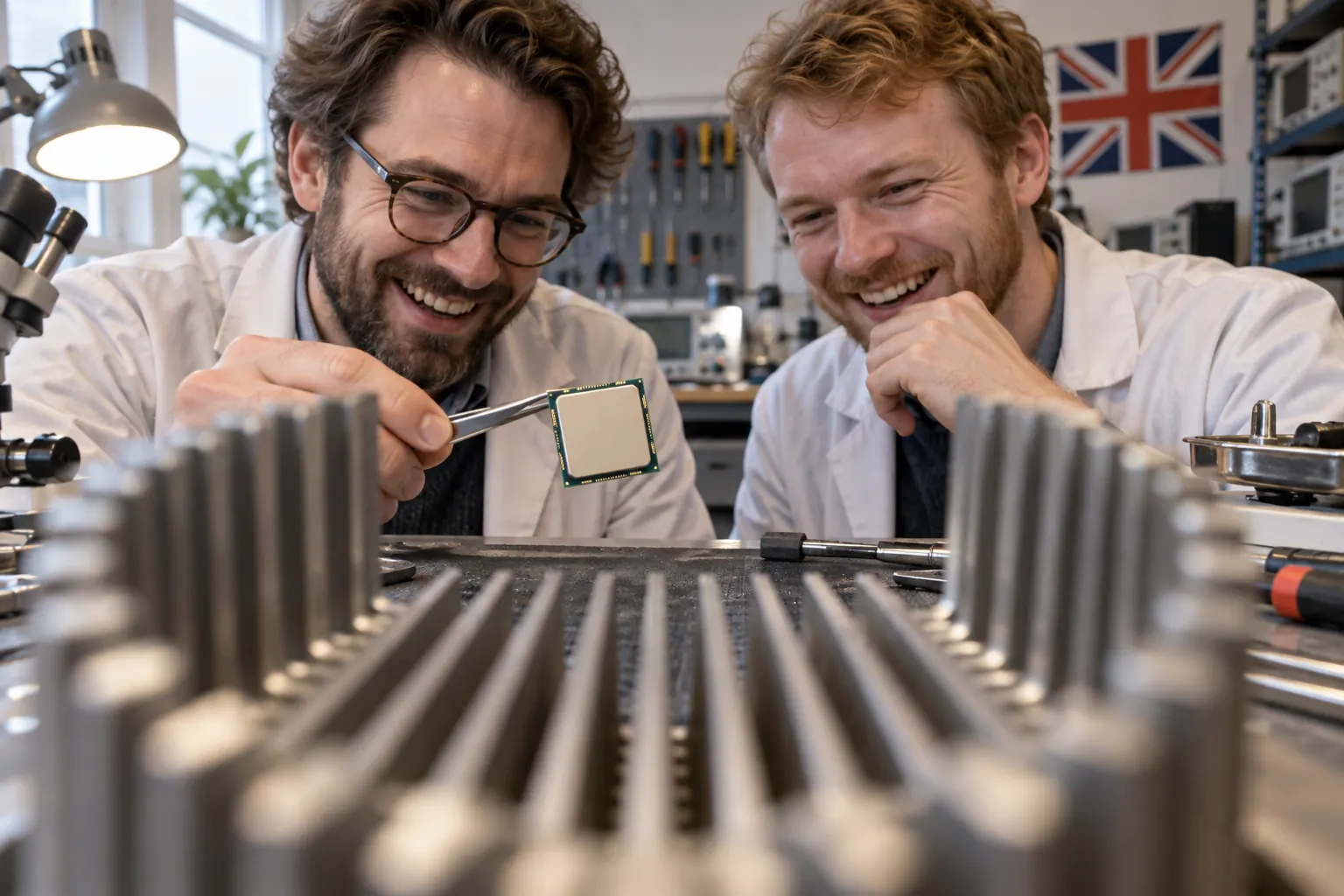
A plan cannot manufacture semiconductors by itself. It can set a direction and identify a strategic problem. The comic part begins when an object the size of a fingernail receives the emotional weight of national destiny and is asked to pose beside a flag.
Britain wants to be an indispensable technology partner. The chip has accepted the role. It has asked only for a lanyard, a decent chair and permission to stop calling itself a keystone whenever anyone from procurement enters the room.
Source: GOV.UK.