England’s new recycling rules have arrived to make household sorting simpler, which is an ambitious opening move for a system that has spent years asking residents to assess the moral character of a yoghurt pot before deciding where it belongs.
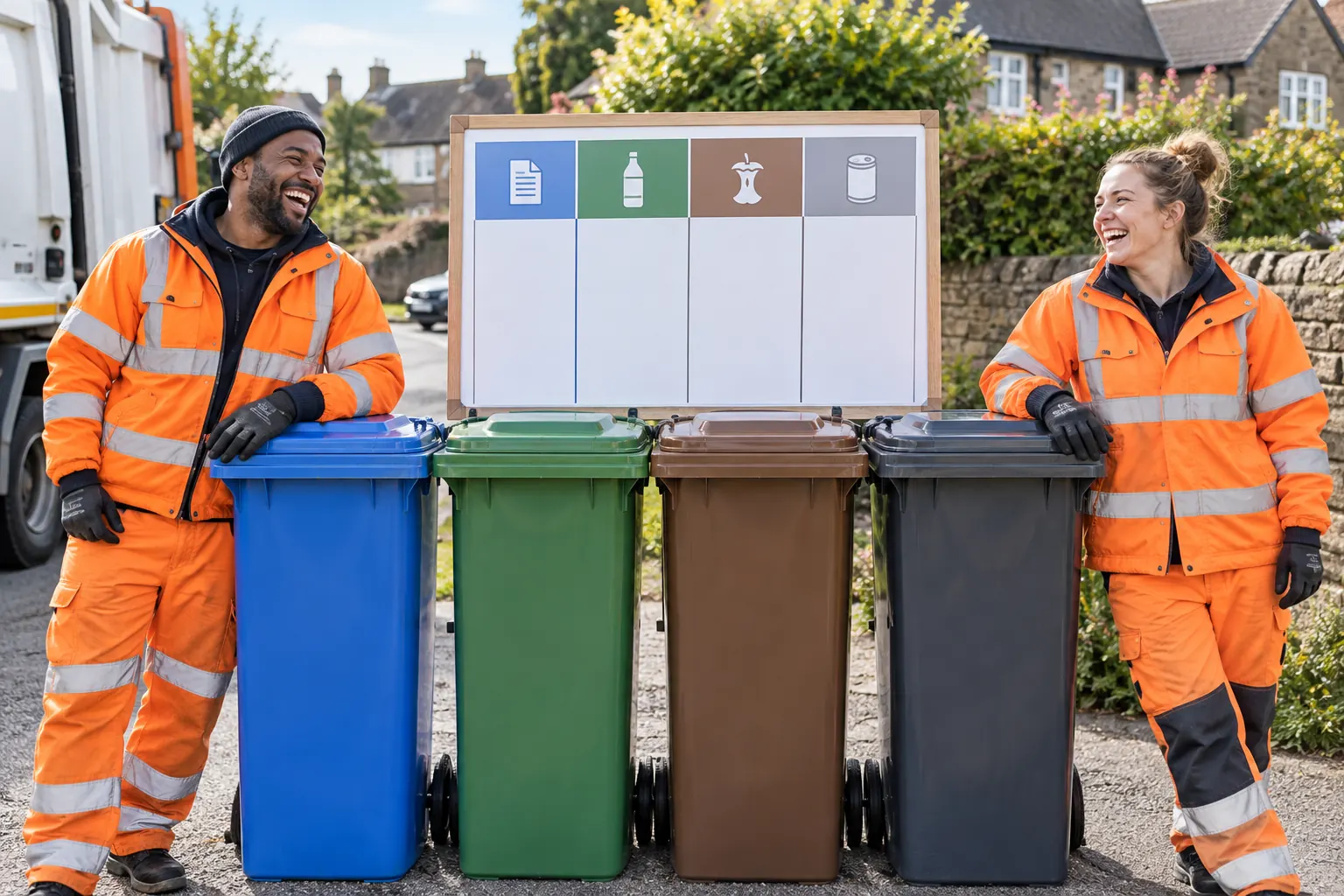
From 31 March, waste collectors in England must by default collect food and garden waste, paper and card, other dry recyclable materials such as glass, metal, plastic and cartons, and residual waste separately. The bins have welcomed the clarity, although several remain suspicious of the phrase “by default”, having seen it enter many a policy document as a firm instruction and leave as a council leaflet with seventeen qualifications.
The Government says Simpler Recycling will end confusion, increase recycling and reduce waste sent to landfill or incineration. This is welcome news for discarded packaging, which has spent years waiting for a policy framework before deciding whether it is rubbish, a resource or evidence that somebody else should pay for the collection lorry.
There is still room for local flexibility. Paper and card may be collected with other dry recyclable materials where councils decide that this works best, while some areas have transitional arrangements for delivery challenges. England has therefore achieved the rare administrative miracle of introducing one system that can still look different depending on which side of the street a bin is standing on.
Households will be encouraged to sort materials more consistently instead of treating the kitchen counter as a temporary court of appeal. A glass jar can go in one container and a food scrap in another. A suspiciously clean takeaway carton can then be examined by three adults before being placed in general waste with the solemnity of a failed planning application.
The policy is intended to support higher quality recycling, domestic reprocessing and a more circular economy. It also sits alongside wider measures including extended producer responsibility and a future deposit return scheme. The national recycling machine is being rebuilt one collection at a time, from caddies, lorries and fridge magnets bearing instructions that require their own appeal process.
Clear guidance should help, although local instructions still matter. The end of the postcode lottery does not mean every borough has received the same bin, the same timetable or the same interpretation of the word “plastic”.
At last, England has a simpler recycling system. It only needs to explain why making things simpler required enough categories to give every household’s rubbish its own department, inbox and ministerial sounding phrase.
Source: GOV.UK.