The crescent moon visibility map has arrived for March, offering observers a calculated chance of seeing the young Moon between 19 and 21 March. Britain has responded by looking up, packing a thermos and asking the clouds to respect an official timetable for once.
The maps come from the HM Nautical Almanac Office. They show the global likelihood of observing the young lunar crescent and are intended for individuals to interpret. This is sensible. A map can explain where and when to look. It cannot stop a neighbour switching on a security light at the exact moment the Moon decides to appear.
The young crescent is delicate and brief, making it an ideal British spectacle. It stays visible just long enough to reward preparation before leaving everyone in a garden wondering whether they saw the Moon, an aircraft or a speck of dust with unusually good public relations.
The official material provides astronomical data and predictions to aid observers. It does not promise a perfect view. That distinction matters. The Government can publish a map, but it cannot negotiate with cloud cover, persuade a chimney to move or prevent a row of houses from occupying the exact place where the horizon used to be.
Still, the map gives moonwatchers a useful starting point. Check the date. Check the timing. Find a clear view. Then identify the brightest light nearby and discover that somebody has decided the garden requires the illumination of an airport whose only flight is a moth.
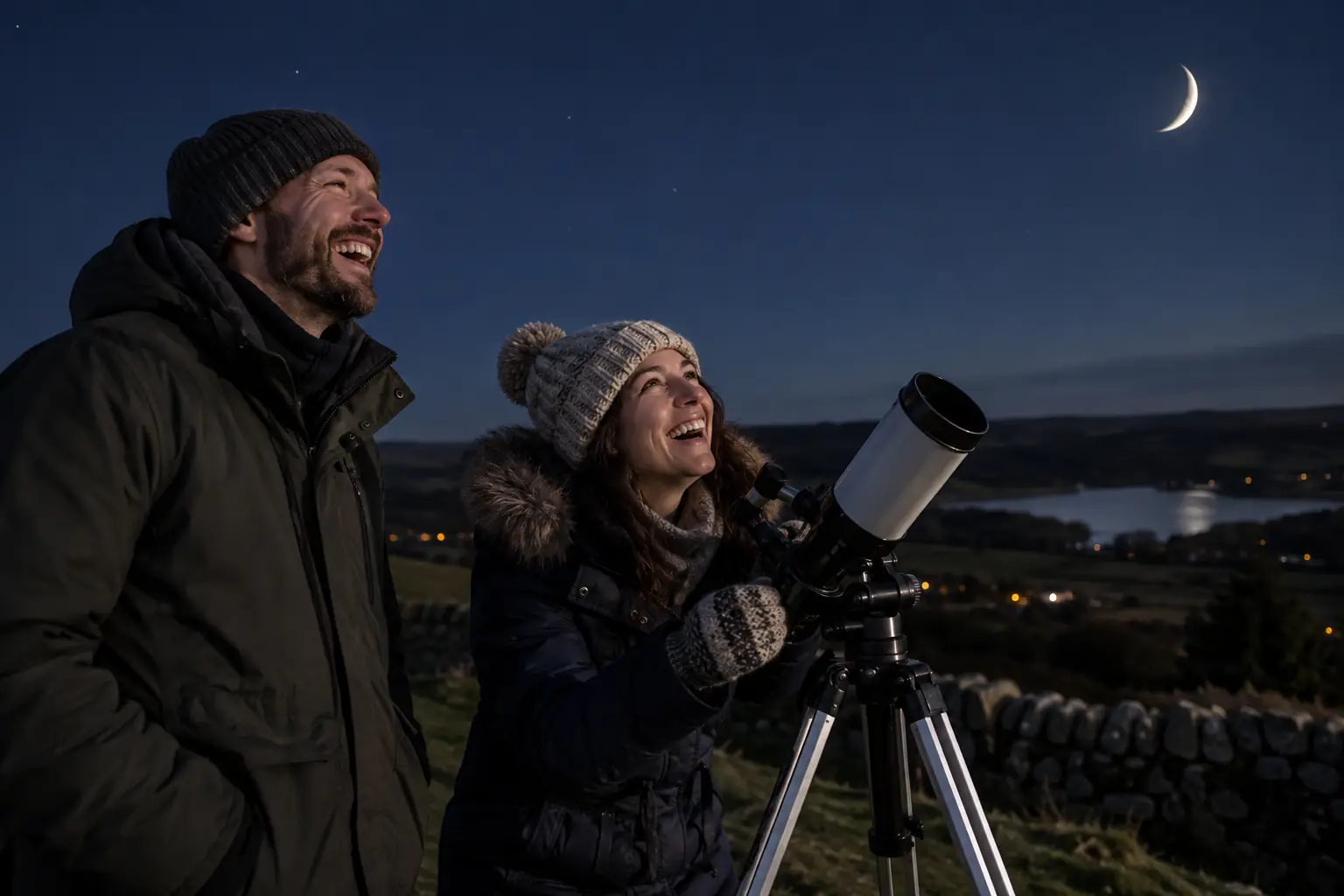
No grand observatory is required. Patience will do, along with a friend who laughs when the first sighting turns out to be an aircraft. The map offers a reasonable chance of success. The British sky offers suspense, damp sleeves and a cloud arriving with the confidence of a senior official who has found a loophole.
By evening’s end, the Moon may have been observed, missed or replaced by a porch light. Britain will then have demonstrated its preferred approach to astronomy: consult the experts, prepare thoroughly and blame the weather when the universe fails to attend a meeting chaired by a thermos.
Source: GOV.UK.