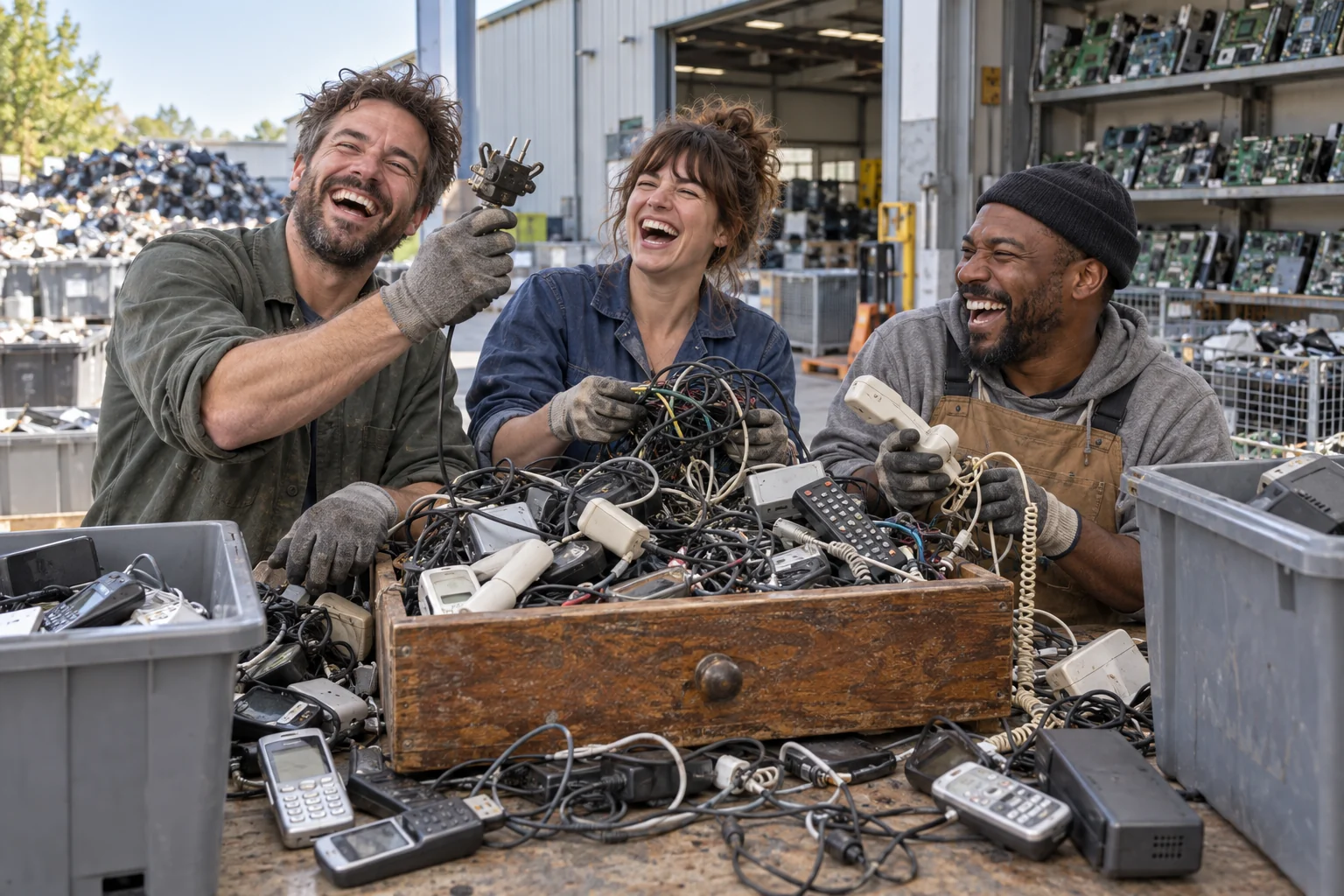
The electronic waste crisis has reached the drawer where old cables, dead phones and one remote without a television wait for civilisation to apologise. The drawer calls this collection future proofing. The planet calls it 62 million tonnes of evidence.
A 2024 UN report estimated that the world produces 62 million tonnes of electronic waste every year. Less than a quarter is properly recycled, while hazardous materials can contaminate soil and water when discarded or handled badly. This is a serious environmental problem, although the drawer remains convinced that the obsolete printer is merely between careers.
The contradiction is painfully domestic. Everyone agrees that electronics should be designed for repair, reuse and recycling. Then a device stops charging and its owner places it in a cardboard box marked IMPORTANT, alongside seven leads that fit nothing currently owned. The box is not rubbish. It is an archive whose curator has misplaced both the catalogue and the courage.
Tilda Plugboard, Commissioner for Things With One Last Flashing Light, has announced that every discarded device deserves a proper exit. She has also forbidden anyone from leaving a nest of unidentified cables beside a charity shop till and calling it circularity. Her first exhibit was a charger last used by a machine whose name had been forgotten by three generations.
Governments and businesses are being urged to improve collection, recycling and product design. The aim is to keep valuable materials in use and reduce pollution. The Ministry of Drawer Archaeology has responded by granting the oldest charger protected status and asking whether anyone can still remember what its plug did. The ministry has now requested a grant to study the second oldest charger, which may be a national treasure or part of a printer.
The wider problem is that electronic waste is growing much faster than formal recycling. Recycling alone cannot solve a system that encourages constant replacement and then acts surprised when the resulting object refuses to die tidily. The drawer has noticed that every new device arrives with a new cable, while every old cable remains available for questioning.
Safe recycling and repair systems matter. So does making producers responsible for what happens when their products become expensive rectangles with no remaining purpose. The drawer supports this principle, provided nobody asks it to identify the cable currently wrapped around the extension lead. That cable has been promoted to senior management.
At last, the remote found its television. The television had become a monitor, the monitor had become a plant stand, and the cable had become evidence in a household inquiry. All three were sent to a proper recycler, where the drawer immediately began saving the receipt in case civilisation needed proof that it had once made a decision.
Source: United Nations Environment Programme.