England’s workplace recycling rules have brought welcome clarity to the office bin, while turning the shared fridge into a constitutional crisis with no recognised authority. Since 31 March 2025, workplaces with ten or more employees have had to arrange separate collections for dry recyclable materials, food waste and residual waste. The banana has finally been given a destination. The sandwich remains under investigation.
The rules are part of Simpler Recycling, which aims to reduce landfill and improve the quality of material sent for recycling. Businesses can choose the size of their containers and how often they are collected, according to the volume of waste they produce. This flexibility has made Martin from accounts dangerously interested in lid capacity.
Martin now begins every meeting by asking, “Before we start, which stream are we in?” Nobody knows whether he means the agenda or the yoghurt pot. The office has stopped inviting him to strategy sessions after he classified the long term plan as residual waste.
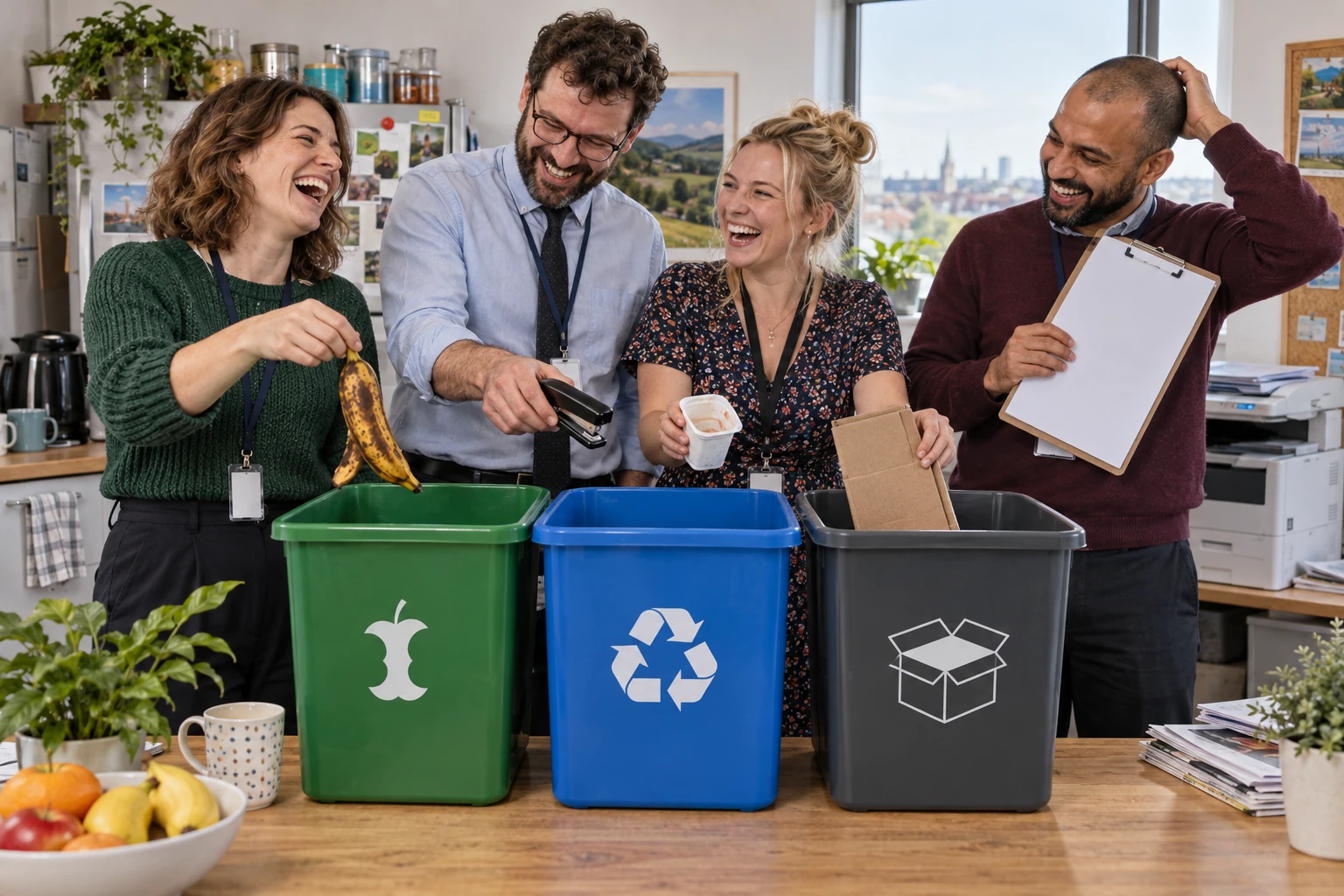
“We needed clarity,” says Pippa Rummage, the office’s self appointed Director of Bin Diplomacy. “So we introduced three labels. One says food. One says recycling. The third says no, that is not recycling, Trevor.”
Trevor has asked whether a stapler counts as metal. He has also submitted a formal appeal against the classification of a half eaten cereal bar. The appeal was rejected after the bar was found to contain an alarming quantity of what the office calls texture. Trevor is now seeking judicial review from the stationery cupboard.
Paper and card may need to be separated from other dry recyclable materials unless the collector accepts them together. This has caused a brief constitutional crisis around the printer. Martin believes an empty toner box is cardboard. The printer believes it is a warning. Both have declined mediation.
The shared fridge has proved harder to govern. Staff can identify paper, bottles and food scraps with reasonable confidence. They cannot identify the owner of a tub marked “chilli, probably”, which has outlived two managers and acquired the moral authority of an abandoned monument. A training session on food waste ended when someone asked whether the tub was waste, evidence or technically a colleague.
The practical message is simple. Put the right material in the right container. This is not thrilling, but neither is sending recyclable cardboard to landfill because somebody panicked near a colour coded sticker. By Friday, the office had sorted twelve boxes, three bottles and one motivational poster reading “THINK OUTSIDE THE BOX”. Naturally, it went into cardboard, where it was the first thing in the building to demonstrate original thinking.