
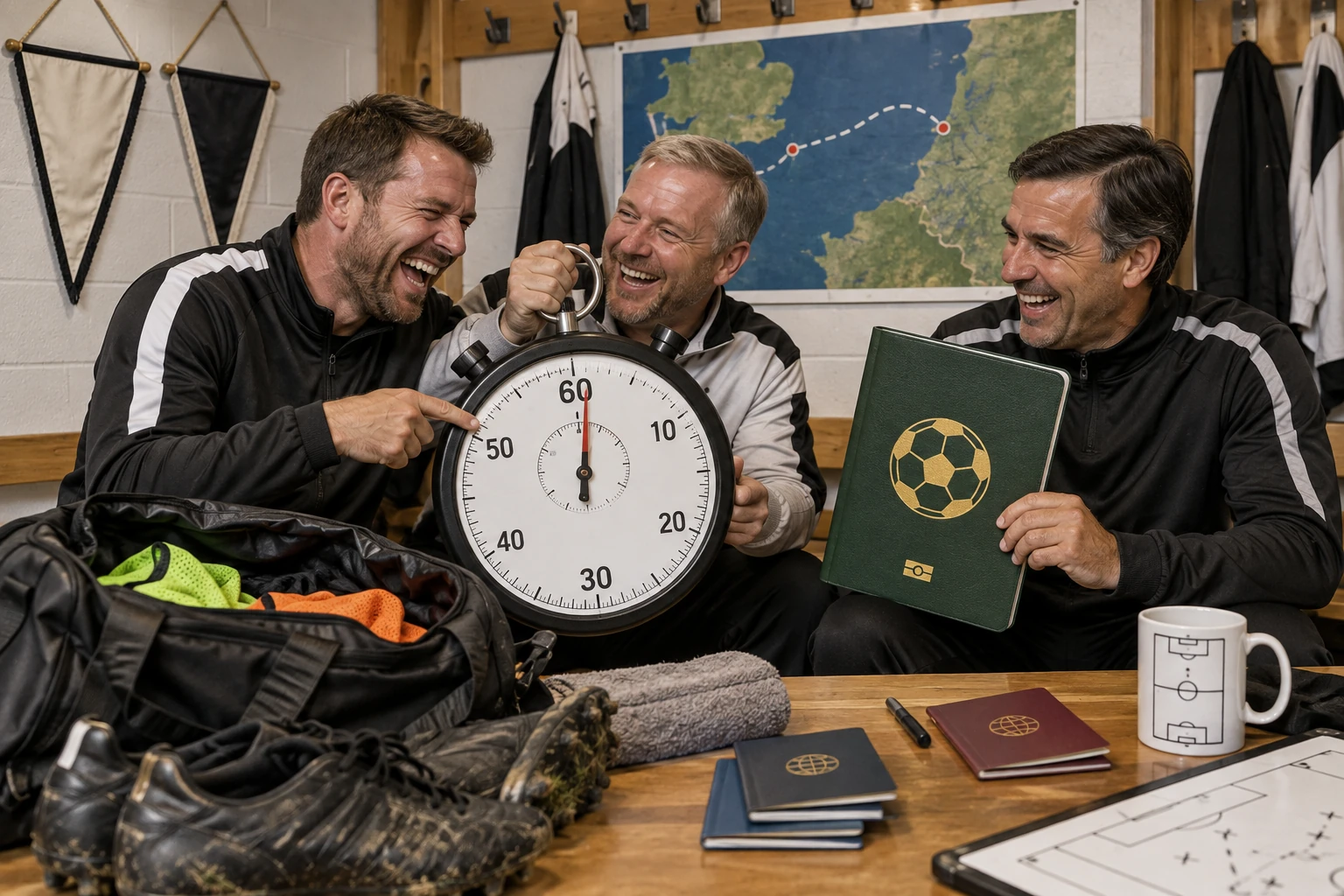
Britain and Germany are sending schools, youth groups and football clubs abroad with £100,000, proving that international diplomacy has finally found a format in which nobody can leave until the referee has checked the paperwork.
The grassroots sport exchange was announced during the German State Visit on 4 December. It aims to build connections, widen opportunities and turn old sporting rivalries into future friendships. Nothing brings nations together like discovering that both believe the other side has misunderstood the offside rule.
Eligible groups will have the chance to travel overseas, play sport and meet people from the other country. Young participants may return with new friends, broader horizons and the absolute certainty that the foreign goalkeeper moved before the whistle.
At the fictional Ministry of Friendly Set Pieces, liaison officer Otto Cornerflag welcomed the plan. “Sport gives young people a shared language,” he said. “Mostly it consists of ‘mine’, ‘ref’ and the international sigh produced when somebody attempts a backheel near their own goal.”
The funding will come jointly from the UK Foreign, Commonwealth and Development Office and Germany’s Federal Ministry for Education, Family Affairs, Senior Citizens, Women and Youth. This is a serious investment in people meeting people, or at least standing beside one another while waiting for a minibus and pretending the itinerary is under control.
The announcement also includes a UK and Germany Youth Summit in Berlin from 20 to 22 March 2026. Seventy young people will network, broaden their international horizons and generate ideas about shared challenges. They will also need to find the delegate who knows the Wi Fi password and remembered the travel adapter, which is where most international cooperation becomes genuinely urgent.
Programme coach Sheila Whistle said the exchange had been designed around practical friendship. “There will be travel, activity and controlled discussion,” she said. “The only subject requiring a separate risk assessment is whether football came home or merely sent a postcard.”
That is the useful absurdity of public diplomacy. A summit can produce a communiqué, but a match produces an argument that must be settled before tea. A teenager can cross a border, share a changing room and learn that another nation’s parents are equally capable of turning a friendly fixture into a constitutional crisis.
The treaty may have its signatures, the summit its delegates and the exchange its £100,000. The real breakthrough will come when both sides agree that the ball was out, the tackle was fine and the linesman needs to explain himself immediately. Peace has a bib now, and it is appealing the throw in.