Fisheries management plans have arrived for five groups of stocks, giving the harbour folder a chance to study the tide table, request a review and explain that sustainability is now an operational priority.
The Government published five Fisheries Management Plans on 16 December 2025. They cover North Sea and Channel sprat, cockle, queen scallop, skates and rays, and Southern North Sea demersal non quota species. The plans aim to maintain or restore stocks at sustainable levels. That is serious work for coastal communities. It is also a lot for one folder to absorb before the kettle boils.
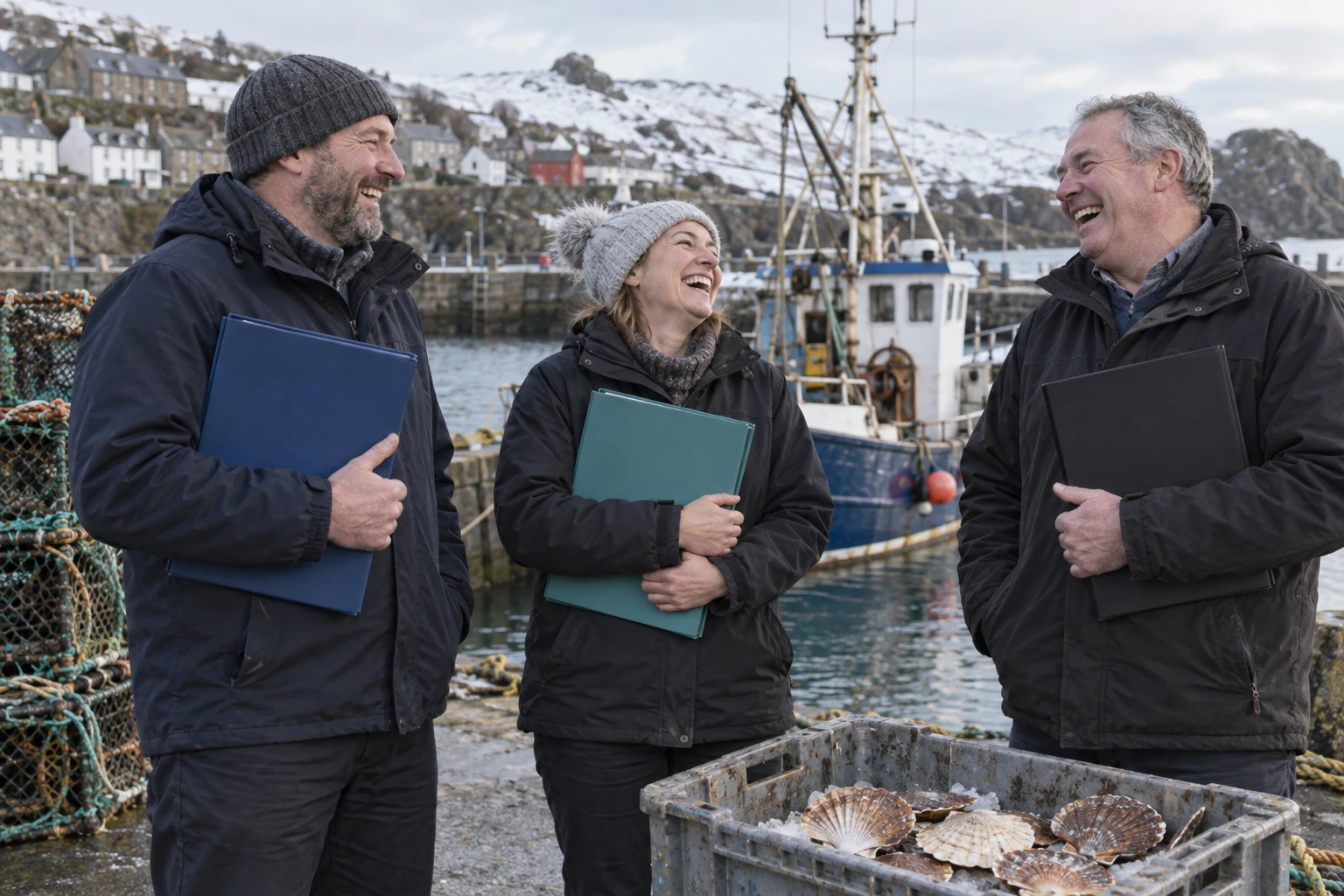
At the fictional Harbour Office of Measured Optimism, a blank marine plan was given a waterproof sleeve and asked to identify its key performance indicators. It asked whether a tide could provide supporting evidence in a standard format.
Fisheries management plans meet the harbour folder
Each plan sets out a route for managing a fishery with new evidence and practical experience in mind. The Government says the plans will be reviewed at least every six years. A scallop shell has already marked the date in a diary, although it remains uncertain about the venue.
The sprat plan was prepared with the Scottish Government for English and Scottish waters. The other plans address different stocks and settings. That range matters because fishing communities need arrangements that fit real waters rather than a single tidy idea of the sea.
A review visits the quay
Sustainable management needs information, cooperation and the ability to adjust when conditions change. The harbour folder supports all three. It has formed a working group, scheduled a workshop and placed a life jacket on the photocopier.
For fishing businesses, the plans connect environmental protection with jobs and a future for coastal places. The paperwork has interpreted this as an invitation to become a local economic actor with a modest view on governance.
For now, the fisheries management plans are in place. The folder is ready for the next review. It has brought a tide table, a pencil and a carefully worded note asking the sea whether it can make its behaviour more predictable.
Source: UK Government.