The National Physical Activity Taskforce has been asked to help 3.5 million more adults and children become active by 2030, so the national movement has begun in the traditional British manner: with a seated meeting, a biscuits budget and a detailed discussion about whether walking counts as delivery.
In January 2024, the Government announced £93 million for more than 1,100 grassroots sport projects, including pitches, changing rooms, floodlights and goalposts. That practical investment could help people get active. The taskforce, meanwhile, introduces the thrilling possibility that a national jog will require terms of reference before anyone is allowed to leave the building.
The wider sport strategy set an ambition for 2.5 million more adults and one million more young people to meet exercise guidance by 2030. This is an admirable target. The administrative response is already preparing a framework to ensure that every framework is properly aligned with the framework that explains the previous framework.
“Activity needs momentum,” said Stanley Sprint, chair of the Committee for Not Sitting Down Too Long. “First, we will define momentum. Then we will commission a report on whether it can be measured without anyone breaking into a sweat.”
The £93 million is the useful bit. Communities need affordable facilities, decent pitches and places where playing sport does not involve treating a leaking changing room as an endurance event. A new floodlit pitch can get people moving immediately, without requiring a national dashboard to explain why the ball has not yet met its quarterly outcome.
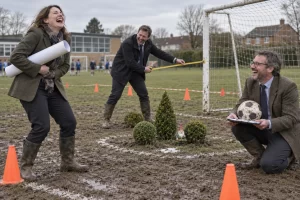
More than 1,100 projects are due to benefit, from artificial pitches and changing rooms to a tractor and mower for Poppleton United FC. The programme is therefore supporting both strategic national movement and the vital local task of stopping a football pitch becoming a meadow with fixtures.
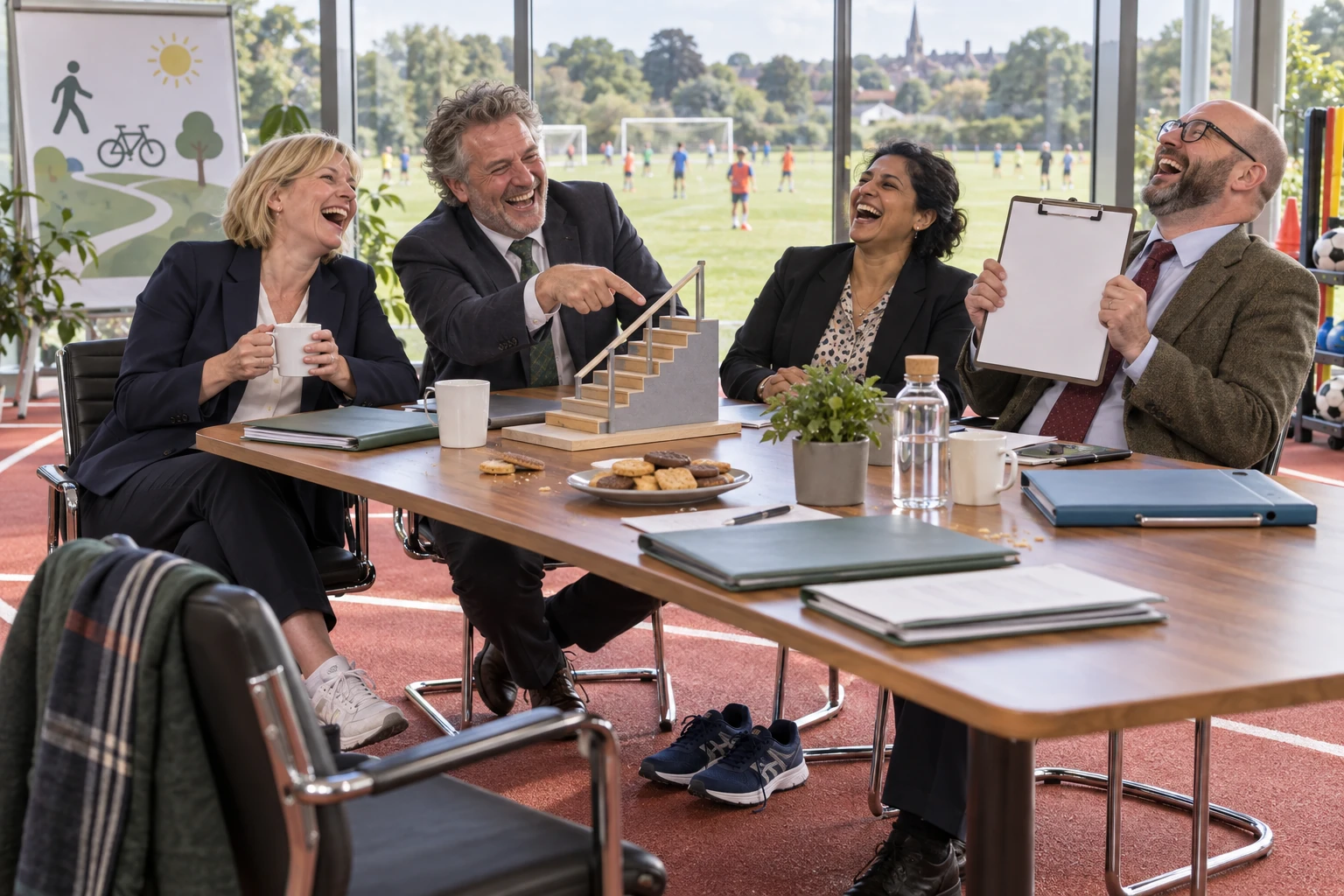
The taskforce will now consider how to encourage exercise across the country while remaining seated long enough to approve the minutes. Its likely recommendation is that everyone should take the stairs, provided the stairs have completed an impact assessment, appointed a reporting officer and demonstrated measurable progress towards the landing.
By 2030, Britain may be more active than ever. It will certainly have the paperwork to prove it, stored in a cabinet nobody can reach without climbing two flights of stairs, which will then be referred to a committee for further consideration.