
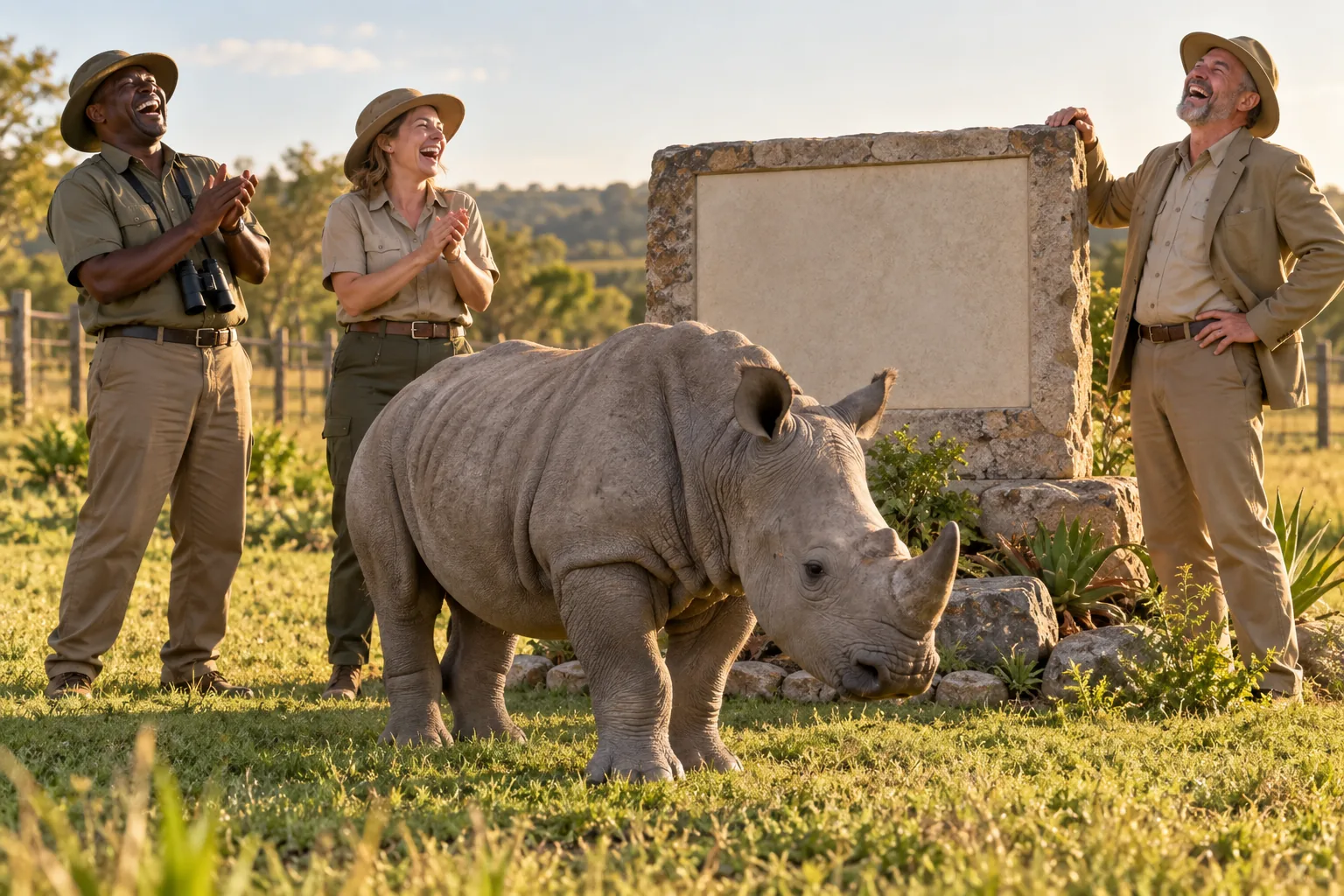
A rhino naming ceremony at Ziwa Rhino Sanctuary has celebrated one of conservation’s least bureaucratic miracles. Uganda’s white rhino population has returned from local extinction in the 1980s to 48 animals today, while 17 juvenile rhinos acquired names and the ceremony acquired several adults who appeared ready to accept shared custody of the achievement.
The recovery belongs to conservationists, communities, the Uganda Wildlife Authority and the people doing the unglamorous work of protecting enormous animals from disappearing. The ceremony belongs to everyone who has ever seen a genuine success and wondered whether it might look better beside a tasteful plaque.
Nobody mistook the plaque for a rhino, although one official did ask whether it could be photographed from its better side. The rhinos declined to stand near the lectern while adults explained that progress was happening. They had more urgent appointments with food, grass and the ancient diplomatic practice of ignoring speeches.
Dr Cora Mudlark, Registrar of Serious Good News, said that a name was a celebration rather than the work itself. Her entirely invented office recommends habitat, care and people turning up every day in boots as the preferred definition of achievement. It is a radical position, particularly in rooms where a piece of engraved metal is waiting for its close up.
The British High Commission used the event to restate support for conservation, sustainable tourism and Uganda’s wider economic ambitions. Those commitments are useful when they protect wildlife and benefit local communities. They become less useful when the ceremonial furniture starts behaving as if it personally carried a rhino through the difficult bits.
The Office of Modest Applause has therefore asked attendees to celebrate without claiming they personally taught a rhino to recover from extinction. It has also advised speakers to use the phrase “unlocking opportunities” only after somebody has unlocked the enclosure. This may shorten several official speeches and improve the safety record of the lectern.
There was no need for the animals to deliver remarks. The 17 young rhinos continued eating, growing and ignoring the guest list. This was not a failure of stakeholder engagement. It was the clearest sign that the ceremony had kept its priorities in order.
The rhinos have names now. More importantly, they have a population, a protected home and people willing to keep doing the work after the photographs are filed. The plaque can take the credit once it learns to eat thorny bushes and survive a night in the enclosure.
Real story: British High Commission Kampala.