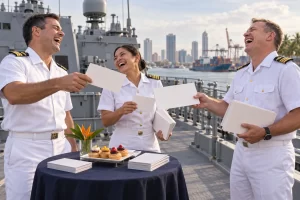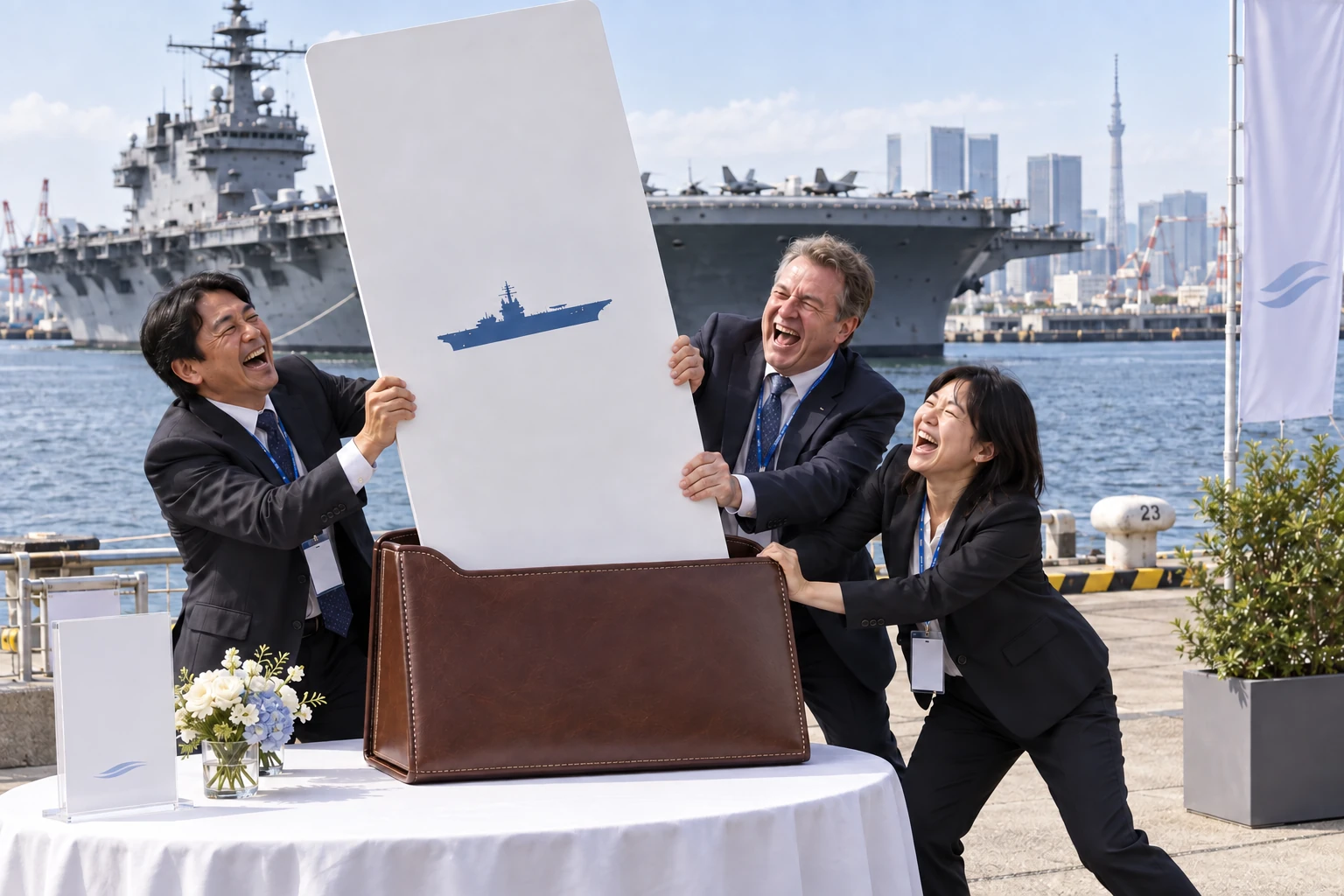
The UK Japan defence partnership has discovered that ordinary networking lacks a flight deck, so HMS Prince of Wales has arrived in Tokyo carrying up to 24 fighter jets and the sort of business card that requires a harbour master.
The carrier’s visit coincided with Defence Secretary John Healey meeting Japan’s prime minister and defence minister, alongside a Pacific Future Forum for defence and industry leaders. It is a serious programme of alliance building, which is why the networking venue has propulsion, radar and enough aircraft to make a hotel conference centre feel underqualified.
The visit also promoted the Global Combat Air Programme, the trilateral project involving the UK, Japan and Italy to develop a next generation combat aircraft. The wider UK Future Combat Air System programme supports more than 4,500 British jobs, while industry research and development spending has risen above £700 million.
“We considered bringing brochures,” said Rear Admiral Crispin, Commander of Strategic Mingling. “But brochures cannot host a summit, launch aircraft or make every delegate’s lanyard look like a minor naval appointment.”
The wider Carrier Strike Group deployment involves nearly 4,000 personnel and engagement with 30 countries. Every handshake therefore arrives with its own logistics chain, every introduction needs catering, and someone has presumably been assigned to protect the spare name badges from the weather.
Officials describe the UK Japan relationship as one of the strongest in the Indo Pacific. The carrier has taken the phrase literally, mooring beside Japan and turning bilateral cooperation into the only diplomatic meeting where “please take your seats” may involve several thousand tonnes of British engineering.
The Pacific Future Forum will discuss security, industry and future technology. A conference room might have offered cheaper carpeting, but it could not host a two day summit while carrying fighter aircraft in what the Ministry of Defence describes as the Royal Navy’s largest concentration of fifth generation aircraft.
International defence cooperation needs patient diplomacy, industrial investment and shared training. Yet when Britain wants to demonstrate that it is serious about a relationship, it sends a floating city with aircraft on top and lets the stationery explain itself.
The delegates exchanged views, contact details and possibly a reinforced wallet. The UK Japan partnership has achieved a new level of interoperability: Japan provides the harbour, Britain provides the carrier, and both sides agree that the follow up email should probably be delivered by helicopter.
Real story: Ministry of Defence.