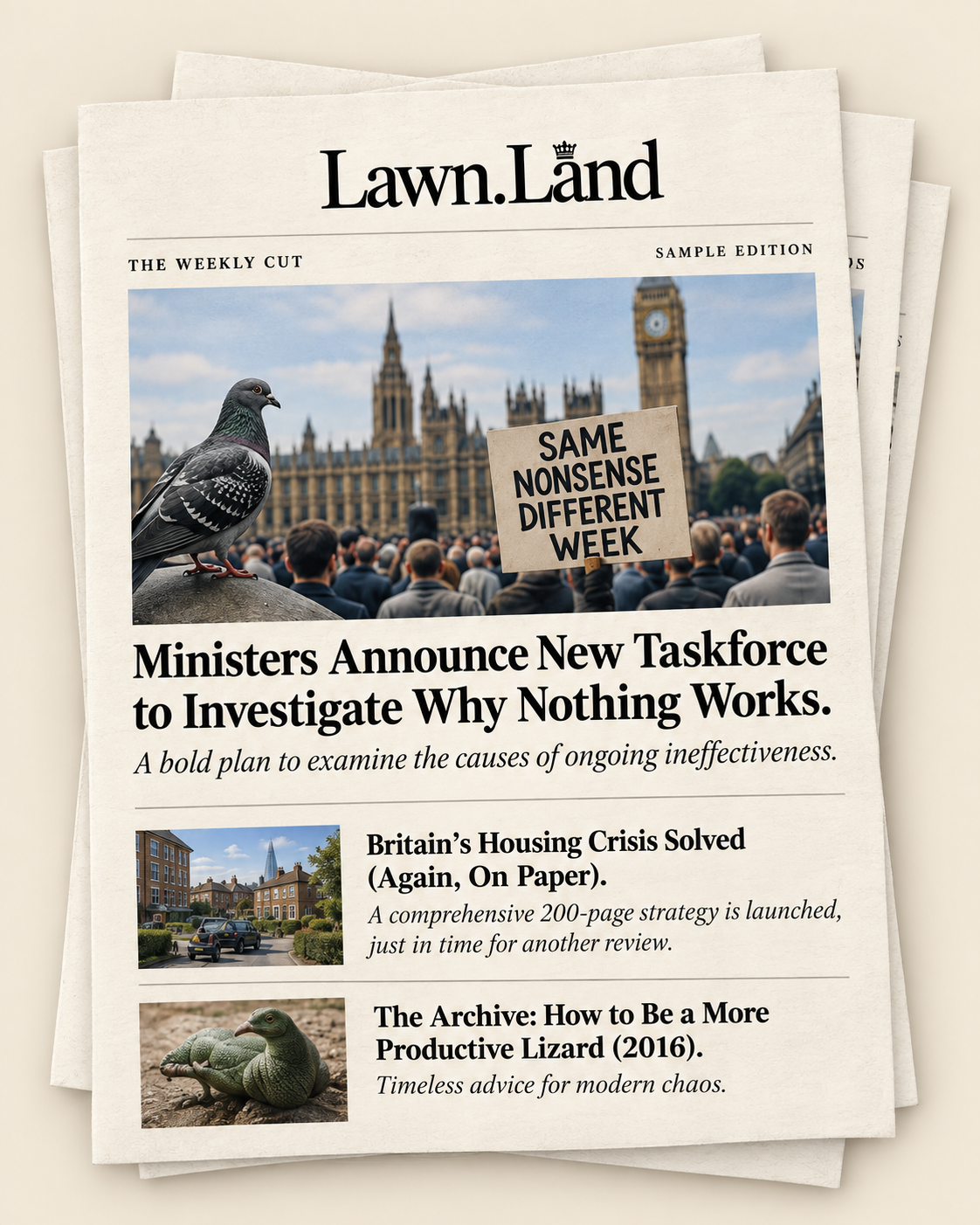

The Government has launched the Evaluation Registry, a single website for planned, live and completed evaluations, allowing Britain to discover what works without first commissioning an evaluation of where it put the last evaluation.
The Cabinet Office says the registry brings evaluation plans and reports together so officials and the public can search evidence about public policy. It already contains more than 1,750 entries, which is excellent news for anyone who has always suspected that the answer was somewhere in a spreadsheet but lacked the emotional strength to open another one.
The registry is intended to help civil servants find previous research, compare findings and plan new studies. This should make it easier to avoid repeating work. It may also reveal that one department tested an idea in 2018, another renamed it in 2021 and a third is now piloting it again beneath a teal logo, having discovered that a fresh colour can make an old mistake feel innovative.
Government staff and employees of eligible public bodies can create accounts, while central evaluation teams or leads oversee entries. The system therefore gives every organisation a clear route to evidence, provided it first identifies the person authorised to create an account explaining why evidence should be easier to find. That person is currently being evaluated for suitability by someone waiting for access to the relevant form.
“We are making learning fully discoverable,” said Vernon, Head of Measurable Lessons. “Our early evaluation found that the Evaluation Registry definitely contains the website, although further research is required into whether anyone has opened it.”
The official announcement says evaluation helps Government decide which programmes should continue, change or stop. This places evidence at the heart of decision making, where it can remain undisturbed while decision making waits for the announcement, the ministerial preference and the version of events that fits the press release.
It also advances transparency by making evaluations available to anyone. Failed programmes can now leave behind a searchable account of what happened, while successful programmes can leave behind three related evaluations explaining why nobody is entirely sure.
Britain has finally built a national home for evidence. The next evaluation will establish whether evidence knows where the spare key is, then commission another evaluation to find out why the first evaluation was not invited.
Real story: Cabinet Office.