The Upper Thames is removing abandoned boats, giving every sunken hull one final opportunity to explain that it was only temporarily becoming part of the landscape.
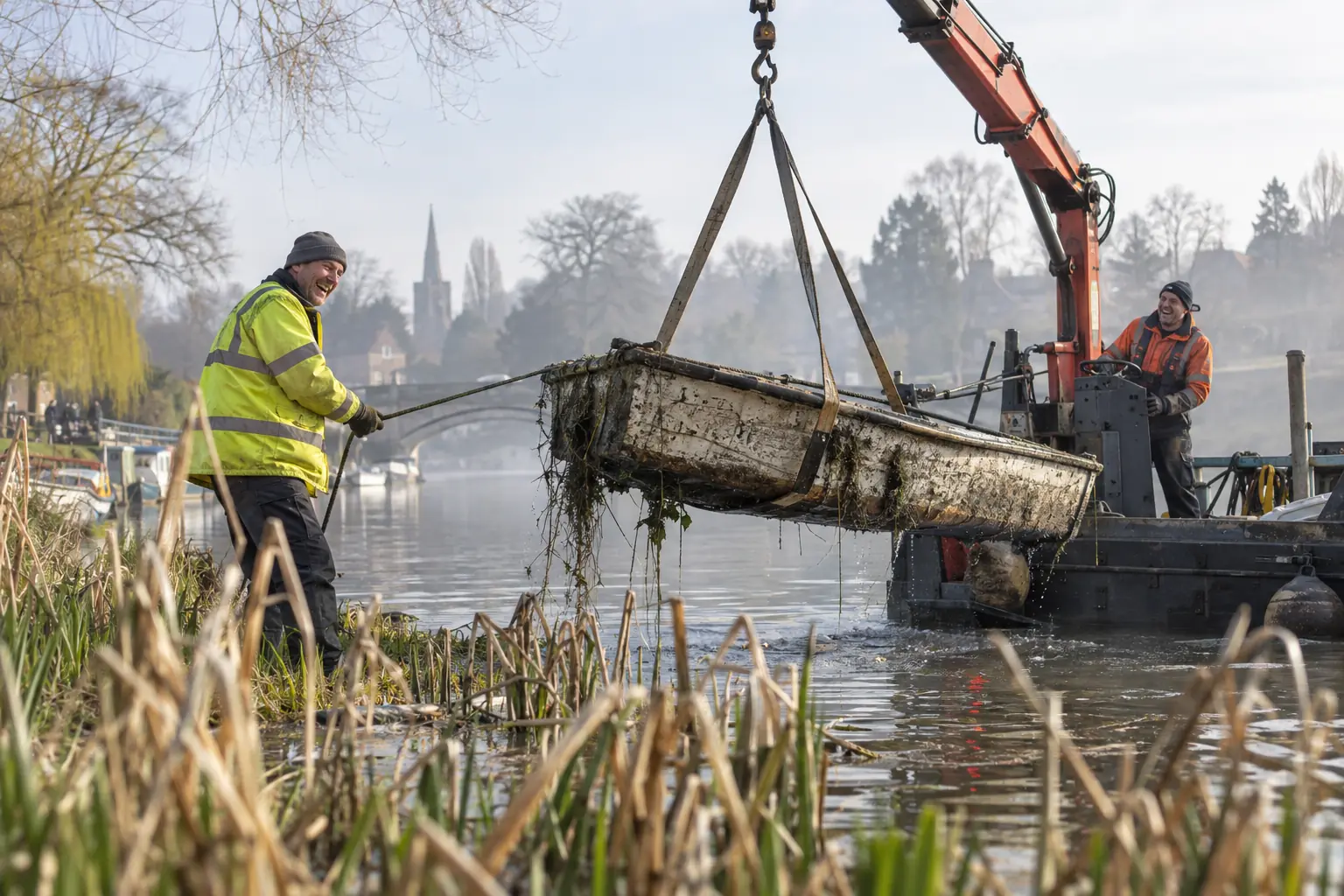
The Environment Agency says it is clearing sunk, wrecked and abandoned vessels from the non tidal Thames. It has already removed 53 abandoned boats this year and plans to remove 70 more in March. The river is therefore receiving the sort of spring cleaning usually attempted with a bin bag, a guilty expression and no expectation of finding the bottom.
The operation targets old boats, unregistered boats and vessels left at unauthorised moorings. A boat may not simply settle beside the bank, acquire moss and declare itself a heritage asset. There are rules, and apparently they apply even when the object in question has developed its own ecosystem and begun charging ducks for berthing.
The task force was established in July 2025. It removed 35 boats during intensive work on the Lower Thames in September and another 18 in January. The remaining vessels have now been informed that their long stay is over, although some may appeal on the grounds that they have already made friends with the wildlife and cannot be expected to abandon a thriving social life.
The agency says owners are responsible for removing their sunken wrecks. Where owners can be identified, it will seek to recover the costs. This is an ambitious administrative position, since identifying the owner of a boat quietly dissolving into the river may require detective work, archaeology and one extremely patient clipboard.
Boats on the river must be registered and meet requirements including insurance and a valid safety certificate. The agency says it will continue prosecuting offenders, while also removing boats whose owners have already been prosecuted and still refuse to comply. Ignoring the paperwork may turn a boat into a legal problem. Ignoring the legal problem turns it into a crane appointment.
The Environment Agency is working with landowners, police, local authorities and contractors to keep the removals moving. The operation is intended to improve the river for users and residents, while restoring some pride to the waterway. It is a considerable coalition for objects whose main contribution to public life has been obstructing the view.
For the boats, this is less a clean slate than an enforced checkout. They arrived hoping to become permanent features of the Thames and have instead encountered the one British institution that refuses to let anything remain indefinitely: a contractor with lifting equipment, a schedule and absolutely no interest in the boat’s emotional attachment to the riverbed.
Source: GOV.UK.