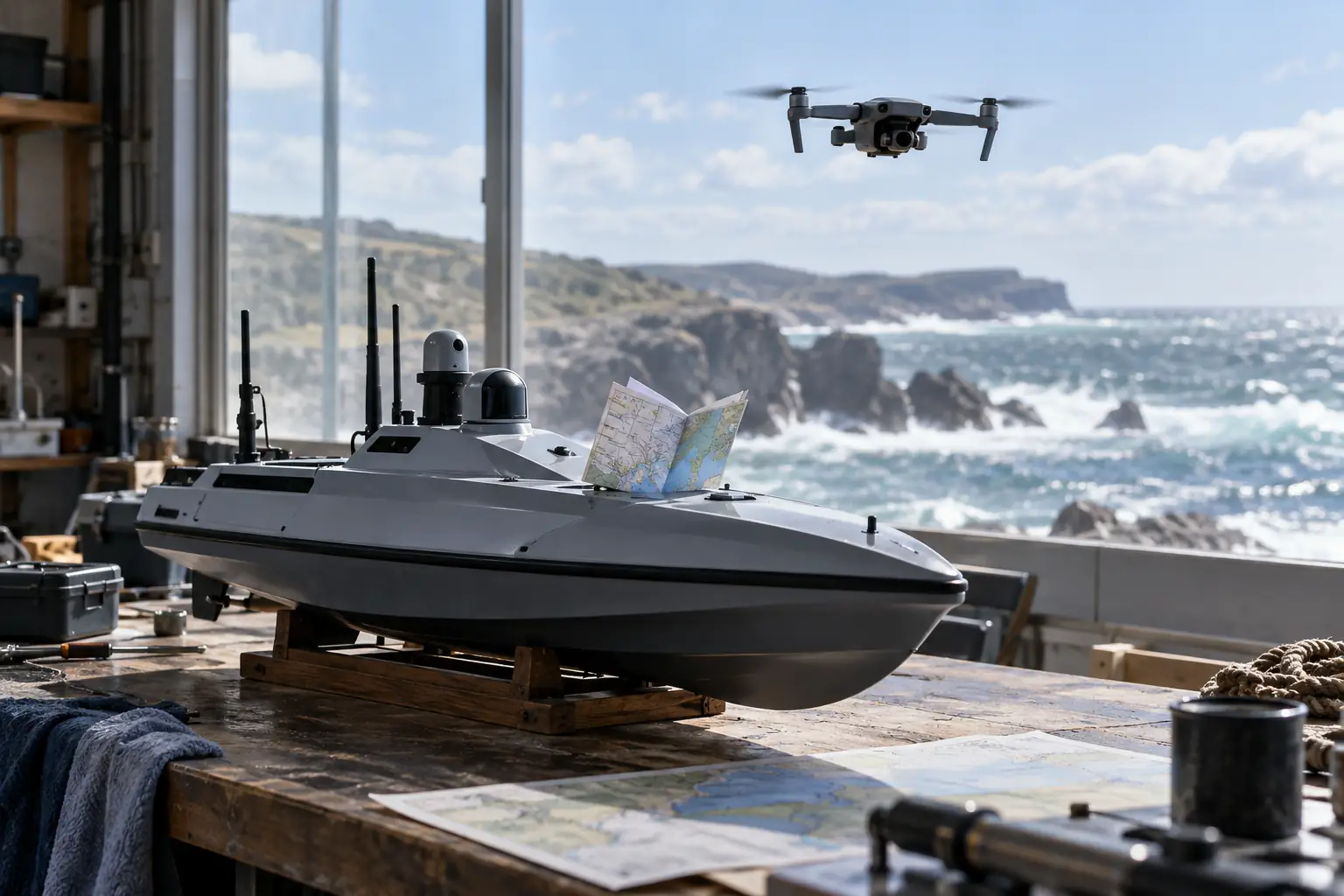
The Government has announced nearly £50 million for drones, flying taxis and the administrative dream of giving airborne objects a numberplate. Britain is preparing its skies for routine deliveries, emergency services and electric air taxis, while a new identification system promises to make suspicious flight easier to report with the precision currently reserved for cars and badly parked wheelie bins.
The announcement on 5 May 2026 includes £26 million for drones and advanced air mobility, alongside nearly £20.5 million to develop a bespoke drone identification system. Delivered through the Civil Aviation Authority, the work is intended to build the regulatory, digital and security foundations for more routine operations.
This is sensible infrastructure. Before a flying taxi carries someone across town, somebody must decide how it is approved, tracked and prevented from becoming an unlicensed patio ornament. The proposed system will transmit a drone’s identification and location during flight, allowing authorised users to access current and historical information.
That gives the sky a new administrative principle. If you are going to arrive overhead, you must first make yourself available to a database. The drone may be autonomous, electric and able to avoid a lamppost, but it will still need to show that it has completed the right digital application and is not, technically, a man carrying a parcel with ambitions.
The Government says the investment will cut red tape, speed up approvals and support medical logistics, infrastructure inspections and emergency responses. It also says regulation must maintain high safety standards while helping flying taxis reach the skies from 2028. This is an impressive amount of responsibility to place on a vehicle whose main selling point is that it does not use roads.
There is the useful contradiction. The future is being sold as faster, cleaner and more flexible, yet its arrival depends on creating a careful record for objects that cannot physically carry paper. Every airborne innovation will apparently be free to soar, provided it first submits its location, purpose and likely intentions to the correct online form.
The tiny numberplate has therefore become the founding document of British flying. By 2028, the nation may finally have taxis that glide above the traffic, bypass the potholes and spend twenty minutes circling the landing site because the passenger has forgotten the reference number. The future will not be delayed by congestion. It will be waiting for its password reset.
Source: GOV.UK.