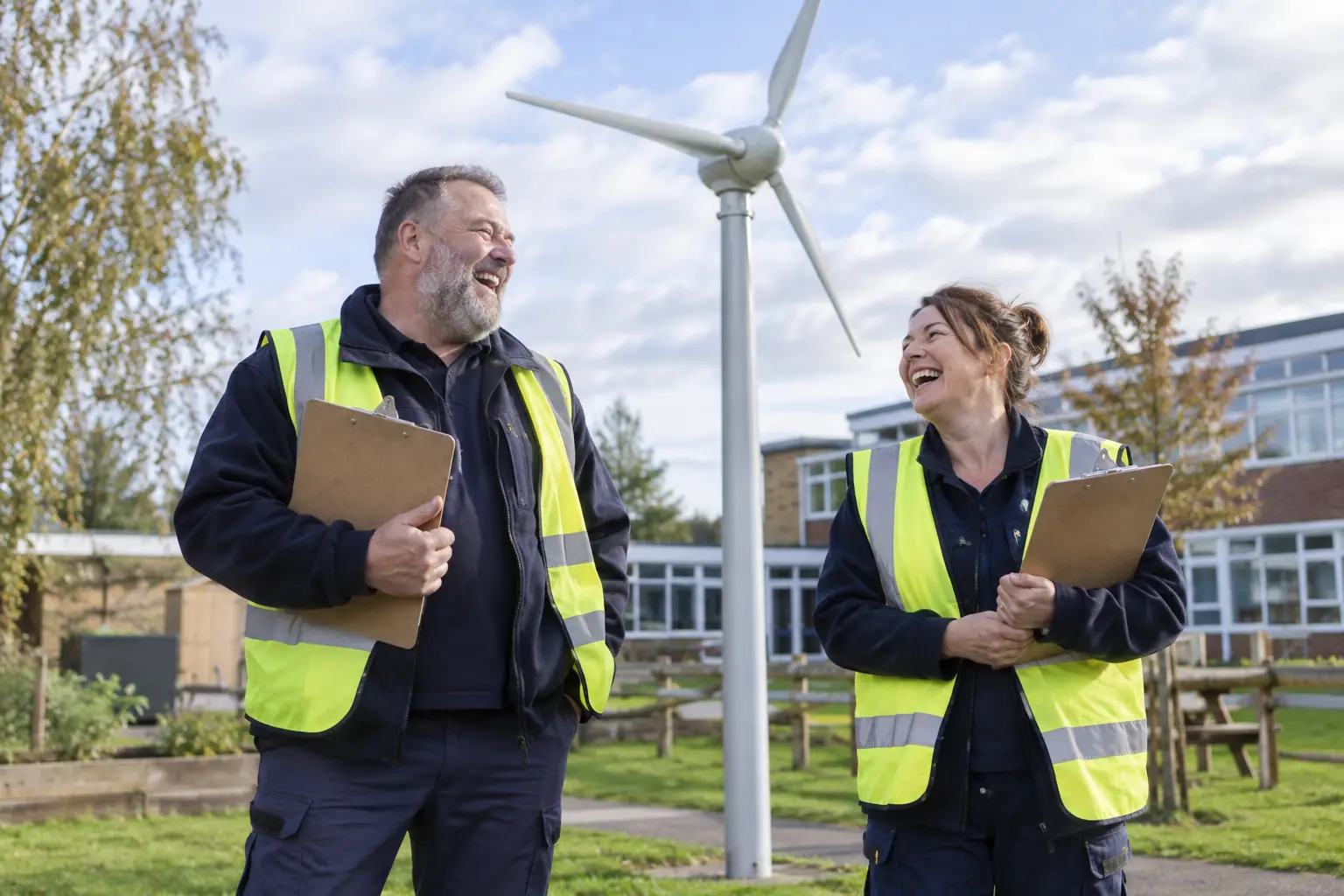
Small onshore wind turbines could soon be easier to install in England, provided the Government’s proposal survives the national tradition of making sensible things queue behind a form asking whether they are absolutely certain they exist. Farms, schools, factories and public bodies may be allowed to install one turbine without submitting planning proposals. The humble shed has taken this personally.
The proposed turbine could stand up to 30 metres tall, which the announcement describes as no bigger than an oak tree. This may reassure planners. It may not reassure the oak, which has spent centuries establishing an extremely high standard for being tall, rooted and quietly useful without requiring a consultation period.
The idea is to let organisations generate some clean power where they use it. A farm could have a turbine. A school could have a turbine. A factory could have a turbine. Every car park now has one more reason to look thoughtfully at the sky while pretending to understand the local landscape.
These would be small onshore wind turbines, not giant new mountains with a customer service department. The proposal concerns one machine, subject to siting and safety conditions. Even so, a turbine has presence. It is a fan with confidence, a timetable and the unnerving ability to achieve something useful without first producing an appendix about the emotional impact on a parking space.
The Government says removing planning barriers and high planning costs could make clean power faster and cheaper. That is a rare and beautiful sentence. Somewhere, a stack of forms is being told that its lifelong career in delaying a practical idea may be coming to an end.
The proposal also presents on site generation as protection from volatile fossil fuel markets. This is the moment when an ordinary breeze starts to look like a valuable colleague. It arrives free, changes direction often and never asks whether the fuel budget has been approved by three committees and a subcommittee.
One turbine will not settle every energy question, power every building or make the weather behave. It could give more organisations the option to produce some electricity on their own land, which is a pleasingly direct idea. The shed, meanwhile, has spent years being the tallest structure on the premises and now faces competition from an outdoor appliance with a national policy attached.
Its owners are reportedly considering a loft conversion, a second storey and a planning application to become a turbine before the turbine becomes a shed.
Source: GOV.UK.