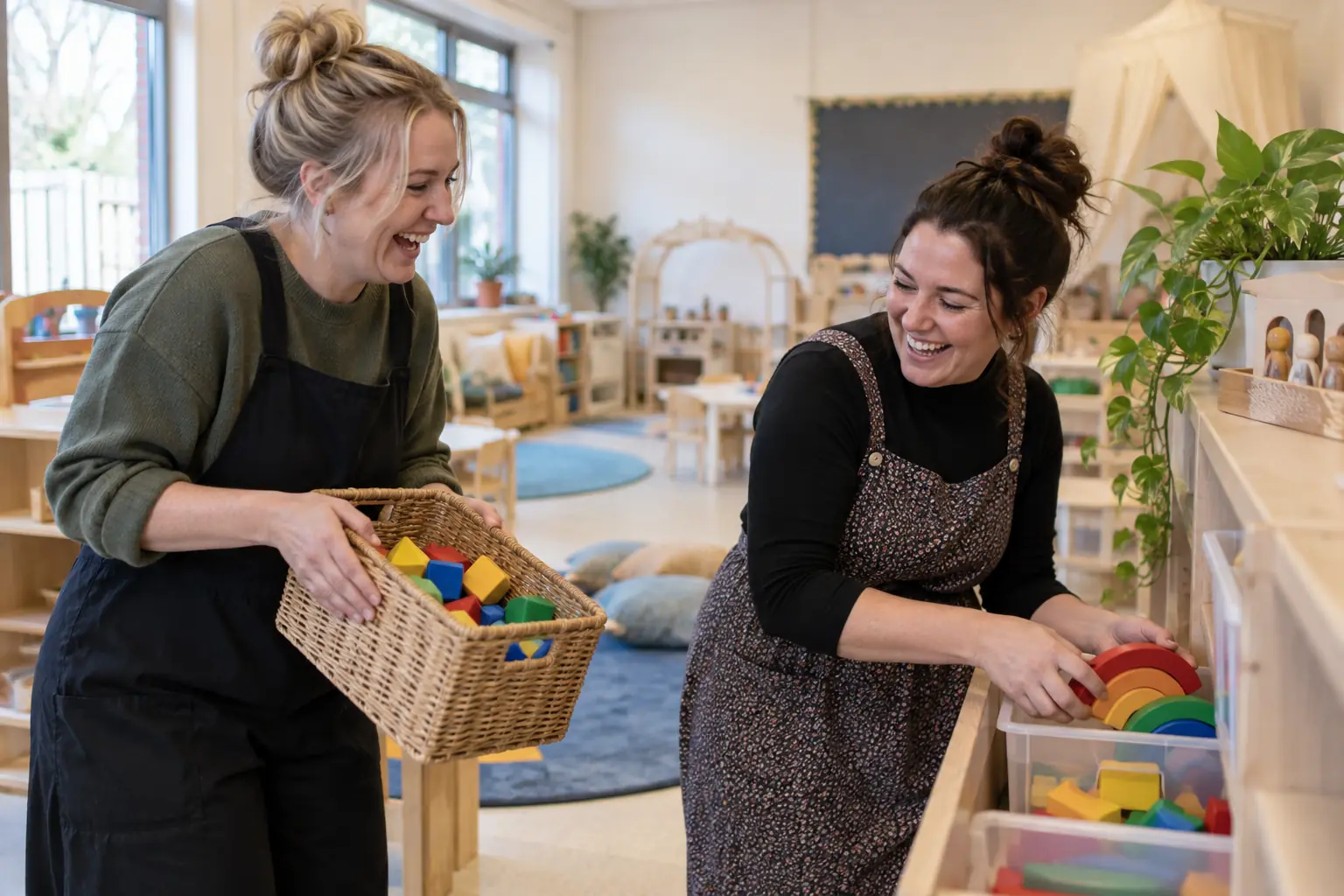
More than 300 schools are preparing to open or expand nurseries, creating more than 6,000 childcare places from September. At last, Britain’s smallest storage fixtures have been given a national mission. Every coat peg is now one ministerial briefing away from calling itself critical infrastructure.
The Government says 331 schools have secured a share of £45 million to create the new places. The programme is aimed at communities where childcare is hardest to find, which means the national childcare strategy has finally reached the point where a low shelf and a responsible adult count as regional development.
This is the useful bit. A nursery on a school site can mean fewer drop offs, fewer journeys and fewer chances for a child to remember an essential item only after the car has started moving. The funded childcare offer is intended to reduce costs for working families too, although nobody has yet calculated the cash value of not having to send a desperate message asking whether anyone has seen a missing water bottle.
For schools, the announcement is an invitation to turn available space into a complete early years system. Classrooms will acquire colourful blocks, low tables and adults who can identify a child’s parent from the back of a coat. The coat pegs will remain silent, but their workload is expected to rise faster than their wages.
The next phase will move towards a locally led model, with councils invited to propose nurseries in communities judged to have the greatest need. Local authorities must now combine budgets, buildings, staffing and the sort of confidence usually found in a project plan whose final page has not been written. Somewhere, a spreadsheet is being taught to believe in family life.
The programme also links nursery provision with family support, health visiting and help for children with special educational needs. In theory, several services will sit under one roof. In practice, several clipboards will sit beside the same coffee machine, while the reception desk develops the calm expression of an institution that has just been asked to solve society.
There is a serious point beneath the peg based excitement. Childcare affects whether parents can work, how families manage money and whether children arrive ready to learn. A shorter morning route can be a meaningful improvement, even if the route still ends with someone asking why they have brought a conker indoors and left their shoes at home.
By September, the Government hopes the new places will support families and prove that the school run can be made simpler. The coat pegs are preparing their own evaluation framework, with targets for capacity, visibility and hat recovery. Britain has built a childcare policy around practical support, and the first performance review will be conducted by a row of wooden hooks judging every parent at the door.
Source: GOV.UK.