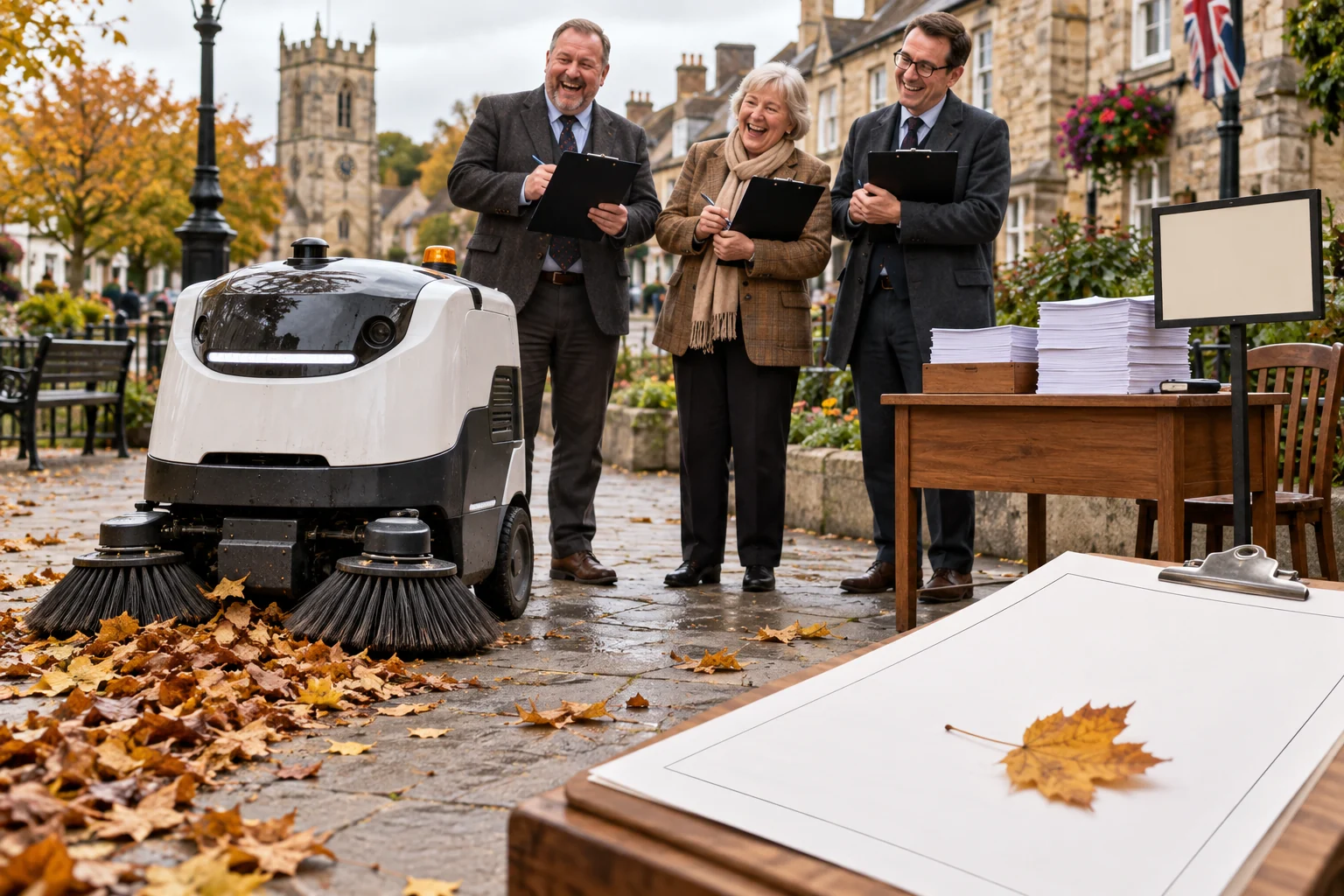
Britain is trialling robots to sweep the streets while attempting to remove the regulations that stop useful technology reaching the pavement. At last, a national innovation programme with a clear division of labour: the machine handles the litter and the officials handle the forms.
The government has announced funding for projects intended to reduce regulatory obstacles around emerging technology. One Milton Keynes project will examine a licensing regime for robots that could clean and de ice pavements. The robot has therefore been granted a more direct route into public life than most citizens, although it may still need to prove that its bristles meet acceptable standards.
The same programme covers drones delivering medicines, artificial intelligence for fire risk assessments and work in engineering biology, space and digital healthcare. These are serious fields with serious risks. Street sweeping is also serious, particularly when a leaf enters a public footpath without completing the correct paperwork.
At the Office of Sensible Machines, innovation lead Janet Brushless welcomed the announcement. “We want technology that helps people,” she said. “We do not want a pavement sweeper to spend six months preparing a stakeholder engagement plan before touching a crisp packet.”
The Regulatory Innovation Office exists to help regulators work with new technologies and reduce unnecessary burdens. This is sensible. Rules can protect the public, but enough overlapping rules can create a second public, composed entirely of people explaining why the first public cannot proceed.
Policy engineer Neville Firmware said the trial would provide useful evidence. “A good test tells you what works,” he said. “A bad test tells you which committee the robot must join before it can report the blocked drain.”
The challenge is to distinguish a genuine safety concern from the familiar British instinct to place every innovation inside a process so carefully managed that nothing remains capable of moving. A robot sweeping a pavement should not be allowed to injure anyone. It should, however, be allowed to encounter a leaf without summoning a review panel.
Public services contain plenty of tasks where better tools could save time and money. They also contain plenty of forms that ask three departments for the same information, then congratulate themselves on creating a joined up service. The robot has one route, one brush and no dashboard. It may be the only participant in the programme that understands what delivery means.
By the time the new licensing system is approved, the Milton Keynes robot may have cleared the pavement, retired and returned as a consultant to explain how it managed to get anything done.