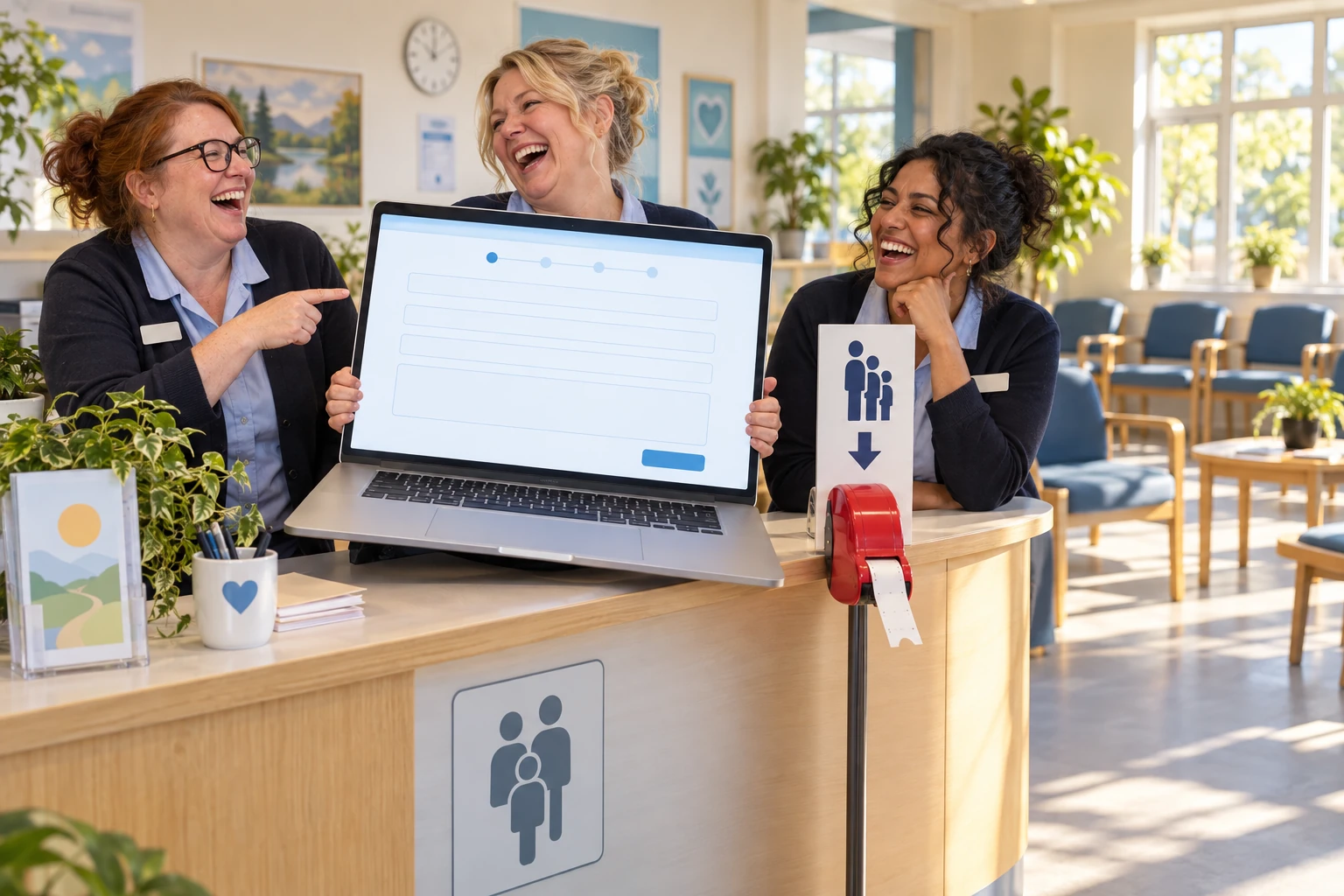
Online GP access now reaches 98.7% of GP practices in England, giving patients a new way to ask for medical help without first completing the traditional NHS ritual of phoning at eight o’clock and being defeated by a recorded voice with a minor in queue management.
The government said on 3 December that patients at nearly every practice could submit online consultation requests during working hours, from 8am to 6.30pm. Eight million online requests were made in October, suggesting that people are keen to contact their GP through a system that does not immediately place them behind somebody asking whether the surgery is accepting new patients.
Online access should make it easier to explain a problem, request advice and reach the right member of the practice team. It also gives patients the useful choice between typing their symptoms into a box and describing them aloud while a stranger’s kettle boils directly into the telephone receiver.
The service is intended for non urgent requests. Urgent needs still require a phone call or an in person visit, which means the NHS has not entirely replaced human contact with a login screen. It has merely created a digital front door where patients can wait politely while the old front door continues to display a sign saying the surgery is closed for lunch.
At the Ministry of Sensible Waiting Rooms, service designer Doris Password welcomed the change. “People need a clear route to care,” she said. “They do not need a portal that remembers their appointment but forgets their surname.”
Online requests can help practices direct patients to the appropriate clinician and reduce repeated explanations. That will be useful for anyone who has tried to describe a rash, a pain or a worrying noise while also trying to establish whether they are number two or number 42 in the telephone queue.
There is still a limit to what software can solve. A digital form can collect information, but it cannot replace judgement, reassurance or the occasional professional expression that says the thing you feared is probably not fatal. It can, however, stop a patient spending half an hour listening to a flute arrangement of a song nobody requested.
Reception technology referee Nigel Keyboard said the next breakthrough should be a system that tells patients where their request is. “Ideally, it would say whether the form has been received, read or quietly transferred to a cupboard,” he said.
The NHS has finally put the waiting room online. Britain can now avoid the queue in person, join it digitally and still spend the afternoon wondering whether a captcha featuring bicycles has made a clinical decision. The future has arrived, and it would like you to reset your password before it can see you.
Source: Department of Health and Social Care.