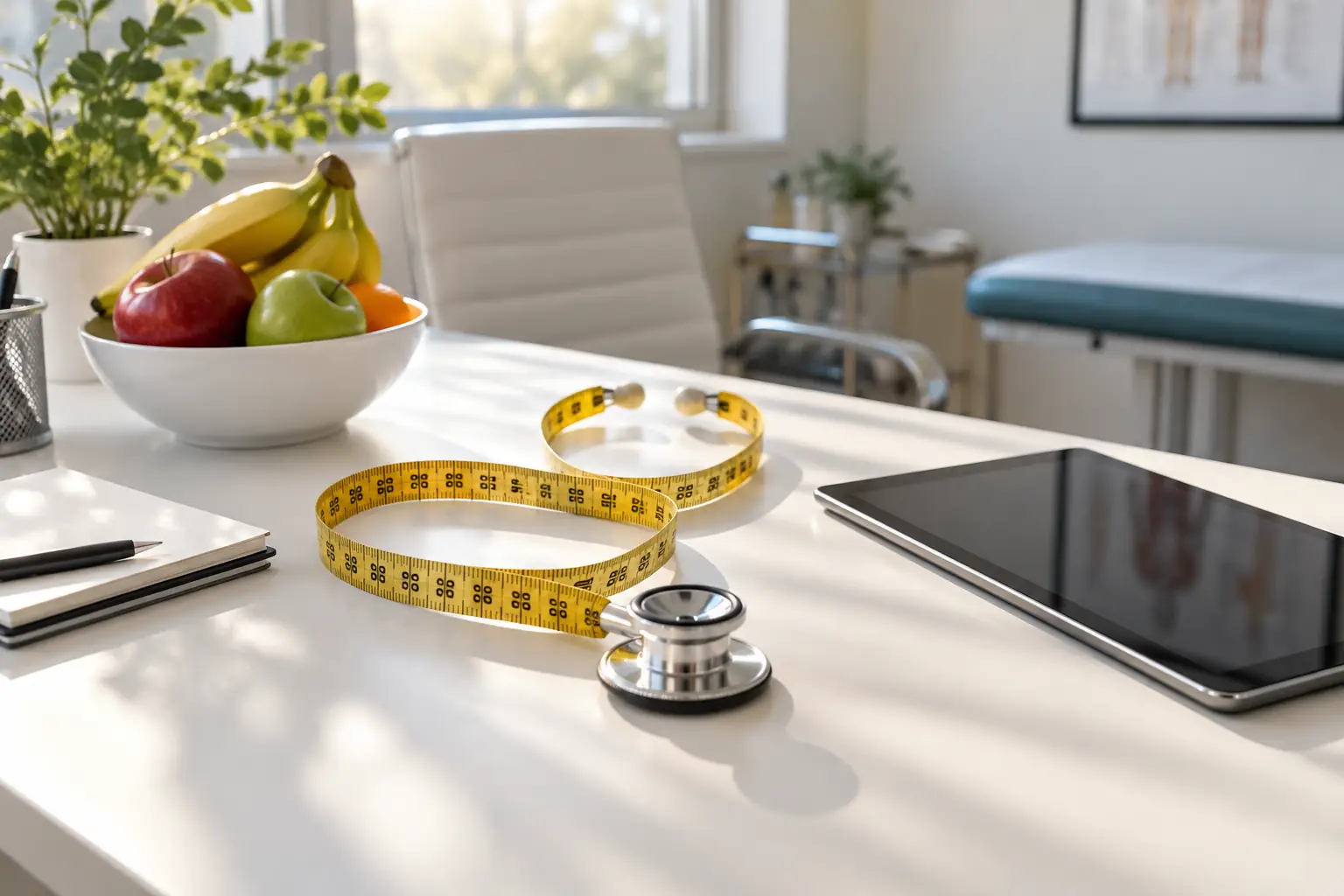
Britain’s new obesity care programme has £85 million, twelve projects and enough digital confidence to make a tape measure wonder whether it should retrain as a doctor. Announced on 27 June 2026, the scheme will test AI assisted triage, virtual advice, neighbourhood hubs and simpler routes into support. The money comes from government and pharmaceutical company Lilly, proving that the modern healthcare journey can begin with a patient, pass through an algorithm and still pause to ask who is paying for the biscuits.
The Obesity Pathway Innovation Programme is meant to make care easier to reach without sending people through the traditional obstacle course of referrals, waiting lists and discovering that the relevant service moved offices three years ago. Twelve projects across the UK will try different approaches, including self referral, pharmacy support, bilingual digital access and advice delivered through WhatsApp.
In Norfolk, Suffolk and north east Essex, AI will help match patients with suitable support. In Kent and Medway, up to 3,300 families will be offered round the clock guidance through an AI powered WhatsApp service. Elsewhere, new hubs will appear in community facilities such as pharmacies and gyms, allowing healthcare to move closer to people without requiring everyone to locate the one hospital car park designed by a military cartographer.
The serious point is access. The programme identifies rural and coastal communities, minority ethnic communities, people with disabilities and families needing early years help as groups that can struggle to reach support. A service that does not assume everyone owns a car, speaks one language or has a spare afternoon for administrative pilgrimage would be useful. It might even leave the tape measure with less work to do.
The funny point is the technological confidence. Policy documents can now announce AI assisted triage with the calm assurance once reserved for “a receptionist will call you back”. An imaginary official from the national queueing department has welcomed the innovation, provided the machine can say “your form is incomplete” in twenty languages and redirect the patient to a different form.
Apps will provide information, pharmacies may offer a local front door and clinicians will assess which support is appropriate, including medication where clinically suitable. The aim is to stop a postcode behaving like a medical diagnosis, a modest ambition only because public services have spent years treating geography as a qualification.
The projects are due to run until March 2029 and will produce evidence about what works and what merely produces a dashboard with a reassuring green arrow. The government hopes the results will shape future care and reduce pressure on frontline services. The tape measure has now requested professional registration, a consulting room and permission to diagnose the filing cabinet.
Britain may finally discover the perfect healthcare model: personal enough to help, digital enough to impress and complicated enough to require another programme explaining how to use it. The tape measure is already taking notes, preferably before the algorithm refers it to a specialist.
Source: GOV.UK.