The Thames is being divided into lanes for the National Sea Scout Regatta, which is perfectly sensible until one rowboat realises that a buoyed channel, patrol launches and a £1,000 penalty have turned two days of racing into the opening ceremony of a tiny maritime state.
An Environment Agency notice says racing will take place on Saturday 4 and Sunday 5 July 2026, from 8am to 6pm, on the Teddington reach between Thames Ditton Island and the River Mole. Racing boats will use a buoyed channel on the Surrey side, while the navigation channel remains on the Middlesex side.
The arrangement is admirably clear. Regatta boards mark the course. Control points and patrol launches can give instructions. Boatmasters must keep a safe speed and lookout, avoid collisions and remember that the river is not an enormous blue corridor in which every vessel is entitled to improvise.
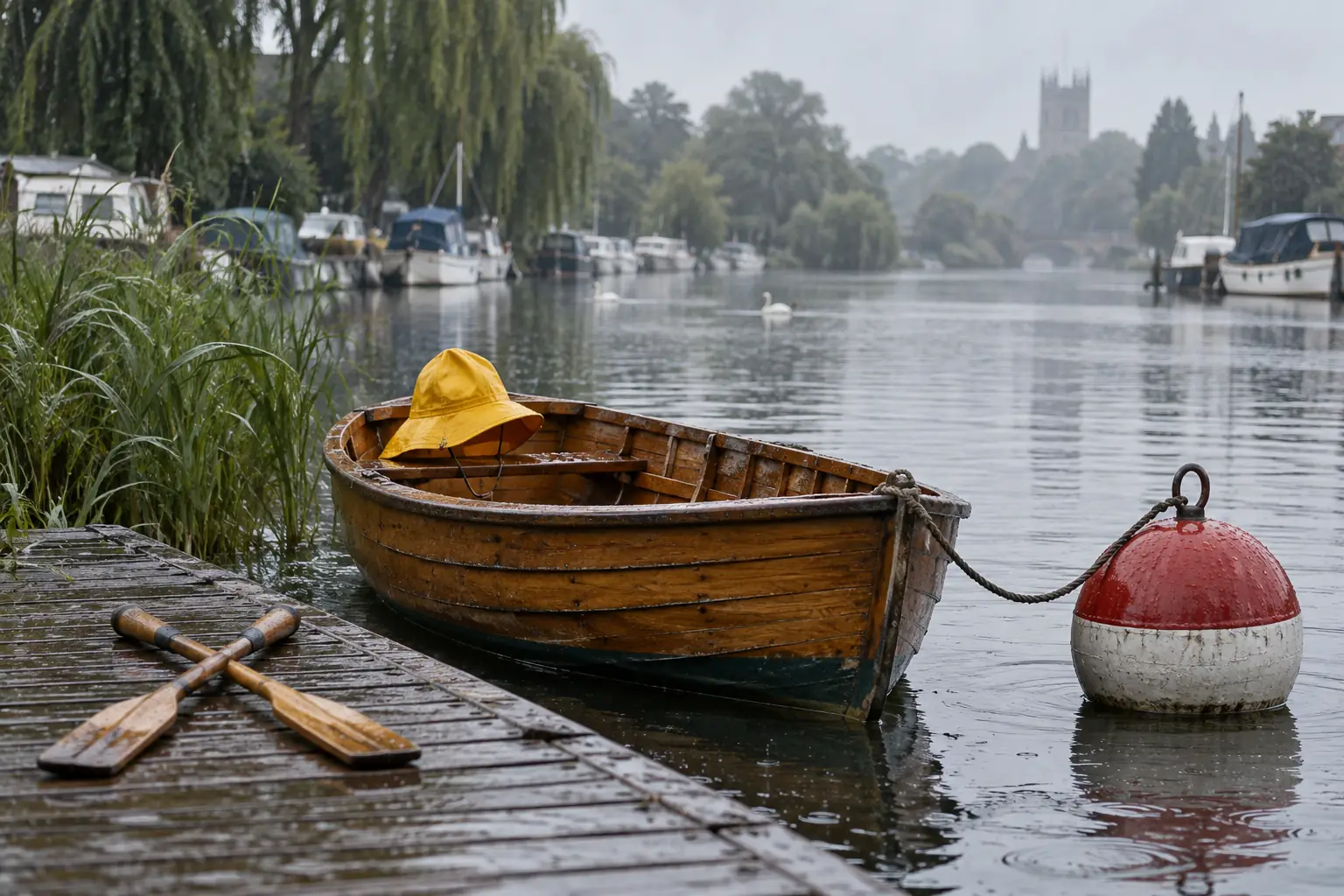
The rowboat has taken this personally. After reading the notice, it appointed itself deputy harbourmaster, deputy compliance officer and acting minister for sensible spacing. Its fictional response consisted of one stern look from the bow and a request for a lanyard with enough authority to survive a light shower.
Bathing is not allowed inside the buoyed channel during the racing hours. Left and right banks are helpfully defined by looking upstream, which is the sort of guidance that becomes necessary after several centuries of people pointing confidently at water and being wrong. The notice also reminds masters that the relevant Thames byelaw can impose a maximum penalty of £1,000 for obstructing or interfering with a race or gathering.
That is the deliciously British escalation. A short stretch of river acquires lanes, boundaries, patrols, control points, formal directions and a financial consequence large enough to make a rowboat reconsider its entire social circle. The bureaucracy is not overreacting. It is simply giving an ordinary event the full ceremonial treatment usually reserved for something with a task force and a commemorative mug.
By 6pm, the racing will be over and normal navigation can resume. The rowboat, however, will remain at the waterline, laughing at its own new importance and demanding to know whether its lanyard needs annual renewal, a risk assessment or a public consultation before it is allowed to drift unsupervised.
Source: GOV.UK.