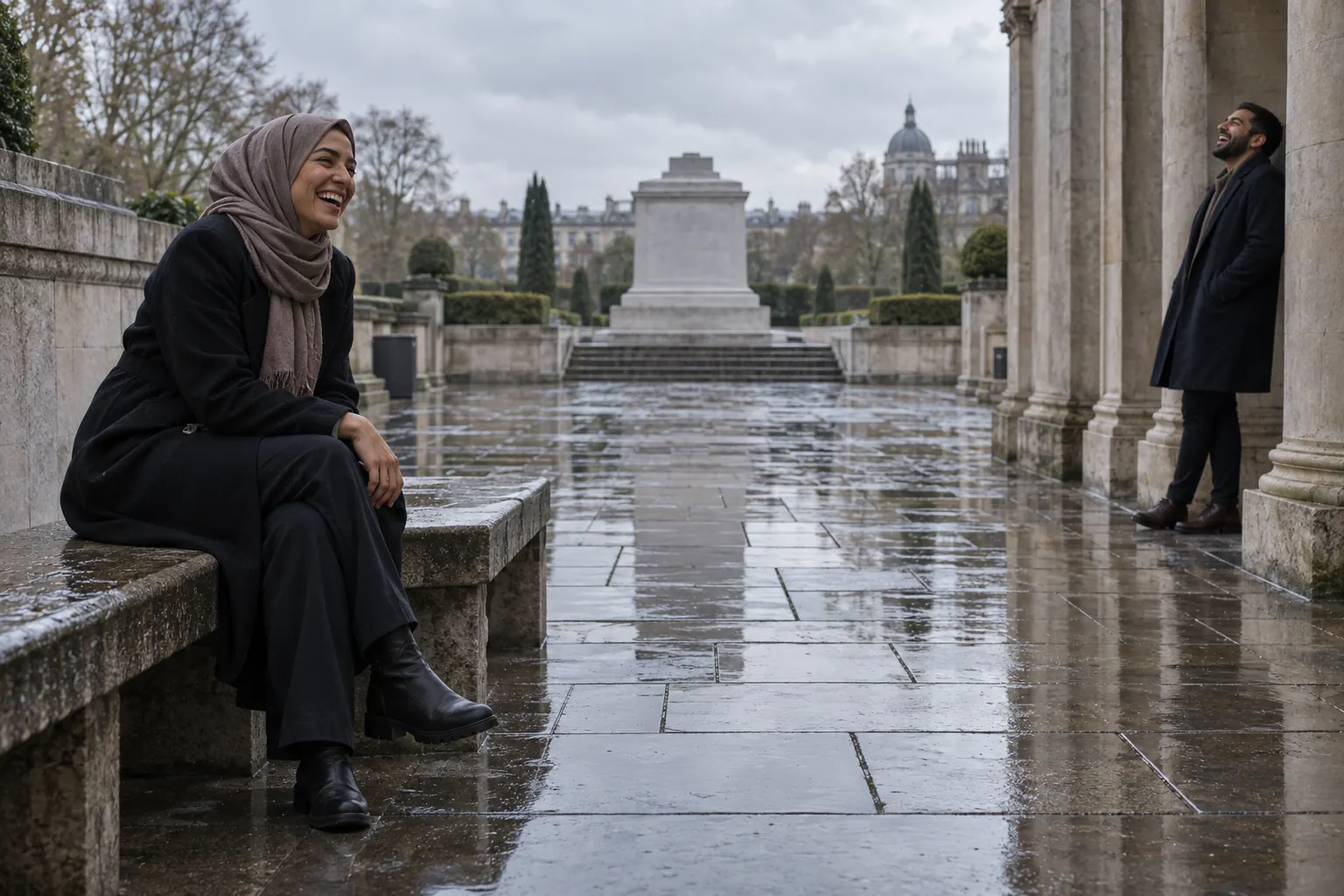
The Government has opened a competition to design and deliver a National Muslim War Memorial, offering up to £970,000 to the organisation that can turn remembrance into a prospectus, a deadline and several solemn meetings about benches.
The announcement recognises the hundreds of thousands of Muslims who served alongside Britain and its allies in the First and Second World Wars. It also asks the successful applicant to support interfaith dialogue and education, so the future memorial must honour the dead, teach history and satisfy whatever the evaluation spreadsheet has highlighted in amber.
There are already an estimated 70,000 war memorials across the UK. The Government says this will be the first prominent national tribute to Muslim soldiers. A historic absence has therefore been handed to the familiar national solution: a funding ceiling, an application window and a request for qualified organisations to explain how they plan to remember people who have already done the difficult part.
Somewhere, a fictional procurement officer is measuring the distance between lasting tribute and please attach your delivery plan. The form presumably wants experience in remembrance, construction and making a national story fit neatly inside the required word count. Applicants may also be invited to explain how their stone, bronze or carefully consulted landscape will demonstrate value for money.
The Government’s announcement points to the service of figures including Khudadad Khan and Shahamad Khan, alongside the wider contribution of Muslim soldiers from the Middle East, North Africa and the Indian subcontinent. Their courage needs no administrative decoration. Yet the modern state appears determined to honour it through the traditional British method of asking a consortium to submit evidence that it can honour courage correctly.
The memorial is also intended to encourage people of different faiths to reflect on shared sacrifice and to teach a chapter of military history left in the shadows for too long. That purpose is serious. The comedy sits in the machinery around it, where remembrance has been given an opening date, a closing date and the delicate responsibility of proving that a plinth can deliver outcomes.
By July, the Government expects proposals from an organisation or group of organisations willing to take on the project. Until then, the memorial is an idea with a budget, a prospectus and the rare administrative privilege of being asked to inspire the country while remembering to attach its delivery plan. Britain has finally found a way to make history apply for permission to exist.
Source: GOV.UK.