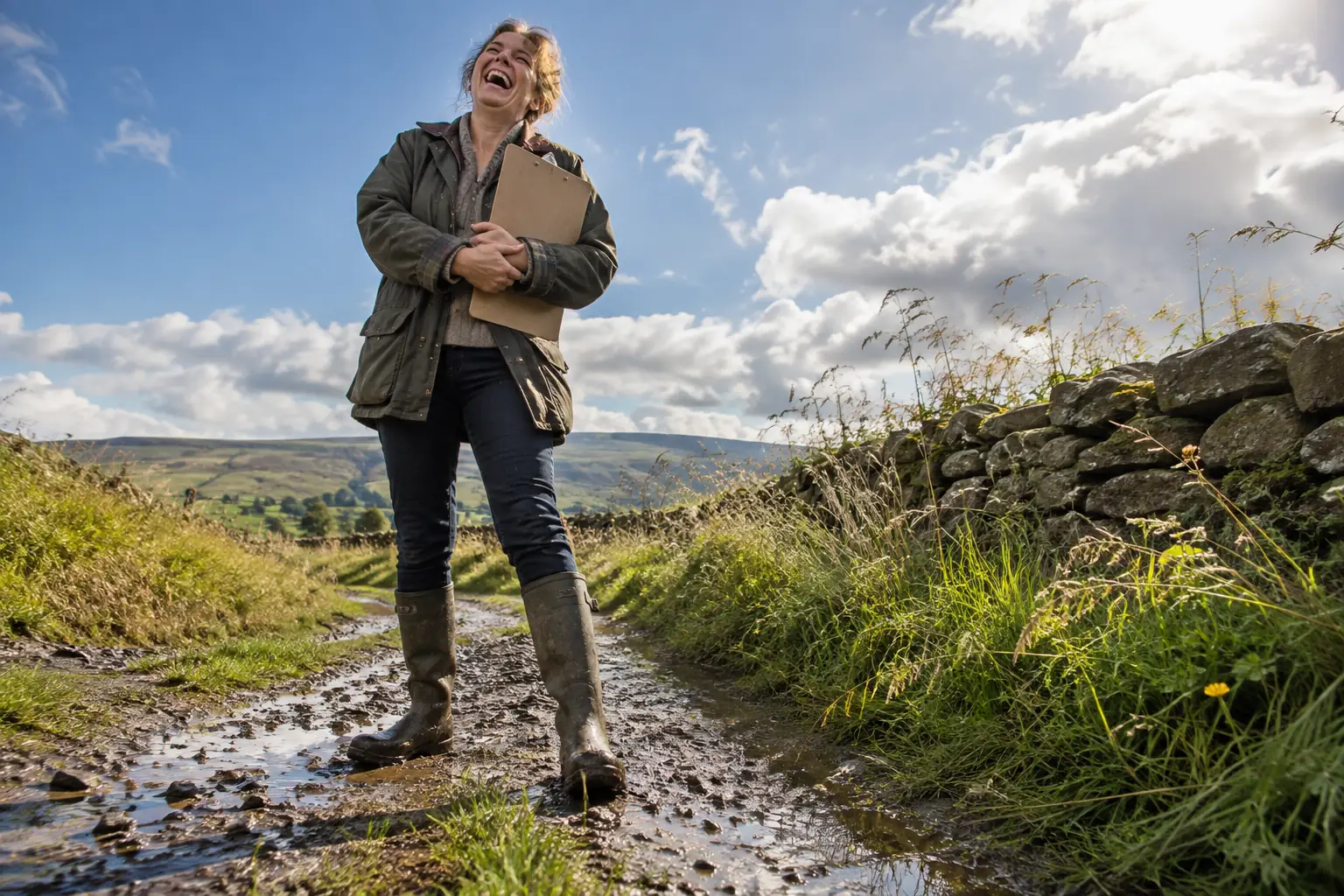
The Future Rural England report has arrived with six themes, a cross government board and the calm confidence of a document that thinks a village can be repaired by arranging its headings correctly. Published on 16 July 2026, it sets out plans for rural communities, including better connectivity, housing, health, skills and economic growth. The Wellington boot has read the summary and is waiting for the countryside to become joined up.
Future Rural England report meets the filing cabinet
The report says rural policy should face rural reality. This is a bold development. For years, reality has apparently completed the paperwork itself and returned it during office hours.
Its six themes cover economic growth, infrastructure and housing, skills and education, health and wellbeing, safety and community resilience, and connectivity. The Wellington boot approves of the breadth. It has always suspected that officials treated its problems as a footwear issue.
The report also proposes a cross government board with annual public reporting. Rural communities may therefore receive regular updates explaining that officials have placed their needs at the heart of policy, somewhere between the agenda and the refreshments.
When rural proofing becomes a full time job
The Future Rural England report contains a useful contradiction. Departments must consider rural consequences before policies arrive. That should prevent them discovering the countryside later, when a bus route has vanished and broadband has become a rumour.
Fictional rural policy officer Mabel Thistledown has prepared a complete assessment of how government decisions affect villages. She then spent forty minutes trying to submit it online. The connection offered a moving tribute to rural heritage by disappearing.
The report identifies transport, digital access, health inequalities and affordable housing as genuine challenges. Its answer is better coordination and clearer accountability. That may work. The Wellington boot has requested a second board to check whether the first board has noticed the countryside.
A report that wants to be a bus
The Future Rural England report cannot build a house, restore a service or strengthen a weak signal by calling it connectivity. Its promise is more modest. Departments should understand the places their decisions affect and report what happens next.
That is almost revolutionary. The Wellington boot has prepared its own rural action plan with six themes, one annual review and a sign reading “Please prove this worked” outside the filing cabinet. The cabinet has formed a working group to consider moving it.
The working group has requested a subcommittee, a listening exercise and a pilot scheme. The Wellington boot has requested a bus. The filing cabinet has asked whether the bus can first complete a rural impact assessment.
Source: GOV.UK.