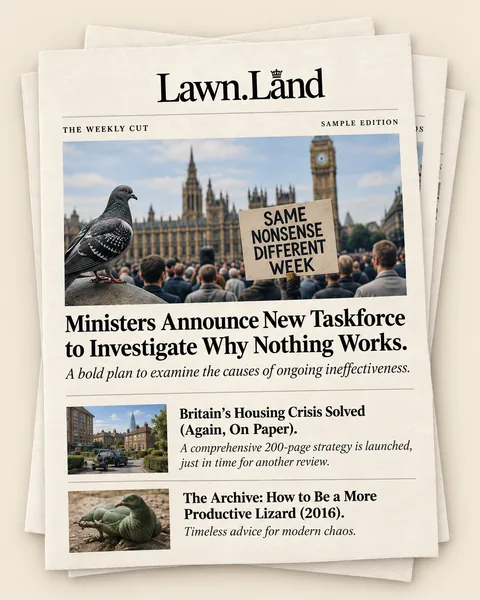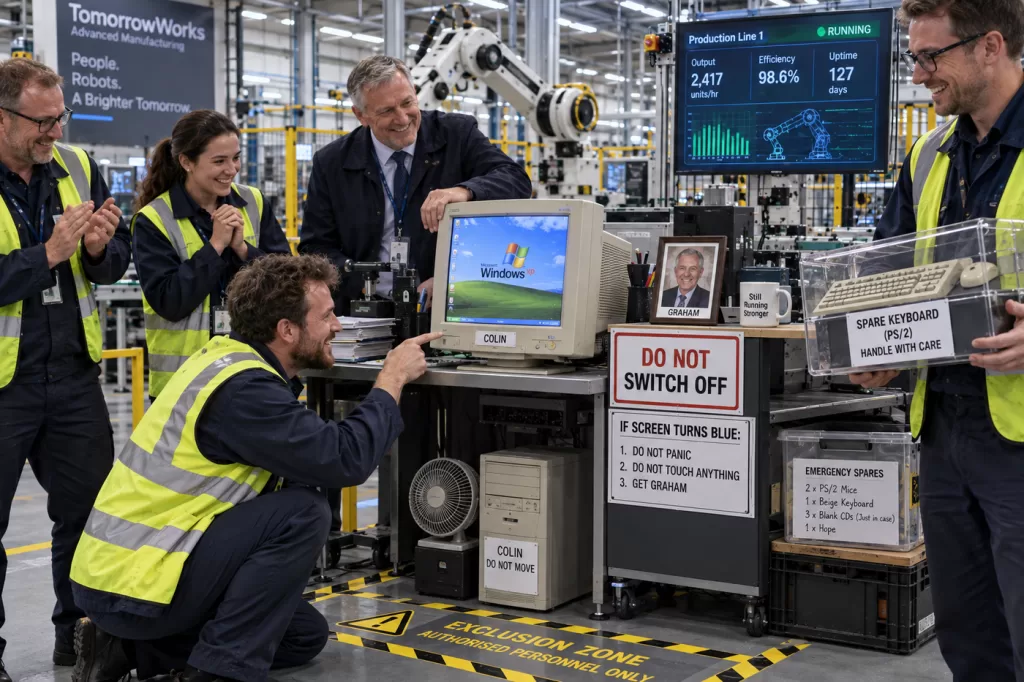

Businesses have reported that economic uncertainty remains their biggest challenge, giving Britain’s finance departments the rare pleasure of being completely certain about one thing: nobody knows what is happening.
The Office for National Statistics found that 31% of trading businesses said economic uncertainty was affecting their turnover in early January. Among businesses with ten or more employees, the leading concern was the cost of labour, reported by 36%.
The figures came from the voluntary Business Insights and Conditions Survey, described as official statistics in development. The economy has therefore not only become difficult to predict. It has also been given provisional status and asked to supply its own confidence intervals.
Businesses were not entirely without hope. Sixteen per cent expected their turnover to increase in February, while 20% expected it to fall. The remaining firms presumably planned to wait until February before deciding whether their spreadsheet was optimistic or merely using a brighter shade of blue.
Penny Ledger, Chief Reader of the Small Print, said the figures showed that uncertainty was being managed responsibly. “We have divided it into short term uncertainty, medium term uncertainty and uncertainty about whether the first two categories are still available,” she said.
The survey also found that 32% of trading businesses reported a fall in turnover in December compared with November. That was the highest proportion recorded since the question was introduced, although the ONS noted that the movement was broadly in line with patterns seen at the same time in previous years.
This created a difficult communications problem. A business could be performing badly, performing normally, or performing normally while feeling bad about it. All three conditions now require a dashboard, a briefing note and a meeting called Unlocking Resilience Through Clarity.
Labour costs were also the leading factor for businesses considering price rises in February. The sensible response would be to examine costs, prices and demand. The modern response is to open a fourth spreadsheet called FINAL FINAL USE THIS ONE and invite everyone who has ever used the phrase “circle back”.
The ONS cautions that survey respondents may not have full oversight of their businesses’ future expectations. This is reassuring. The forecasts are not necessarily wrong. They may simply have been prepared by somebody still waiting outside the meeting room, where the economy has finally reached its most accurate prediction: another meeting about the last meeting.
Source: Office for National Statistics.