Bank Rate cut wins narrow arithmetic contest
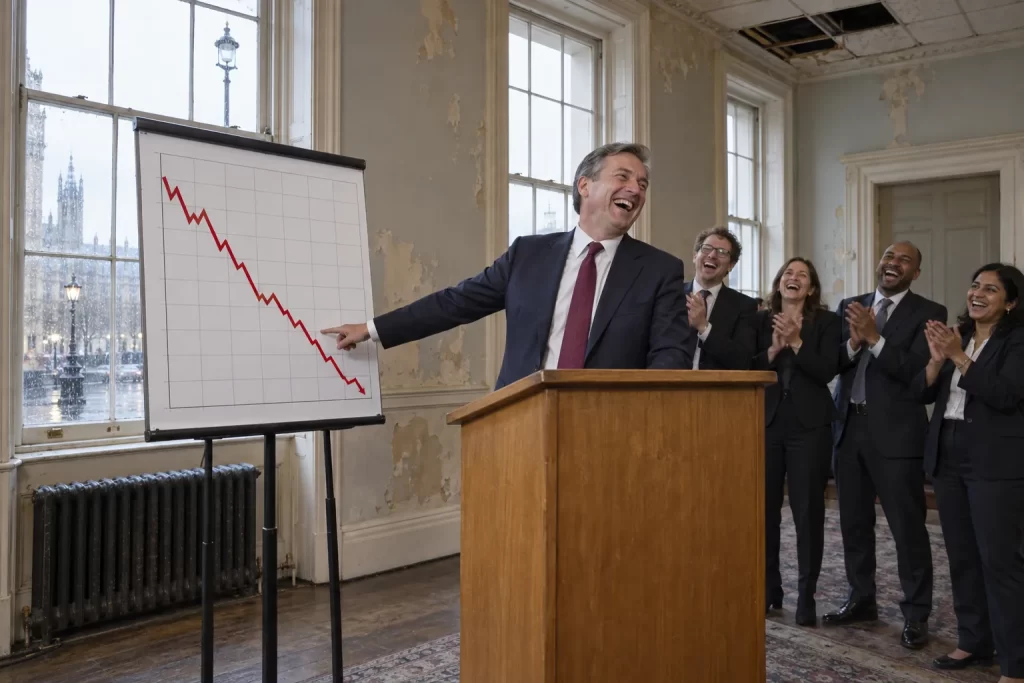
A Bank Rate cut has lowered the figure by a quarter point to 4.25%. The decision passed 5–4, the monetary-policy equivalent of carrying a sofa through a door while everyone gives different angles.
Five committee members chose the quarter-point cut. Two wanted half a point, while two preferred no change. Nine experts therefore created three answers, which is excellent productivity by economics standards.
The Bank noted progress on inflation but still expected price pressures to rise during the year. Rates remain restrictive, a technical phrase meaning the medicine is working but continues to taste like remortgaging.
“A quarter point sends a finely calibrated signal,” said Prudence Basis-Point, Keeper of the Ceremonial Calculator. “A half point would require us to unfold the larger ruler.”
Borrowers may welcome lower rates. Savers may not. Markets had already spent days predicting the decision, then reacted with surprise that it resembled one of their predictions.
At the Museum of Forward Guidance, curators moved the word “gradual” into a temperature-controlled display. Visitors can view it from either side, depending on their mortgage renewal date.
The committee will keep watching data. The data has asked for privacy after nine adults stared at it until it became a decimal.
Read the real story: the Bank of England’s May interest-rate decision.