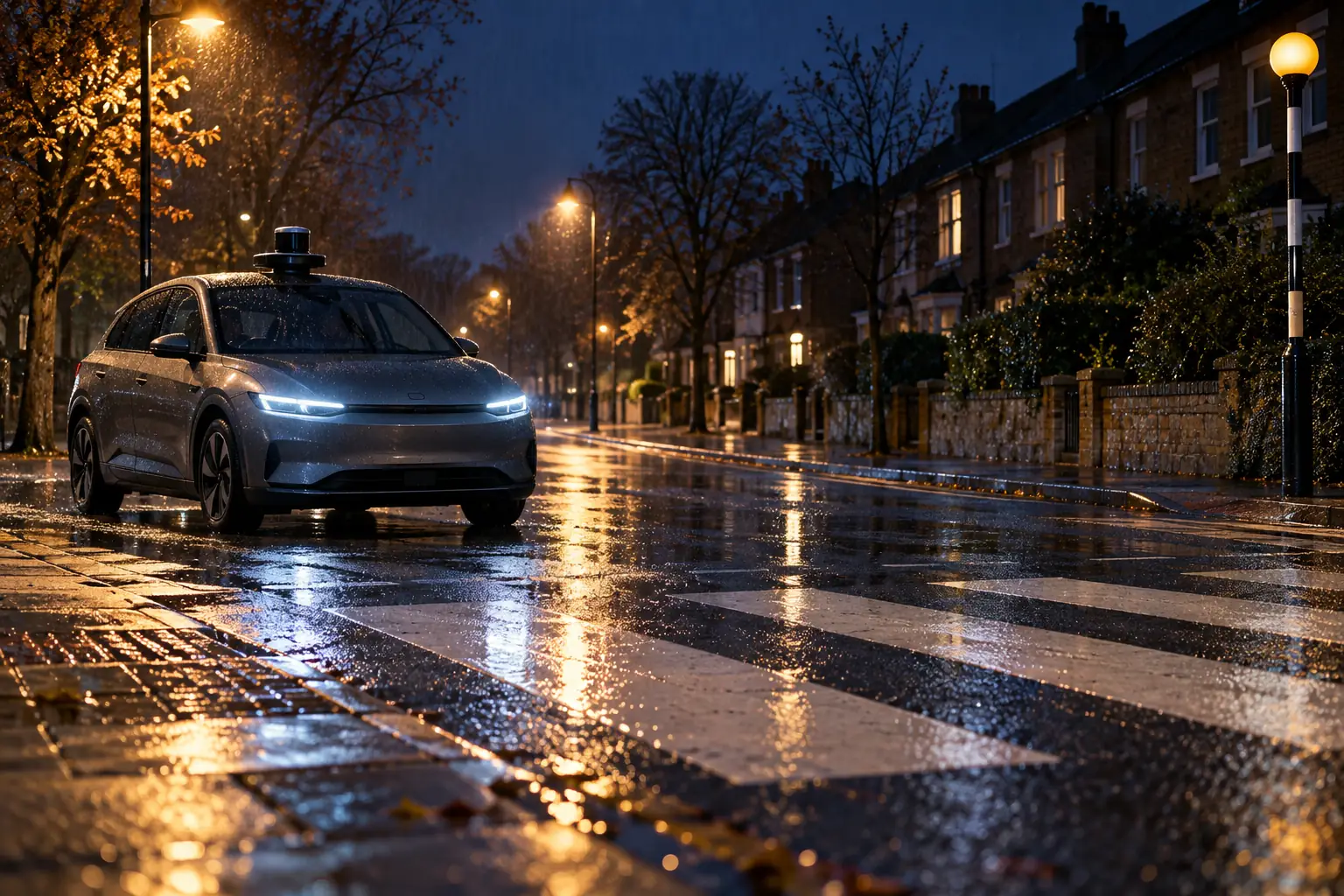
Britain has invited self driving cars to explain how they intend to be safer than people, which is an ambitious request to make of anything that has spent years trying to park without emotional support.
On 17 June 2026, the Department for Transport and the Centre for Connected and Autonomous Vehicles opened a consultation on draft safety principles for automated vehicles. The principles are intended to support the safe and responsible introduction of self driving vehicles on British roads. They would also require those vehicles to meet a higher safety standard than the average human driver.
This is awkward for humanity, which has spent decades treating the road as a private theatre for impatience. The Government says drivers contribute to 88% of reported road collisions. The car has therefore been asked to exceed the national driving standard while quietly wondering whether this is a high bar or simply a kerb.
The consultation is open until 9 September. The public, industry, road safety groups, accessibility organisations and local authorities are invited to submit their views. The process is intended to establish clear safety expectations before automated vehicles are approved for use.
That means the machine must demonstrate that it can handle the road, protect passengers and resist cyber threats. Humans, by contrast, appear to have secured approval on the basis that they can find the brake pedal most of the time and do not need a software update after reversing into a shrub.
The policy also presents self driving technology as a way to improve independence and mobility for older and disabled people, while supporting jobs and economic growth. This is the sort of future in which a vehicle can provide freedom, provided the paperwork has first confirmed that freedom is operating within its approved lane.
The consultation is sensible. Clear principles are needed before automated vehicles become ordinary transport rather than a research project with indicators. But the spectacle remains remarkable. Britain is preparing to teach cars responsibility by asking them to outperform the people who wrote the Highway Code, ignored it in a queue and then blamed the sat nav. The car may soon be the only road user required to pass an exam before being allowed to make everyone late.
Source: GOV.UK.