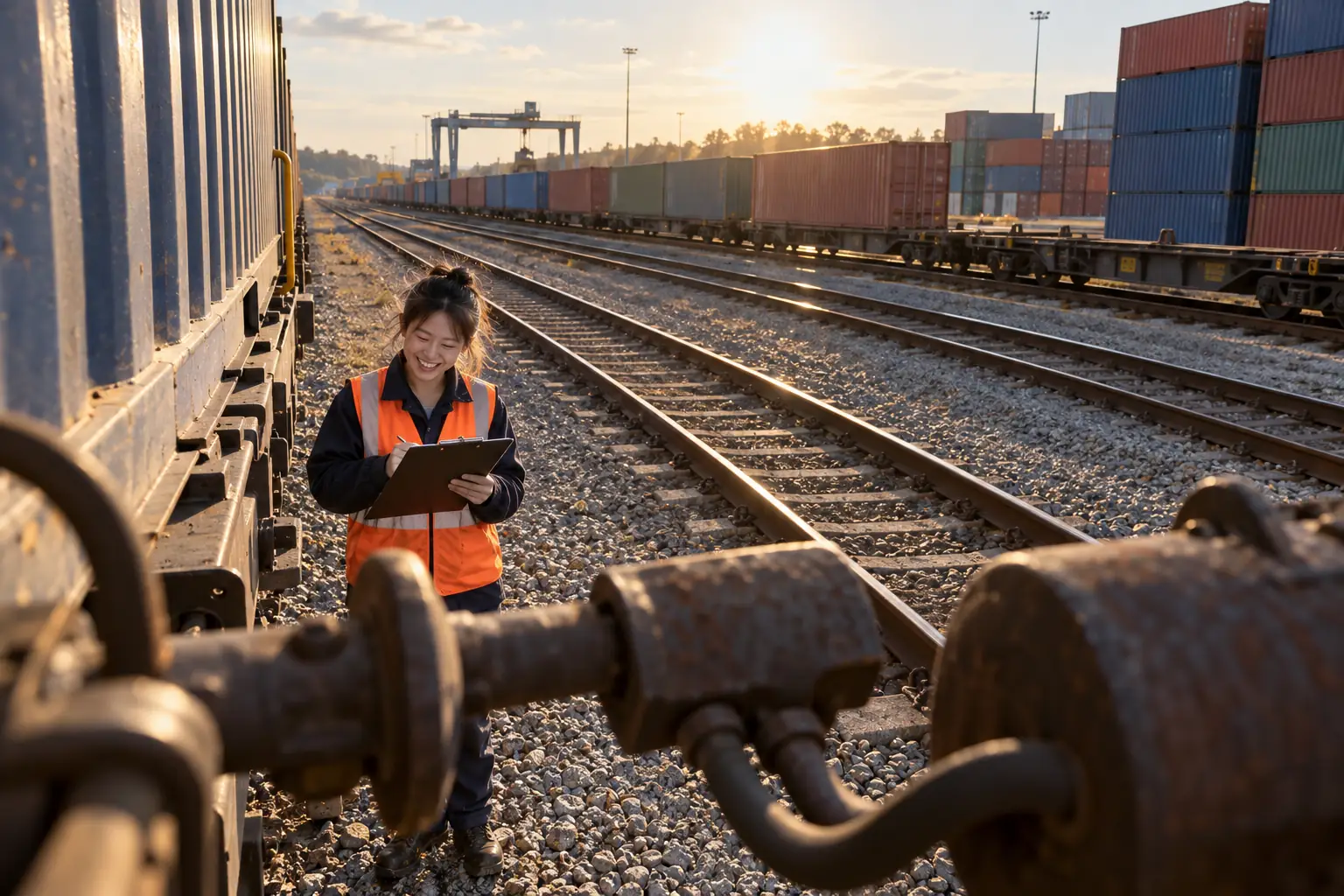
The rail freight growth target has arrived with the confidence of a lorry that has discovered a second gear. On 8 September 2026, the government announced a target to increase rail freight by at least 40% by 2040, with an ambition of at least 75% growth by 2050. Great British Railways is being lined up to help deliver it. The plain unmarked freight container has therefore begun preparing for a management role.
The proposal is presented as a way to move more goods, strengthen supply chains and support economic growth. The government says meeting the target could mean around £15 billion more goods moved by rail each year, while reducing congestion and carbon emissions compared with moving the same freight by road.
This is a substantial plan. It is also a remarkable amount of confidence placed in a system whose most visible experts are often passengers standing beneath a board saying “Delayed”. The rail freight growth target asks the network to become more ambitious while the container waits patiently for someone to explain where it is going.
The rail freight growth target meets the timetable
The Railways Bill was entering committee stage in the House of Lords when the announcement was made. The proposed Great British Railways would receive strategic oversight of network access and duties to support freight growth. A dedicated board member would also represent freight operators and the businesses relying on them.
In the fictional minutes of the first planning meeting, the container raised one question. Did “growth” mean more trains, more goods, or simply a larger folder labelled Growth? It was reassured that all three possibilities remained on the table, provided the table could be reached by rail.
There is a sensible contradiction at the heart of the plan. The railway is being asked to carry more of the economy while making room for passengers, construction materials, cars, wine, white goods and medicine. One freight train can carry enough material to build around 30 homes. It may soon also carry the paperwork confirming that the homes are still awaiting planning permission.
A target with its own platform
The government says the rail freight growth target could save up to one million tonnes of carbon dioxide a year compared with moving the same goods by road. That is a useful case for shifting freight. It is also the sort of number that makes every container feel briefly responsible for the planet.
The plain unmarked freight container has now created a five year plan. First, it must be moved. Then it must be moved more often. Finally, it must attend a review meeting about why it has not moved quickly enough. By 2050, it expects to have achieved at least 75% growth, or at least found a convincing way to describe a very large queue as progress. The container has applied for the board position. It is currently waiting for a platform.
Source: GOV.UK.