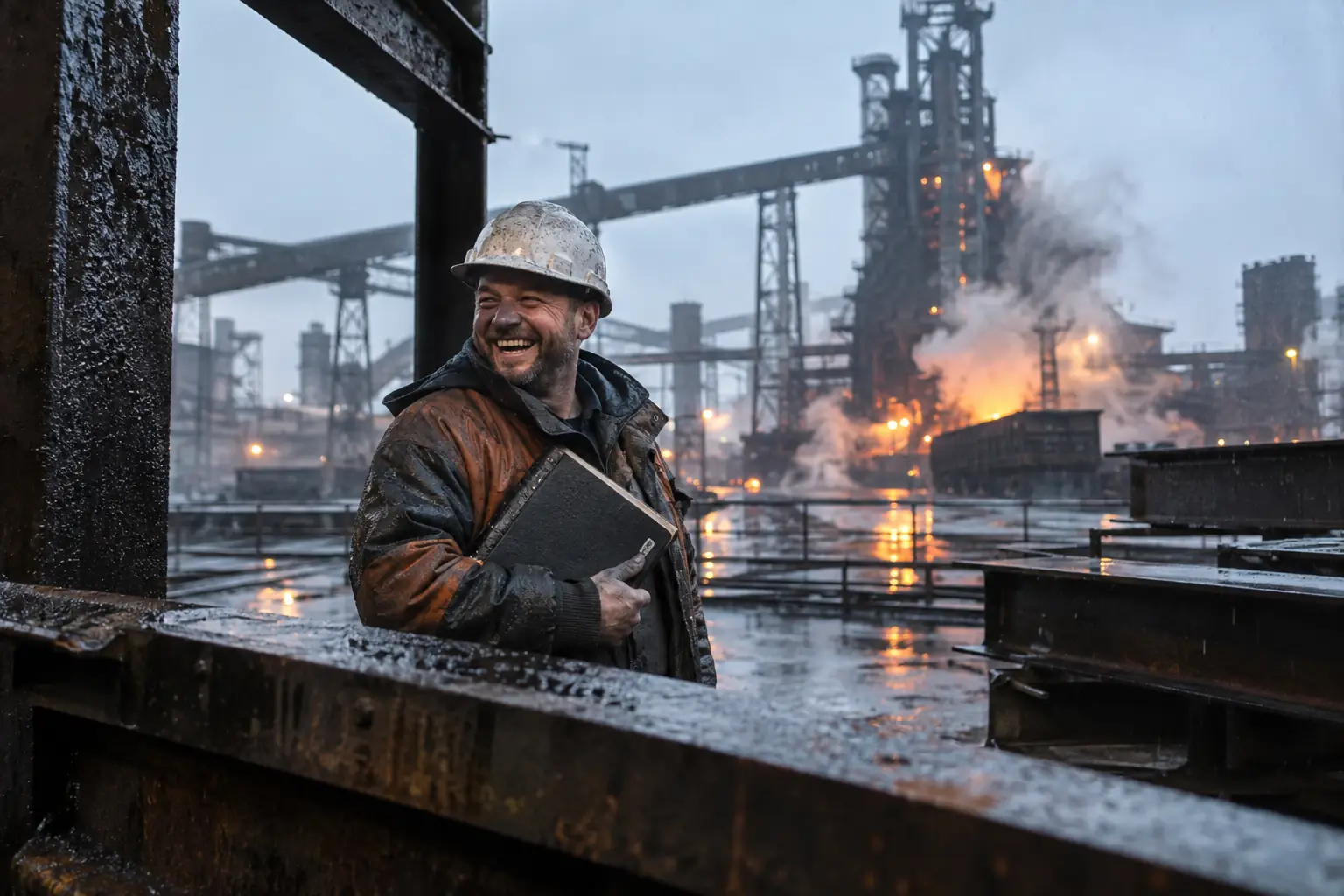
British Steel public ownership has arrived with a serious purpose and a polished clipboard. On 16 July 2026, the government took British Steel into public ownership. It said the move would protect steel production, thousands of jobs, supply chains, infrastructure and national security. A new leadership team will stabilise the business and develop a commercially sustainable, lower carbon future. The hard hat nodded carefully, then asked whether the meeting included biscuits.
British Steel public ownership in the ledger
The Steel Industry (Nationalisation) Act received Royal Assent on 15 July. The next day, British Steel entered public ownership. Ministers said the decision followed intervention since April 2025 and the failure to reach an agreement with the former owner that would protect the company and deliver value for taxpayers.
The official plan has several sturdy legs. It must maintain production, protect jobs, support supply chains and preserve a strategic national capability. It must also make the business greener and commercially sustainable. That is a lot for one policy table, especially when the taxpayer is already carrying the table.
Public ownership can therefore look like both a destination and a waiting room. The government says it can stabilise the business while exploring possible private sector investment for its longer term future. British Steel public ownership has opened the door to the market, but only after the state has found the key, repaired the hinges and paid for the welcome mat.
The hard hat checks the small print
A fictional government ledger now has four columns. They cover jobs protected, furnaces operating, carbon reduced and future options explored. A fifth column appeared after lunch. It records things the taxpayer may eventually be asked not to notice.
The contradiction is not that the state has intervened. Steel is plainly tied to infrastructure, defence, energy and national resilience. The joke lies in the paperwork. It tries to make rescue, industrial policy, national security and future commercial sustainability look like separate appointments rather than one very long meeting.
The new leadership faces serious work. It must manage health and safety, maintain production and work with staff, unions and management. Those duties make the phrase “quick win” leave the room, collect its coat and avoid eye contact.
British Steel public ownership, with an exit drawer
For now, the hard hat remains optimistic. It has labelled one drawer “national capability”, another “lower carbon future” and a third “possible private investment”. The last drawer is locked, but everyone has been given a key.
British Steel public ownership has begun as a rescue dressed for a strategy launch. If it works, ministers can point to a saved industry. If it struggles, the ledger can be reopened and the headings rearranged. The final form is stamped: Britain remains open for business, provided the taxpayer opens first and remembers where the spare keys are kept.
Source: GOV.UK.