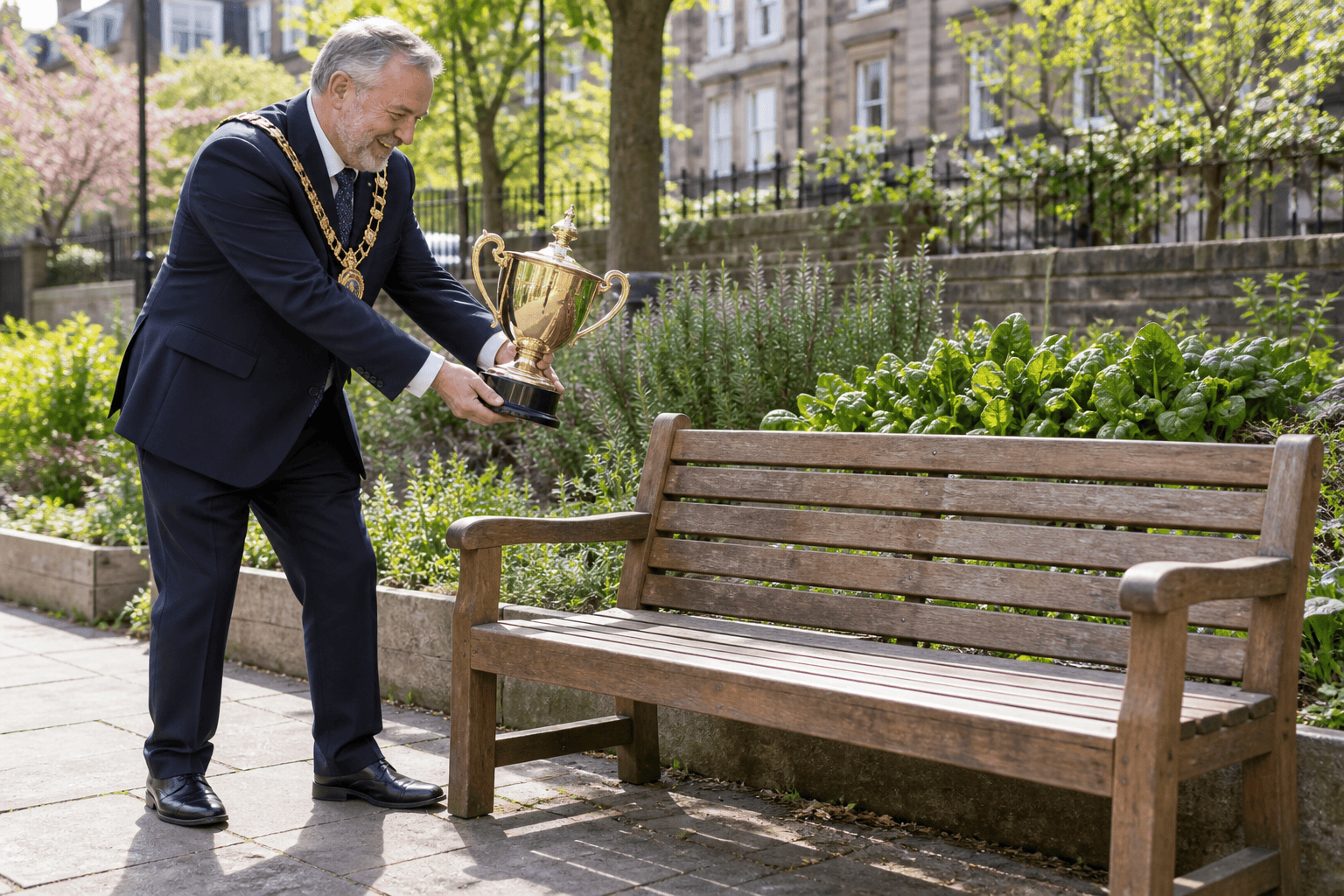
Ten cities have received WHO Healthy City awards after proving that urban wellbeing can be measured by how close a resident may stand to a vegetable. One council submitted a bench facing some spinach, provided residents first crossed a six lane road and survived the crossing.
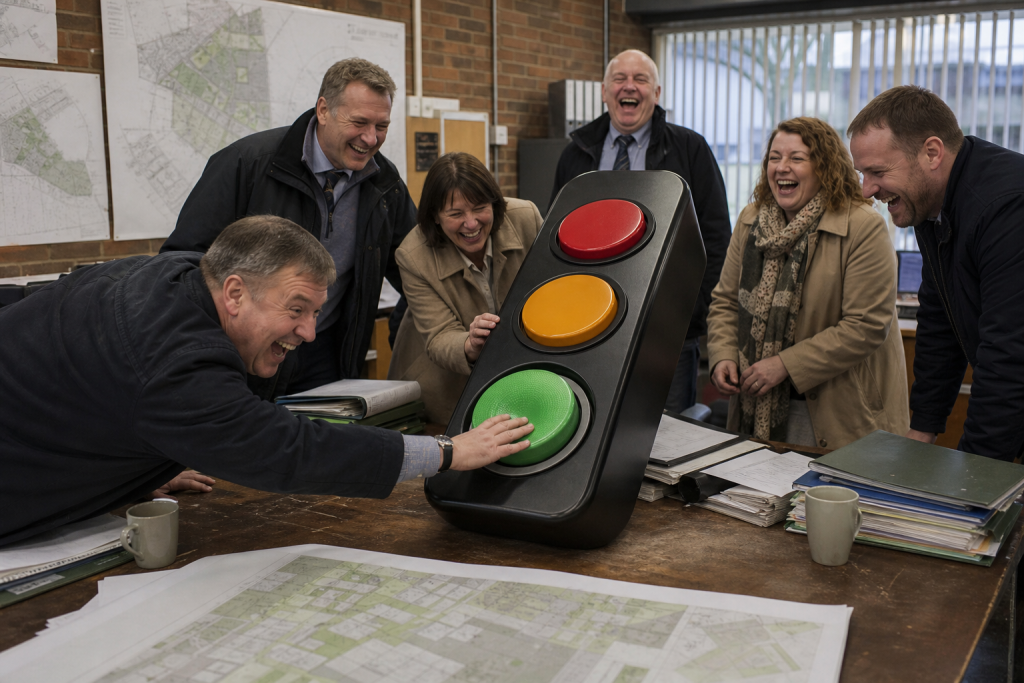
WHO judges considered parks, safe walking, care for older people and health services. Local officials instead produced a map where every dual carriageway appeared as a soothing mint ribbon. The map has since received planning permission for a quieter life than its users.
WHO Healthy City awards now available by appointment
Clive Salad Adjacent of the Municipal Wellness Beacon said residents could reach a park in fifteen minutes. “That includes fourteen minutes crossing the ring road and one minute being told the gate is locked for biodiversity.”
The panel wanted proof of active travel. The council put a step counter in the town hall lift. It recorded 900 journeys before lunch. Officials promoted the lift to Head of Exercise and awarded it a lanyard.
A healthy eating zone also opened between a doughnut shop and a larger doughnut shop. It contains one fruit bowl. Staff replace the fruit each Tuesday, unless the pear has become an ambassador for composting.
The city then launched an age friendly seating scheme. Each bench received a QR code explaining why maintenance had removed the seat. Older residents can read it while standing beside a sign that says community resilience.
Officials unveiled the award by the spinach bench. A pigeon stole the ribbon, flew over the ring road and became the borough’s most successful active travel programme.
By evening, the council had declared the pigeon a public health partner. It will receive £40,000 to deliver crumbs to people who cannot reach a park without a risk assessment.
Read the real story: WHO’s Healthy City awards announcement.