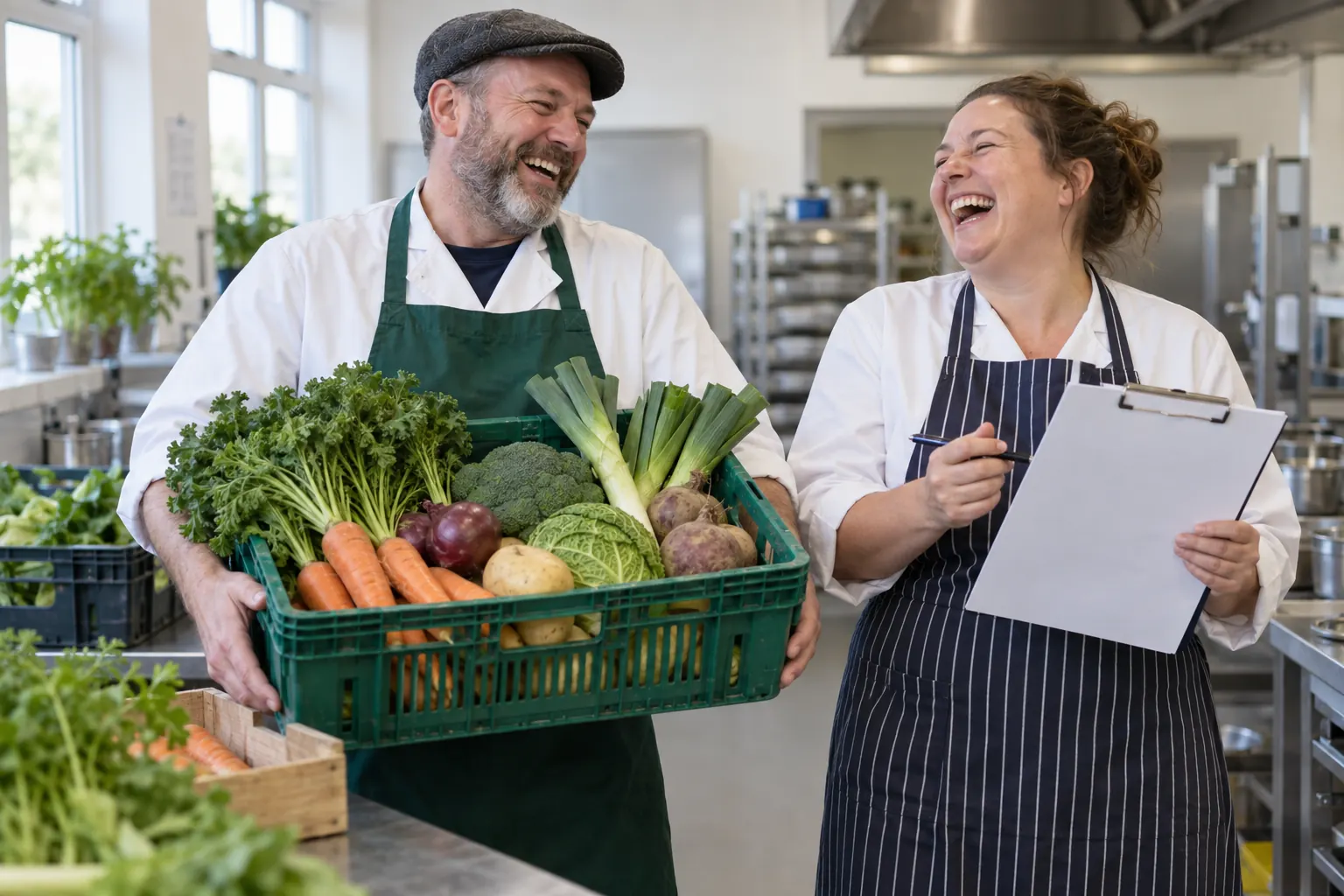
Selected councils are being given £155,000 each to improve how public food is bought, which means the nation has finally admitted that a school dinner begins several miles before anyone finds it on a tray. A cabbage has welcomed the investment and asked whether the tender is available in a font it can digest.
Defra says councils including Middlesbrough, Brighton and Hove, Bristol and Cambridge will use the grants to improve procurement, offer healthier and more sustainable food, and help local and small food businesses supply the public sector. This is encouraging news for anyone who can grow a perfect carrot but has previously been defeated by a form asking for a fourteen page account of its carrot strategy.
England’s public sector spends £4.9 billion a year on food and catering. That is an impressive amount of purchasing power, although much of it appears to be kept in a room where nobody may say “local” until the procurement framework has completed its risk assessment and located the correct spreadsheet.
The scheme is intended to help councils learn from existing good practice and build stronger local supply chains. It also supports the government’s ambition for at least half of public sector food to come from local sources or suppliers certified to higher environmental standards.
The humble lunch tray has therefore been promoted to national infrastructure. A patient’s soup, a pupil’s vegetables and a worker’s sandwich may now carry the full weight of food policy, environmental standards, public health and a partnership meeting booked for 3.30pm.
The challenge is not simply persuading councils to buy better food. It is persuading the system that a small supplier is still a supplier when it does not employ a compliance manager, a procurement lawyer and someone called Gareth who knows where the spreadsheet lives.
The cabbage has submitted its bid. It is local, sustainable and certified to a higher environmental standard, although it has declined to say whether it can provide three years of audited accounts. The carrot has offered to act as a referee, provided nobody asks what it does for a living.
Public money can support healthier meals, local businesses and more resilient food supply chains. It can also produce a tender process so nourishing that the vegetables may be the only applicants left standing, fully qualified and still waiting for permission to mention lunch.
Source: GOV.UK.