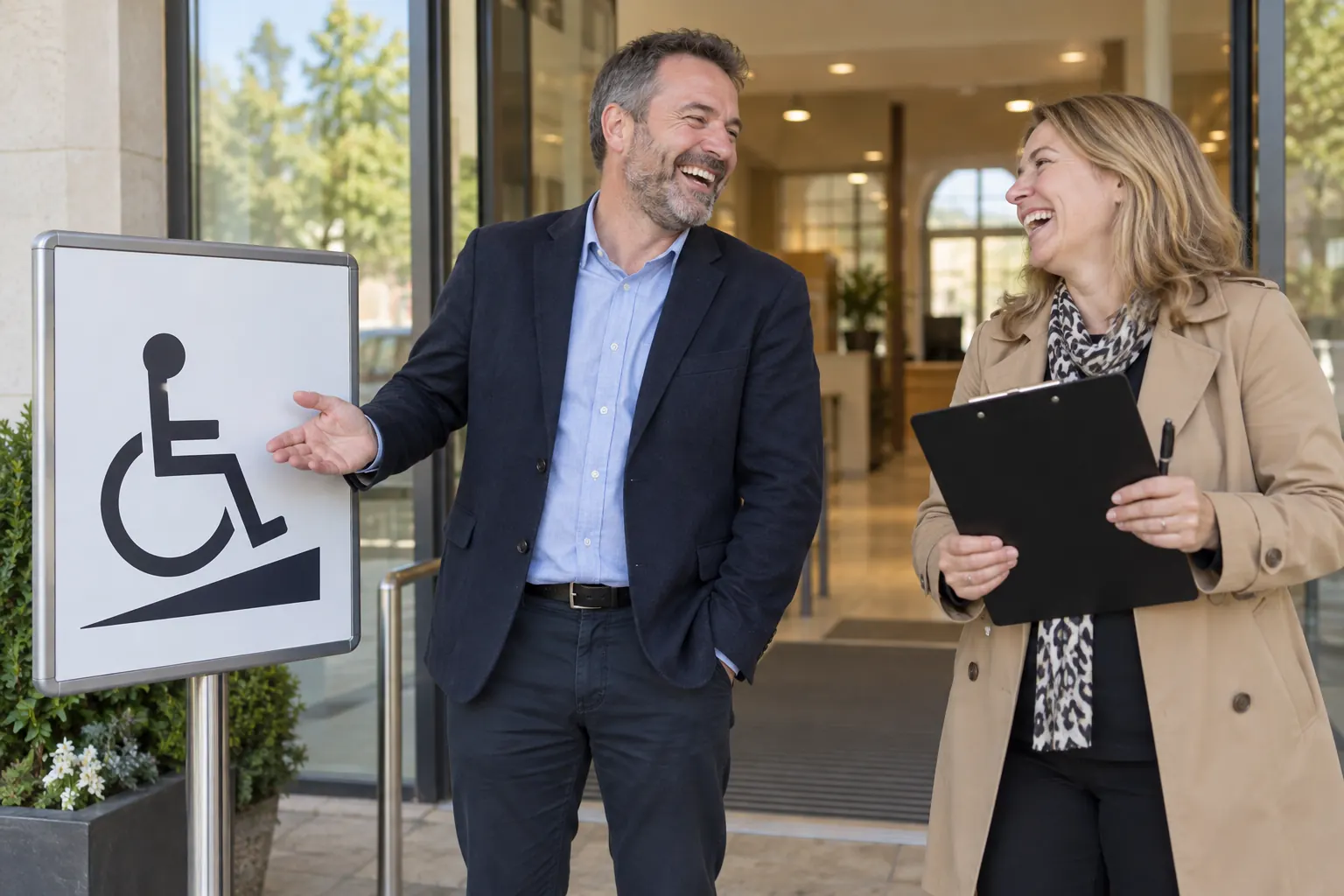
The government is seeking Disability and Access Ambassadors, which is excellent news for anyone who has watched a business install a ramp, photograph the ribbon cutting and then leave a delivery van across the entrance.
The application guidance asks candidates to advocate for better accessibility and quality in services and facilities. It also asks them to showcase best practice, explain the business benefits of accessibility and help organisations understand the benefits of employing disabled people.
This is practical work, although the ramp has prepared a clipboard in case the selection panel wants to hear from infrastructure directly. It has no formal qualifications, unless years of being ignored by property managers count as sector experience. Its network is mostly concrete, but it reaches the pavement more reliably than several public strategies.
Applicants were asked for a short CV of no more than one page, with examples showing that they are successful, well connected, respected in their sector and passionate about social change for disabled people. The ramp has highlighted its strongest achievement: remaining in place while businesses treated its existence as a complete accessibility policy.
The role is meant to give businesses useful advice rather than another framed statement about inclusion. That distinction matters. Accessibility is not a decorative extra to admire during an inspection before quietly blocking it with a sandwich board, a bin or the confident assumption that nobody affected will complain.
A service works better when people can use it with dignity and ease. A workplace works better when disabled people can enter it, move around it and do their jobs without completing an obstacle course designed by somebody who thinks an automatic door is an extravagant lifestyle choice.
The guidance also asks ambassadors to share progress with others. First, make a change. Then explain what changed. Finally, let someone who uses the service confirm that the improvement is not merely a new sign pointing towards the old problem. The sign has agreed, provided it is not asked to hide the problem again.
The closing time was set for 11.59pm on Sunday 29 March 2026. The ramp has submitted its expression of interest, its CV and a covering note explaining that it is self motivated, sector respected and available in several gradients. It has requested a reasonable adjustment for the interview: nobody should wheel it into a cupboard and call that storage. The panel has now discovered its first accessibility improvement is allowing the ramp to leave with the clipboard.
Source: GOV.UK.