Honey authenticity testing has reached the point where a jar must prove not only that it is honey, but that it has maintained an honest relationship with every country it passed through before arriving at breakfast.
The Government Chemist says adulteration with cheap sugar syrups and mislabelling of origin remain concerns. The jar has responded by looking offended, which is currently its strongest available legal defence.
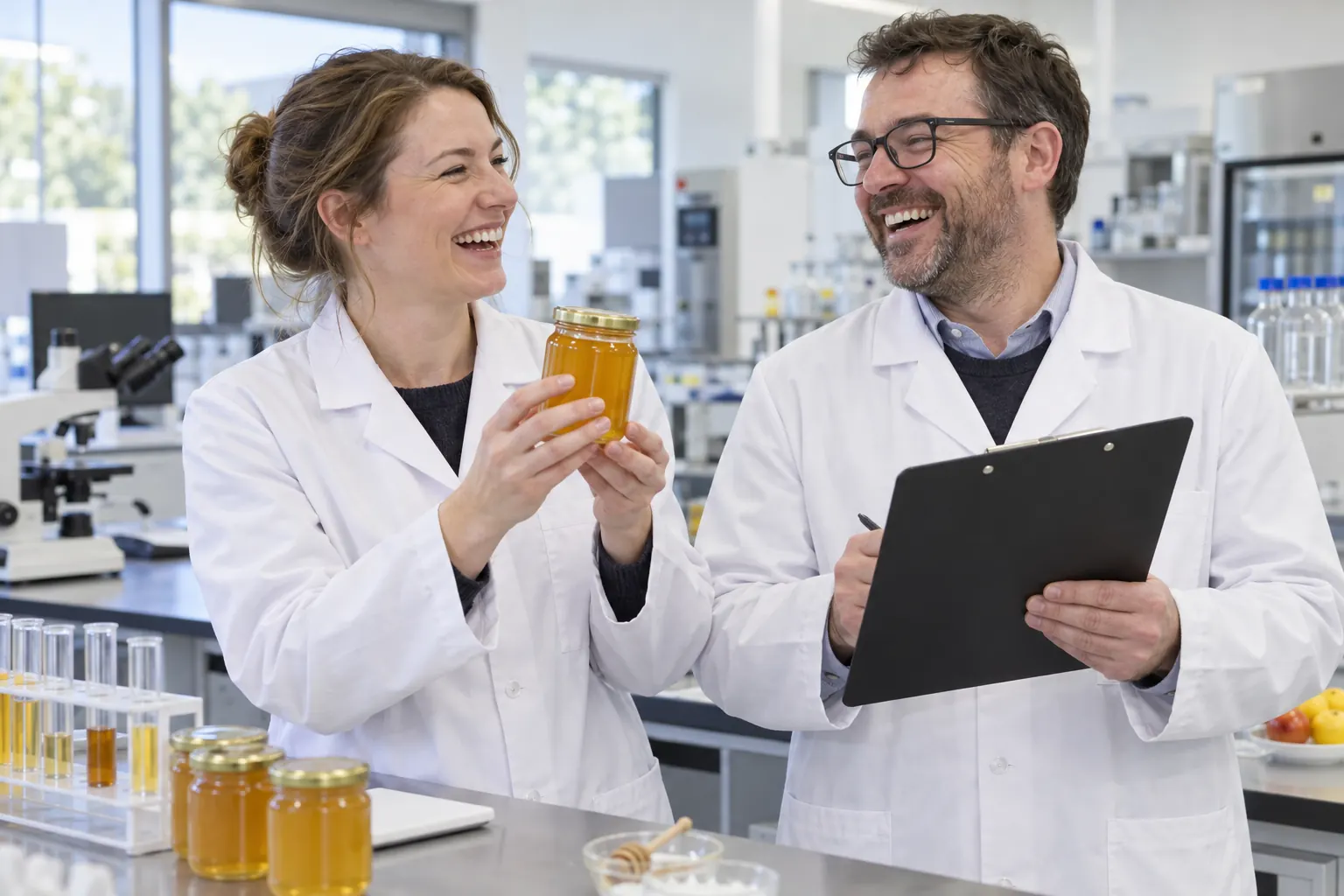
A framework jointly funded by the Government Chemist and Defra is being used to interrogate honey authenticity databases. It is a serious attempt to discover what is in the nation’s jars. It is also the opening chapter of a detective story in which the suspect is unusually good on toast.
Honey can travel through complex global supply chains, get blended, acquire an impressive backstory and arrive on a supermarket shelf with less traceability than a man leaving a pub while claiming to know a shortcut. The shopper wanted something for porridge and has unexpectedly been handed an international investigation.
The official account notes disagreement over the reliability and interpretation of analytical methods, including nuclear magnetic resonance. Science has entered the kitchen wearing a lab coat and asked everyone to stop guessing. Several jars have asked whether this means they can finally appeal their tasting notes.
Retailers and industry bodies point to due diligence and existing controls. Beekeepers and campaigners argue that more is needed. This is a familiar British arrangement. One side brings evidence, the other brings evidence, and a committee is formed to decide whether the evidence needs a smaller committee.
The scale of fraud remains unclear where testing methods vary and no harmonised approach exists. That uncertainty is precisely why better testing, transparency and international alignment matter. Even a spoon understands the value of consistency, although nobody has yet asked it to validate a supply chain.
For now, the framework is trying to make the label mean what the label says. The bees are supportive, provided their invoices continue to be paid in flowers and nobody describes syrup as a complicated form of regional honey.
The laboratory has labelled its tea “control sample”. The kettle is laughing in the corner, but only because it has already destroyed the evidence.
Source: GOV.UK.