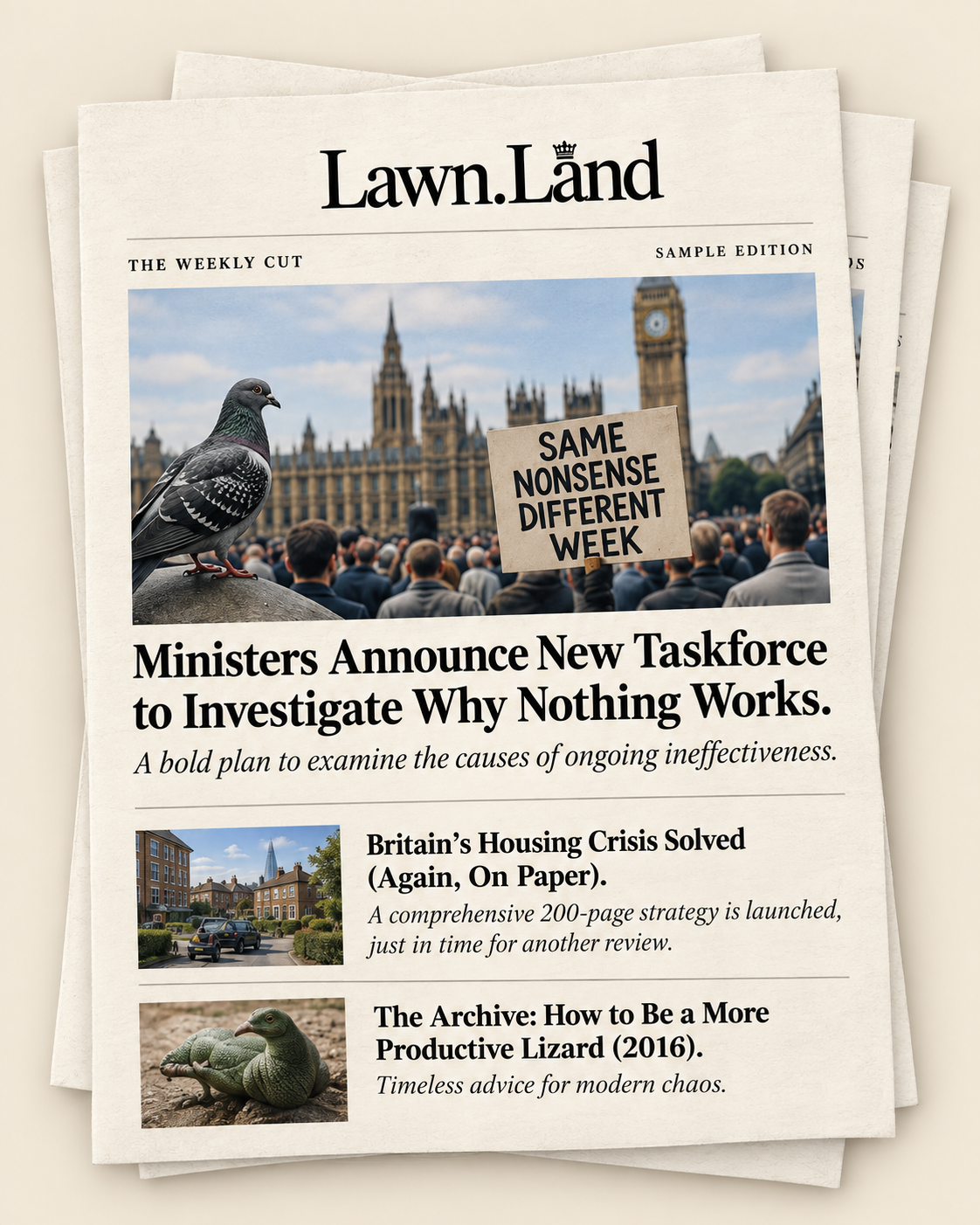
Whitehall’s consultation culture reset has arrived with a duster, a higher threshold and the expression of someone who has discovered that the cupboard contains paperwork about clearing the cupboard. Ministers want unnecessary reporting and consultation requirements to face a tougher test in legislation, leaving several clipboards wondering whether public service has a retirement age.
The Cabinet Office says artificial intelligence will help identify duties that are disproportionate and slowing delivery. This is excellent news for machines, which have long suspected that government contains too many forms and not enough decisions. It is less reassuring for spreadsheets, whose senior members may soon be asked why fourteen tabs are needed to approve a letter.
A pilot found 131 consultation requirements in only ten pieces of legislation. The Government plans to extend the work across its legislation. Whitehall may finally discover that it has been consulting about consultation while waiting for the consultation on whether consultation is still necessary.
The stated aim is not to abolish scrutiny. Consultations will remain necessary where policies affect a wide range of complex groups. This is sensible, since people should occasionally be asked what they think before a decision affects them. The new principle appears to be that a routine administrative change should not require a parade of forms, three meetings and a ceremonial biscuit.
Artificial intelligence will also search for disproportionate reporting and consultation duties. Somewhere in Whitehall, a filing cabinet is preparing its defence. It will explain that although it has not delivered a decision since 2014, it has maintained an important institutional relationship with several envelopes.
Ministers are considering streamlining interdepartmental letter exchanges, which can delay decisions and reinforce siloes. This may prove difficult. A letter that has spent years travelling between departments has acquired rights, a pension and a firm view that reform should be referred to another letter.
The measures sit within the wider Civil Service Reform programme, alongside changes to Cabinet decision making and accountability for Permanent Secretaries. The ambition is to close the gap between a Whitehall decision and something happening on the ground. The gap is reportedly being measured by a working group, which has begun by asking whether measurement requires a framework.
By the end of the review, the cupboard may be tidier, the filing cabinets may be nervous and the letters may finally move. Whitehall will then face its most difficult consultation of all: asking the paperwork whether it is ready to be reduced.
Source: GOV.UK.