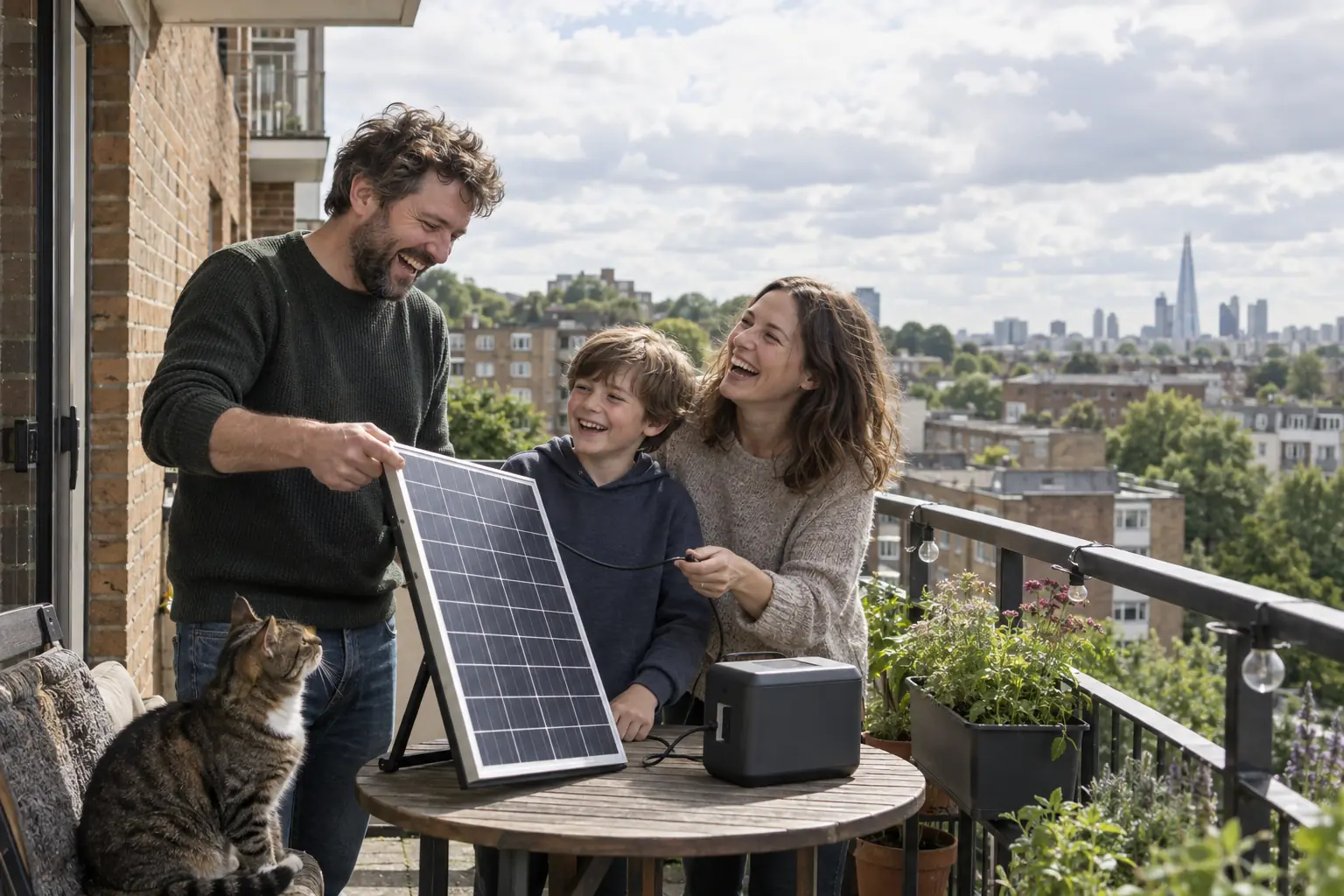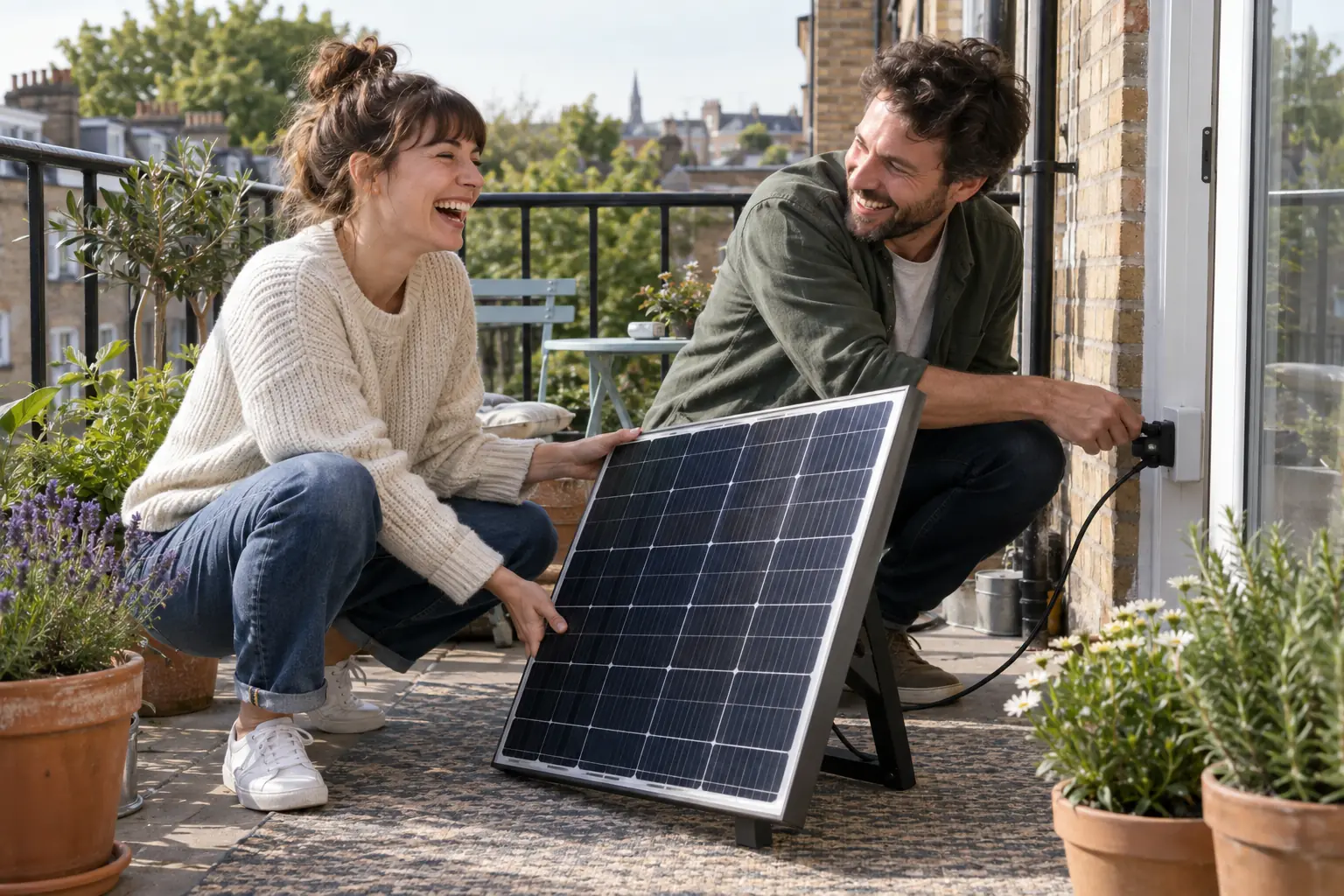
Plug in solar panels are heading for shops within months, giving Britain a chance to become an energy superpower one balcony at a time. The great escape from fossil fuel markets will apparently begin beside a plastic chair, three herbs and a washing rack that has seen things.
The Government says the panels could help households cut their energy bills. That is the serious part. The less serious part is that homes may soon be asked to display a small electricity installation in the same outdoor space currently used for storing a broken lampshade.
The panels are intended for balconies and other outdoor areas, with retailers including Lidl and Iceland working with manufacturers to bring them to British shops. Clean energy therefore arrives in a wonderfully ordinary setting. You could buy a panel after bread, batteries and something discounted from the middle aisle, then take it home and ask the balcony to accept a more demanding lifestyle.
The technology is already widely used in Europe. Germany recorded hundreds of thousands of balcony solar registrations in 2025, suggesting that the continent has been quietly turning railings into minor power stations while Britain has been waiting for a suitable form to authorise the sunshine.
The Government is also introducing rules intended to ensure that most new homes in England include solar panels and clean heating. The modern roof will therefore be expected to keep out rain, reduce emissions and make a convincing case for its existence at the housewarming.
There is a particularly British twist. On windy days, some wind farms are paid to switch off because the grid cannot carry all the electricity they produce. A new trial could instead let households and businesses in affected areas use that power at a discount. At last, the country may stop paying turbines not to work and start asking homes to plug in during the weather.
It is an appealingly simple idea. Generate power, use power and let households take part without hiring a consultant to explain the difference between a socket and a national strategy. The balcony may even feel important, which is useful because it has been carrying the entire housing crisis on one folding chair. Britain has finally found a way to make every small outdoor space responsible for national energy security, just as soon as it finishes drying the towels.
Source: GOV.UK.