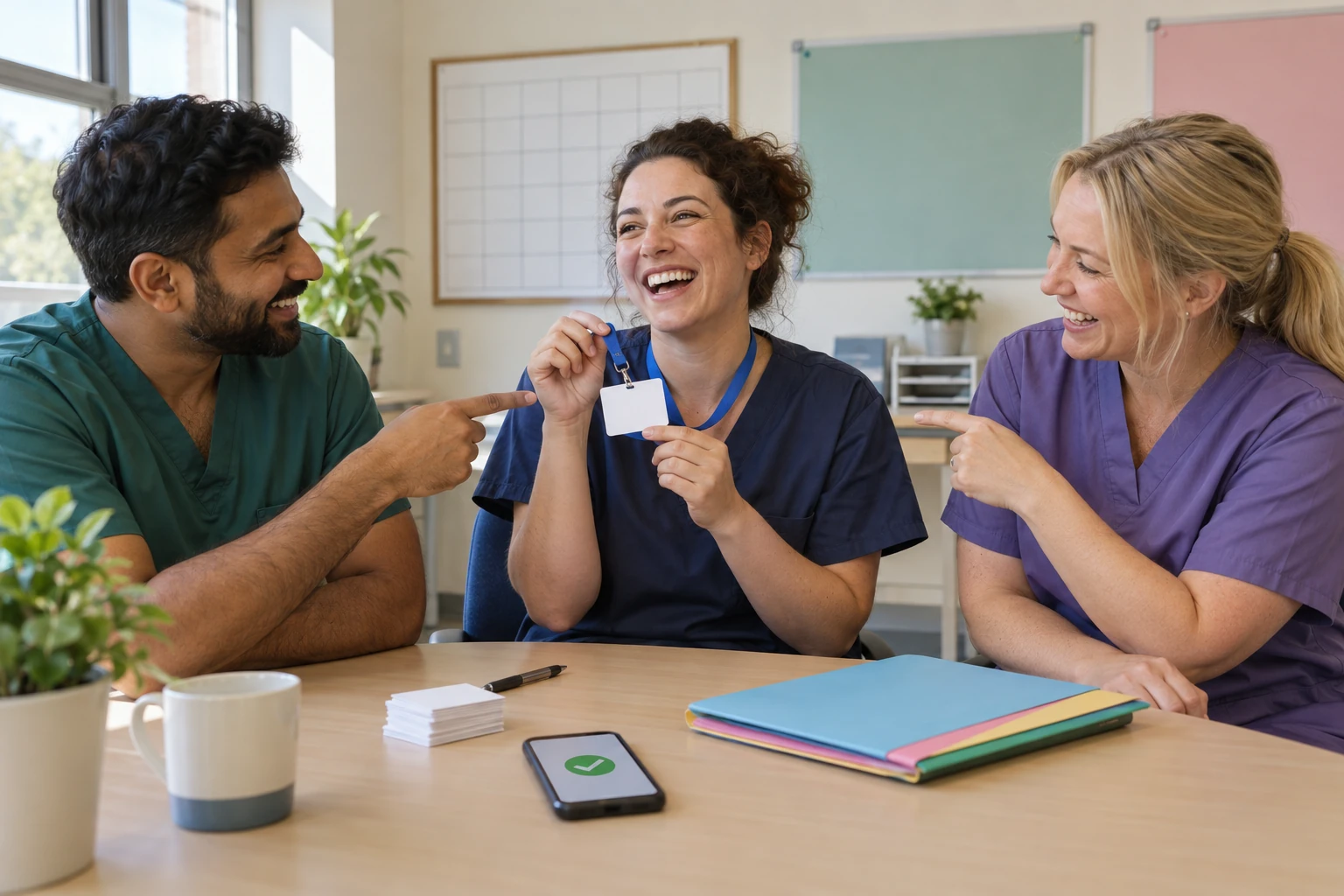
A £2 million pilot is sending trained health visitors into communities to help families access childhood vaccinations, prompting one reminder card to assume it has been appointed permanent secretary of public health.
The scheme will support families facing barriers including travel costs, language difficulties, childcare problems and uncertainty about vaccines. Twelve pilots are due to begin across five regions of England, with health visitors offering vaccinations during routine visits.
This is a sensible attempt to bring care closer to people. It is practical, targeted and apparently designed by adults who have met a family before. The Department of Very Reassuring Folders has nevertheless opened an emergency command centre containing a clear information sheet, a sensible pen and one reminder card wearing a tiny lanyard.
Elsie Bellwether, Coordinator of Useful Reminders, says the point is to remove obstacles, not make parents complete a form last updated when phones had aerials. The service is going to families instead of asking families to defeat the telephone system in single combat.
The pilot gives health visitors extra training, including support for conversations with parents who have concerns about vaccination. It is a safety net, not a replacement for ordinary GP services. The reminder card has read this modest description and interpreted it as a promotion from stationery to national infrastructure.
The government also plans better digital tools for tracking children’s health and vaccinations. The NHS App’s My Children service is intended to provide a modern alternative to the paper Red Book. The Office of App Notifications has drafted a message saying, Hello. This is the important thing you meant to do, but with less guilt and only three screens asking who you are.
First, a health visitor meets a family. Next, they offer information and support. Then they arrange vaccination where appropriate. Finally, the record is updated. This is not a moon landing. Even so, a technical team has been ordered to stop the app requesting a password created before the child could walk.
The trial is due to run for a year before evaluation, with wider expansion planned from 2027 if it works. Evidence first, confident announcement later. The reminder card has objected, claiming that one successful afternoon beside a kitchen fridge qualifies it to advise the Cabinet.
By closing time, it had helped one appointment stay remembered, saluted a magnet and returned to its folder. The health visitors went back to helping families. The card began preparing for its investiture, because in public administration even a useful reminder eventually wants a title, a lanyard and someone else’s budget.
Source: Department of Health and Social Care.