The government has proposed stopping shops from selling high caffeine energy drinks to under 16s, giving Britain’s most electrically committed pupils a short period to hide their cans and pretend the consultation concerns somebody else.
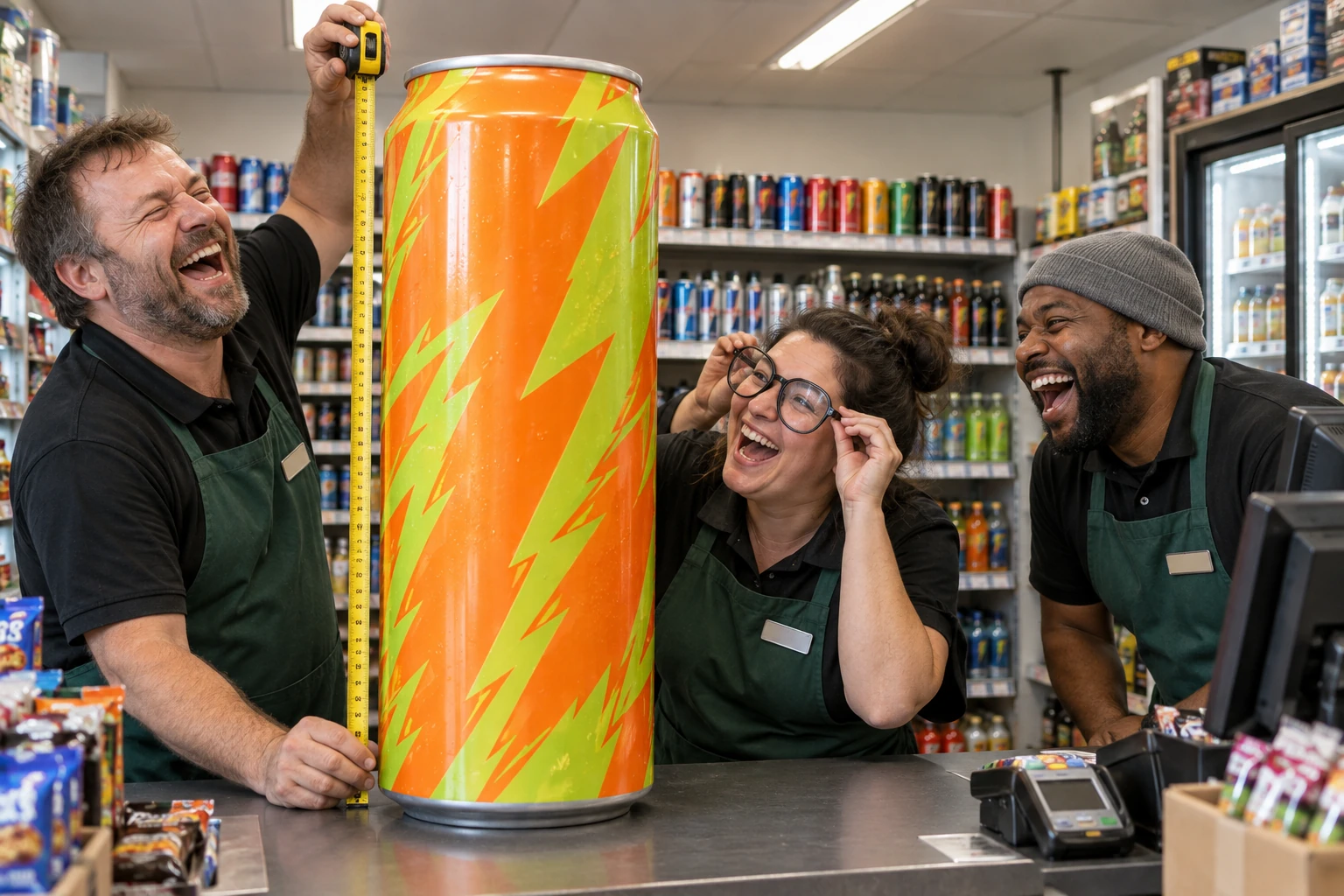
The Department of Health and Social Care launched its consultation on 2 September. The proposal would cover drinks containing more than 150 milligrams of caffeine per litre, with sales restricted in shops, cafés, restaurants, vending machines and online. It is not yet a ban, although the average fluorescent can has already started behaving like a victim of political persecution.
The government cited evidence linking the drinks with disrupted sleep, anxiety, poor concentration and weaker educational outcomes.
‘One pupil answered every question before I asked it,’ said Mr Kelvin, Coordinator of Indoor Weather. ‘Then he lapped the geography block and fell asleep before registration finished.’
Many major retailers already restrict sales voluntarily, while the government says some smaller convenience shops continue to sell the drinks to children. A consistent rule would spare checkout staff from deciding whether a 13 year old genuinely needs 160 milligrams of caffeine for esports training, or merely wants to experience Tuesday in several dimensions at once.
The proposal does not cover every caffeinated drink. Lower caffeine soft drinks, tea and coffee would remain available, allowing teenagers to obtain the energy to tolerate an aunt, mark an essay with growing resentment or stare into a mug until morning becomes legally unavoidable.
The Bureau of Weaponised Mango has asked manufacturers why a beverage intended for homework requires typography normally reserved for cage fights. Manufacturers have reportedly replied that the design helps the can feel understood, which is welcome news for the can and less helpful for the child holding it.
The consultation will run for 12 weeks. Until then, Britain’s youngest consumers remain free to buy ordinary drinks, attend school and discover that the most powerful stimulant in the country is still an adult saying, ‘We need to have a sensible conversation.’ By the end of that conversation, the can will have finished the homework, chaired the meeting and applied for a teaching post.
Real story: Department of Health and Social Care.