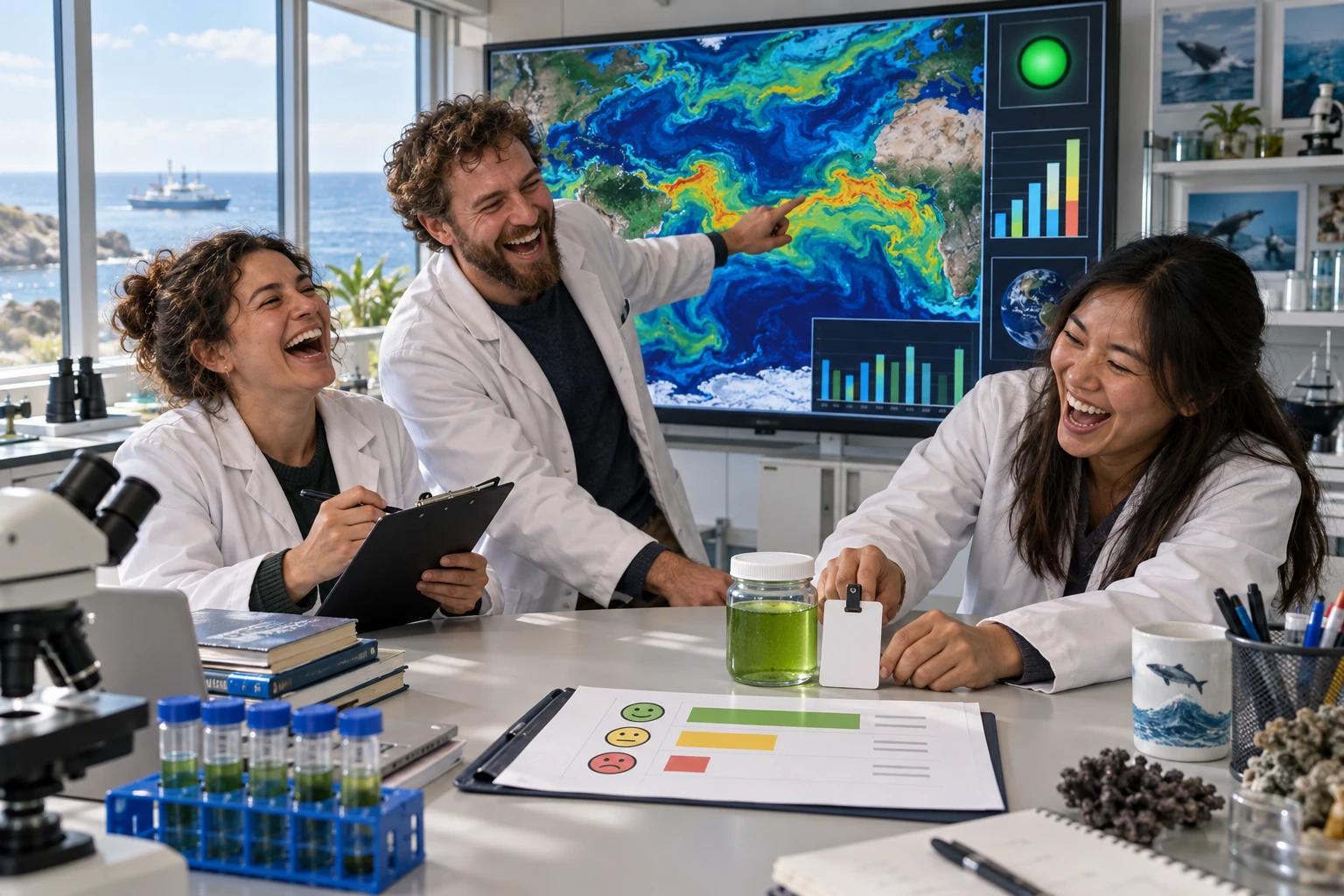
Ocean chlorophyll has been measured by NASA’s PACE mission, informing trillions of phytoplankton that quietly make much of the ocean’s oxygen that microscopic importance is no longer an exemption from performance monitoring.
PACE’s Ocean Color Instrument measures the spectrum of sunlight reflected from the ocean. Scientists can use that information to estimate chlorophyll concentrations, assess phytoplankton biomass and extend a decades long record of marine change. The organisms have been doing the work for ages. They have only recently acquired the paperwork.
The instrument produced its first global chlorophyll map in 2024. In June 2025, a year of observations was assembled into a dataset showing the seasonal cycle of phytoplankton activity. The tiny workforce had delivered a useful annual report before anyone had asked it to identify three professional development goals.
Managers were impressed by the coverage. A satellite can observe huge areas of ocean at once, which is exactly the kind of productivity that causes concern in offices where every successful system eventually acquires a dashboard and a meeting about dashboard ownership.
“Productivity appears strong, but visibility is low,” said Marina, Orbital Manager of Tiny Plants. “Several billion organisms still lack LinkedIn profiles.”
The data arrive in reassuring colours. High concentrations appear in shades including yellow and red, while lower concentrations move through green, blue and purple. The Marine Metrics Unit immediately converted the palette into a traffic light system and began asking whether the Atlantic had a plan for moving from amber to green.
This overlooked a few responsibilities. Phytoplankton form the base of the marine food web, produce up to half of Earth’s oxygen and help transfer carbon dioxide from the atmosphere into the deep ocean. Management thanked them for their contribution, then requested a clearer summary of outcomes and a brief explanation of why oxygen production could not be reported in a more visually engaging format.
PACE also strengthens the long term record of ocean colour by observing the planet from orbit. It requires no desk, commuting allowance or away message, making it dangerously attractive to finance departments searching for further efficiencies. Several executives have reportedly begun wondering whether the rest of the ocean could be reorganised into a spreadsheet.
The ocean has passed its review, subject to remaining blue while delivering measurable green, supporting nearly every marine food chain and continuing to provide atmospheric services without requesting a salary. The plankton’s final appraisal praised their resilience, questioned their communication skills and marked oxygen as an area for further improvement.
At last, a workforce that keeps everyone alive has been told its output is excellent, but its visibility needs work.
Real story: NASA PACE, 11 June 2025, with later corroboration from NASA Earth Observatory, 25 August 2025.