Semiconductor researchers enter the networking layer
Organisers have invited UK semiconductor researchers to apply for a trip to the Republic of Korea. There, advanced chips will meet academia’s most persistent technology: the name badge.
The June delegation includes a bilateral forum, a major conference and visits to laboratories or companies. Participants may present work on photonics, advanced packaging, compound semiconductors and computers that increasingly resemble ambitious toast.
There will also be poster sessions. These allow one scientist to explain five years of work while another nods intelligently and tries not to drop a paper cup on the band gap.
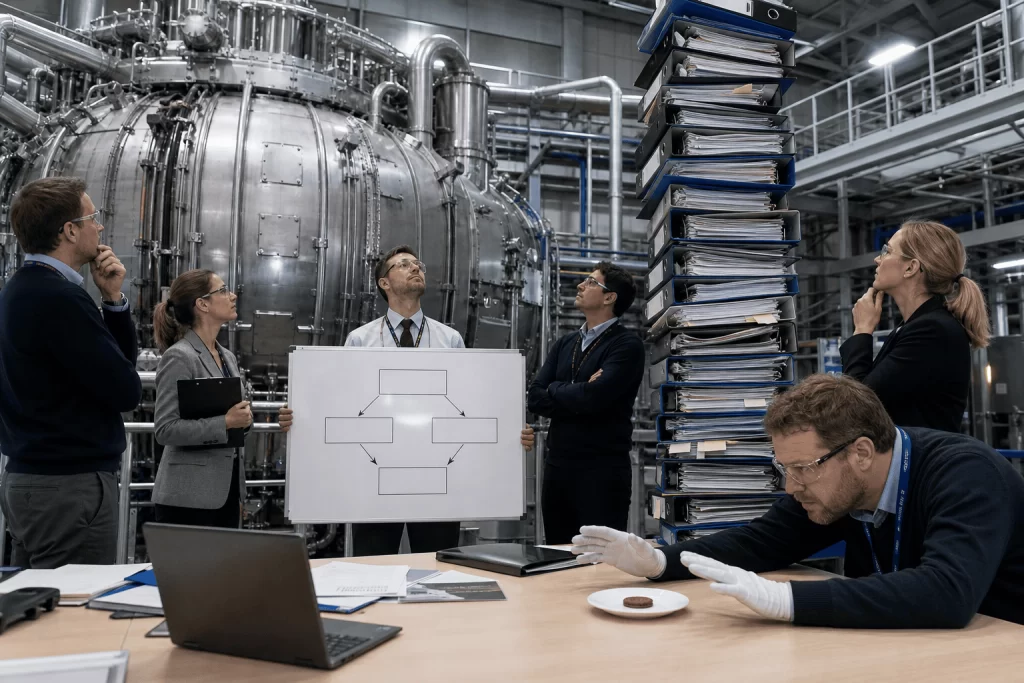
“The greatest conductor is copper, but the greatest connector is a biscuit table,” said Professor Chip Waferly, Chair of Applied Crumbs. “Many collaborations begin beside the last custard cream.”
The programme supports links between two countries with serious semiconductor expertise. It pays reasonable travel and accommodation costs. However, no allowance covers the emotional strain of choosing a conference lanyard colour.
The application form asks researchers to describe their work and potential contribution. Meanwhile, the Office of Microscopic Diplomacy rejects any abstract with fewer than three words that require zooming in.
By the return flight, delegates may have shared methods and formed partnerships. They may even discover which neuromorphic researcher can locate the hotel lift without a machine-learning model.
Read the real story: the call for semiconductor researchers to join the Korea delegation.
The trip may produce valuable joint research, new contacts and at least one collaboration whose first meeting is spent locating the correct video link. Britain’s chip strategy is therefore proceeding at full speed, immediately after everyone has found the seminar room. The biscuits remain the only technology with guaranteed uptake.